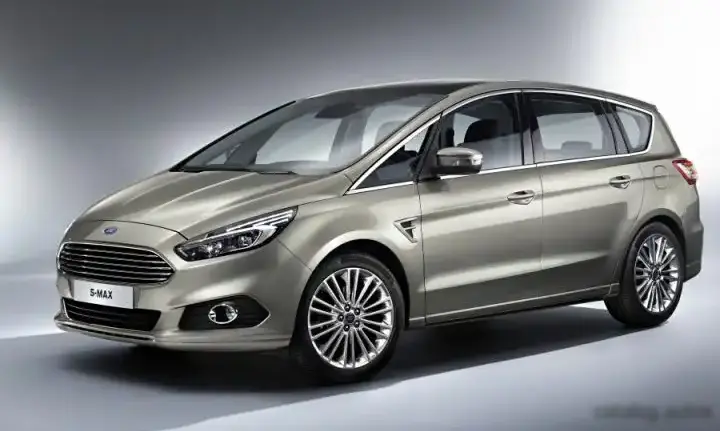
The Ford S-MAX II 2.0 TDCi 180 horsepower all-wheel drive (AWD) model with the PowerShift dual-clutch transmission and seven-seat configuration was a significant offering in Ford’s European MPV (Multi-Purpose Vehicle) lineup from 2015 to 2018. Positioned as a mid-to-high trim level within the second-generation S-MAX range, it aimed to provide a blend of practicality, performance, and fuel efficiency for families and those requiring versatile passenger and cargo space. This variant represented a key component of Ford’s strategy to offer a diverse S-MAX portfolio catering to a wide range of customer needs.
Technical Specifications
| Brand | Ford |
| Model | S-MAX |
| Generation | S-MAX II |
| Type | 2.0 TDCi (180 Hp) AWD PowerShift S&S 7 Seat |
| Start of production | 2015 |
| End of production | 2018 |
| Powertrain Architecture | Internal Combustion engine |
| Body type | MPV |
| Seats | 7 |
| Doors | 5 |
| Fuel consumption (urban) | 6.4 l/100 km (36.8 US mpg, 44.1 UK mpg, 15.6 km/l) |
| Fuel consumption (extra urban) | 5.4 l/100 km (43.6 US mpg, 52.3 UK mpg, 18.5 km/l) |
| Fuel consumption (combined) | 5.8 l/100 km (40.6 US mpg, 48.7 UK mpg, 17.2 km/l) |
| CO2 emissions | 149 g/km |
| Fuel Type | Diesel |
| Acceleration 0 – 100 km/h | 10.5 sec |
| Acceleration 0 – 62 mph | 10.5 sec |
| Acceleration 0 – 60 mph | 10 sec |
| Maximum speed | 206 km/h (128 mph) |
| Emission standard | Euro 6 |
| Weight-to-power ratio | 10.1 kg/Hp, 99.5 Hp/tonne |
| Weight-to-torque ratio | 4.5 kg/Nm, 221.1 Nm/tonne |
| Power | 180 Hp @ 3500 rpm |
| Power per litre | 90.1 Hp/l |
| Torque | 400 Nm @ 2000-2500 rpm (295.02 lb.-ft. @ 2000-2500 rpm) |
| Engine layout | Front, Transverse |
| Engine Model/Code | T8CG, T8CH, T8CI, T8CJ |
| Engine displacement | 1997 cm3 (121.86 cu. in.) |
| Number of cylinders | 4 |
| Engine configuration | Inline |
| Cylinder Bore | 85 mm (3.35 in.) |
| Piston Stroke | 88 mm (3.46 in.) |
| Compression ratio | 17:1 |
| Number of valves per cylinder | 4 |
| Fuel injection system | Diesel Commonrail |
| Engine aspiration | Turbocharger, Intercooler |
| Valvetrain | DOHC |
| Engine oil capacity | 5.6 l (5.92 US qt | 4.93 UK qt) |
| Coolant | 8.2 l (8.66 US qt | 7.21 UK qt) |
| Kerb Weight | 1809 kg (3988.16 lbs.) |
| Max. weight | 2615 kg (5765.09 lbs.) |
| Max load | 806 kg (1776.93 lbs.) |
| Trunk (boot) space – minimum | 285 l (10.06 cu. ft.) |
| Trunk (boot) space – maximum | 2020 l (71.34 cu. ft.) |
| Fuel tank capacity | 70 l (18.49 US gal | 15.4 UK gal) |
| Length | 4796 mm (188.82 in.) |
| Width | 1916 mm (75.43 in.) |
| Width including mirrors | 2137 mm (84.13 in.) |
| Height | 1655 mm (65.16 in.) |
| Wheelbase | 2849 mm (112.17 in.) |
| Front track | 1606 mm (63.23 in.) |
| Rear (Back) track | 1606 mm (63.23 in.) |
| Ride height (ground clearance) | 128-150 mm (5.04 – 5.91 in.) |
| Minimum turning circle (turning diameter) | 12 m (39.37 ft.) |
| Drive wheel | All wheel drive (4×4) |
| Number of gears and type of gearbox | 6 gears, automatic transmission PowerShift |
| Front suspension | Independent, type McPherson with coil spring and anti-roll bar |
| Rear suspension | Independent coil spring |
| Front brakes | Ventilated discs |
| Rear brakes | Disc |
| Assisting systems | ABS (Anti-lock braking system) |
| Steering type | Steering rack and pinion |
| Tires size | 235/55 R17; 235/50 R18; 245/45 R19 |
| Wheel rims size | 7.5J x 17; 7.5J x 18; 8J x 19 |
INTRODUCTION
The second-generation Ford S-MAX, launched in 2015, built upon the success of the original, offering a more refined and technologically advanced MPV. The 2.0 TDCi 180 hp AWD PowerShift variant was a key model, particularly in European markets where diesel engines and all-wheel drive were highly valued for their fuel efficiency and all-weather capability. This version sat comfortably in the middle of the S-MAX II range, offering a step up in performance and features compared to the lower-powered, front-wheel-drive models, while remaining more accessible than the flagship trims. It was designed to appeal to active families who needed space, versatility, and a degree of driving enjoyment.
Powertrain & Engine Architecture
At the heart of the S-MAX II 2.0 TDCi 180 was the Ford Duratorq engine family, specifically the 1997cc four-cylinder diesel. Engine codes such as T8CG, T8CH, T8CI, and T8CJ were used depending on the specific calibration and market. This engine utilized a common-rail direct injection system, delivering fuel at extremely high pressure for optimized combustion. A turbocharger with an intercooler further enhanced performance, boosting power and torque. The engine featured a double overhead camshaft (DOHC) valvetrain with four valves per cylinder, contributing to its efficiency and responsiveness. The PowerShift six-speed dual-clutch transmission (DCT) was a crucial component, offering quick and smooth gear changes compared to a traditional automatic. This transmission allowed for both fully automatic operation and manual gear selection via steering wheel-mounted paddles or the gear selector.
Driving Characteristics
The 2.0 TDCi 180 hp powertrain delivered a respectable level of performance for an MPV. Acceleration from 0-62 mph (0-100 km/h) took around 10.5 seconds, and the top speed was 128 mph (206 km/h). While not a sports car, the engine provided ample torque (400 Nm or 295 lb-ft) from 2000-2500 rpm, making it easy to accelerate and maintain speed even when fully loaded. The PowerShift transmission contributed to a more engaging driving experience than a conventional automatic, with quick shifts and a responsive feel. Compared to the lower-powered 1.5 TDCi versions, the 2.0 TDCi offered significantly more punch, especially when overtaking or climbing hills. The all-wheel-drive system provided enhanced traction and stability, particularly in adverse weather conditions, making it a safer and more confident option than front-wheel-drive models.
Equipment & Trim Levels
The 2.0 TDCi 180 AWD PowerShift S&S 7 Seat typically came with a generous level of standard equipment. This included features like air conditioning, power windows, power mirrors, a touchscreen infotainment system with Bluetooth connectivity, and alloy wheels. Higher trim levels added features such as leather upholstery, heated front seats, a panoramic sunroof, and advanced driver-assistance systems like adaptive cruise control and lane-keeping assist. The “S&S” designation indicated the inclusion of Ford’s Start/Stop system, which automatically shut off the engine when the vehicle was stationary to improve fuel economy. Optional extras included a rear-seat entertainment system, a premium sound system, and parking sensors.
Chassis & Braking
The S-MAX II utilized an independent suspension setup on both the front and rear axles. The front suspension employed McPherson struts with coil springs and an anti-roll bar, while the rear featured an independent multi-link suspension with coil springs. This configuration provided a good balance between ride comfort and handling. Braking duties were handled by ventilated discs on the front wheels and solid discs on the rear. Anti-lock Braking System (ABS) was standard, enhancing safety and control during emergency braking. The all-wheel-drive system distributed power between the front and rear axles as needed, optimizing traction and stability.
Market Reception & Comparison
The S-MAX II 2.0 TDCi 180 AWD PowerShift was generally well-received by automotive critics. It was praised for its spacious interior, comfortable ride, and strong performance. The PowerShift transmission was a point of contention for some, with early versions experiencing some reliability issues, although these were largely addressed in later production years. Compared to the lower-powered S-MAX variants, the 2.0 TDCi offered a noticeable improvement in performance and driving enjoyment. Against competitors like the Volkswagen Sharan and Citroën Grand C4 Picasso, the S-MAX stood out for its more dynamic handling and stylish design. Fuel economy was competitive for its class, averaging around 40.6 US mpg (48.7 UK mpg) in combined driving.
Legacy
The Ford S-MAX II 2.0 TDCi 180 AWD PowerShift remains a popular choice in the used car market. The Duratorq engine is known for its durability, although regular maintenance is essential. The PowerShift transmission requires careful attention, and it’s advisable to check its service history and ensure it has received the necessary software updates. Overall, this variant offers a compelling combination of practicality, performance, and features, making it a versatile and reliable MPV for families and those needing a spacious and capable vehicle.