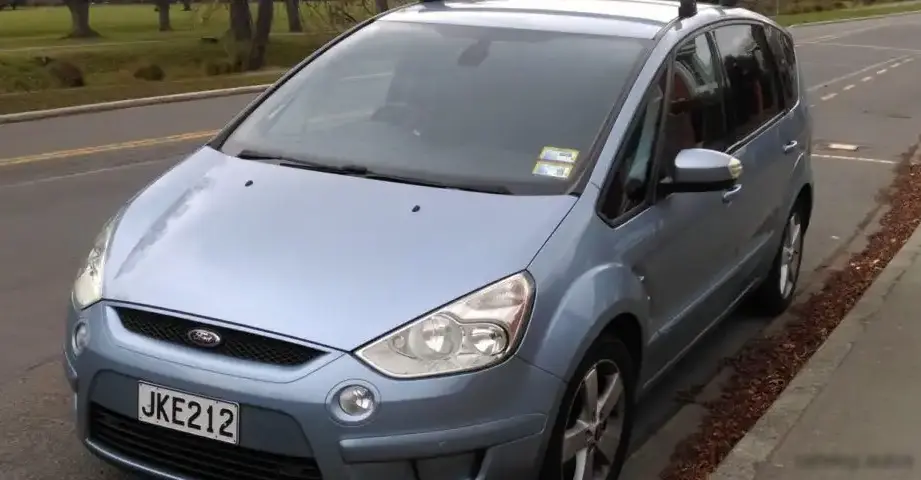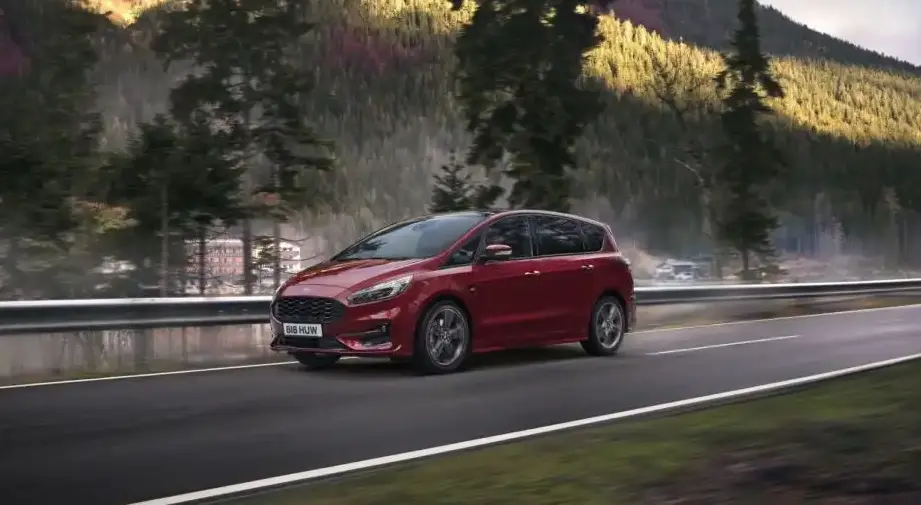
The Ford S-MAX II, specifically the 2.5 (190 Hp) Hybrid CVT variant, represents a significant evolution in Ford’s multi-purpose vehicle (MPV) offerings. Introduced with the facelift in February 2021 and remaining in production until April 2023, this model combined a gasoline engine with an electric motor to deliver improved fuel efficiency and reduced emissions compared to earlier S-MAX iterations. Positioned as a mid-range option within the S-MAX II lineup, it aimed to balance practicality, performance, and economy for families and those requiring flexible passenger and cargo space. This version was primarily marketed in Europe, where MPVs maintained a stronger presence than in the North American market.
Technical Specifications
| Brand | Ford |
| Model | S-MAX |
| Generation | S-MAX II (facelift 2019) |
| Type (Engine) | 2.5 (190 Hp) Hybrid CVT |
| Start of production | February, 2021 |
| End of production | April, 2023 |
| Powertrain Architecture | FHEV (Full Hybrid Electric Vehicle) |
| Body type | MPV |
| Seats | 5 |
| Doors | 5 |
| Combined fuel consumption (WLTP) | 6.4 l/100 km (36.8 US mpg, 44.1 UK mpg, 15.6 km/l) |
| CO2 emissions (WLTP) | 146-147 g/km |
| Fuel consumption (economy) – urban (NEDC) | 6.3 l/100 km (37.3 US mpg, 44.8 UK mpg, 15.9 km/l) |
| Fuel consumption (economy) – extra urban (NEDC) | 5.2 l/100 km (45.2 US mpg, 54.3 UK mpg, 19.2 km/l) |
| Fuel consumption (economy) – combined (NEDC) | 5.6 l/100 km (42 US mpg, 50.4 UK mpg, 17.9 km/l) |
| CO2 emissions (NEDC) | 128-129 g/km |
| Fuel Type | Petrol (Gasoline) |
| Acceleration 0 – 100 km/h | 9.8 sec |
| Acceleration 0 – 62 mph | 9.8 sec |
| Acceleration 0 – 60 mph | 9.3 sec |
| Maximum speed | 185 km/h (114.95 mph) |
| Emission standard | Euro 6d-ISC-FCM |
| Weight-to-power ratio | 9.6 kg/Hp, 104 Hp/tonne |
| Weight-to-torque ratio | 9.1 kg/Nm, 109.5 Nm/tonne |
| Gross battery capacity | 1.1 kWh |
| Battery technology | Lithium-ion (Li-Ion) |
| Battery location | Below the floor, Under the trunk |
| Electric motor power | 133 Hp |
| Electric motor type | Synchronous |
| System power | 190 Hp @ 5500 rpm |
| System torque | 200 Nm (147.51 lb.-ft.) |
| Engine Power | 150 Hp |
| Power per litre | 60.3 Hp/l |
| Engine Torque | 200 Nm (147.51 lb.-ft.) |
| Engine layout | Front, Transverse |
| Engine Model/Code | BGCA |
| Engine displacement | 2488 cm3 (151.83 cu. in.) |
| Number of cylinders | 4 |
| Engine configuration | Inline |
| Cylinder Bore | 89 mm (3.5 in.) |
| Piston Stroke | 100 mm (3.94 in.) |
| Compression ratio | 13:1 |
| Number of valves per cylinder | 4 |
| Fuel injection system | Multi-port manifold injection |
| Engine aspiration | Naturally aspirated engine |
| Valvetrain | DOHC, VCT |
| Engine oil capacity | 5.4 l (5.71 US qt | 4.75 UK qt) |
| Kerb Weight | 1827 kg (4027.85 lbs.) |
| Max. weight | 2350 kg (5180.86 lbs.) |
| Max load | 523 kg (1153.02 lbs.) |
| Trunk (boot) space – minimum | 700 l (24.72 cu. ft.) |
| Trunk (boot) space – maximum | 2200 l (77.69 cu. ft.) |
| Fuel tank capacity | 65 l (17.17 US gal | 14.3 UK gal) |
| Max. roof load | 75 kg (165.35 lbs.) |
| Permitted trailer load with brakes (12%) | 1750 kg (3858.09 lbs.) |
| Permitted trailer load without brakes | 750 kg (1653.47 lbs.) |
| Length | 4804 mm (189.13 in.) |
| Width | 1916 mm (75.43 in.) |
| Width with mirrors folded | 1953 mm (76.89 in.) |
| Width including mirrors | 2137 mm (84.13 in.) |
| Height | 1684-1710 mm (66.3 – 67.32 in.) |
| Wheelbase | 2850 mm (112.2 in.) |
| Front track | 1606 mm (63.23 in.) |
| Rear (Back) track | 1606 mm (63.23 in.) |
| Ride height (ground clearance) | 141 mm (5.55 in.) |
| Minimum turning circle (turning diameter) | 11.95 m (39.21 ft.) |
| Drivetrain Architecture | The Internal combustion engine (ICE) and electric motor drive the front wheels of the car with the ability to work in full electric or mixed mode. |
| Drive wheel | Front wheel drive |
| Number of gears and type of gearbox | automatic transmission CVT |
| Front suspension | Independent, type McPherson with coil spring and anti-roll bar |
| Rear suspension | Independent multi-link spring suspension with stabilizer |
| Front brakes | Ventilated discs, 316×28 mm |
| Rear brakes | Disc, 316×11 mm |
| Assisting systems | ABS (Anti-lock braking system) |
| Steering type | Steering rack and pinion |
| Power steering | Electric Steering |
| Tires size | 235/55 R17; 235/50 R18; 245/45 R19 |
| Wheel rims size | 7.5J x 17; 7.5J x 18; 8J x 19 |
INTRODUCTION
The Ford S-MAX II, launched in 2015 and receiving a significant facelift in 2019, continued Ford’s tradition of offering a practical and versatile MPV. The 2.5-liter Hybrid CVT variant, introduced in 2021, was a key component of Ford’s strategy to improve fuel economy and reduce emissions across its range. Built on the Ford C2 platform (also known as the 1HX0/A3 platform, shared with the Ford Galaxy), the S-MAX II aimed to provide a comfortable and spacious interior for families, combined with a more engaging driving experience than some of its competitors. This particular powertrain configuration was designed to appeal to buyers seeking a balance between efficiency and usability, without sacrificing the practicality inherent in the S-MAX design.
Powertrain & Engine Architecture
The heart of the S-MAX II 2.5 Hybrid is the BGCA engine, a 2.5-liter inline-four cylinder naturally aspirated gasoline engine. This engine produces 150 horsepower and 200 Nm (147.51 lb.-ft.) of torque. It’s paired with a 133 horsepower electric motor, resulting in a combined system output of 190 horsepower. The engine utilizes multi-port fuel injection and a double overhead camshaft (DOHC) valvetrain with variable camshaft timing (VCT) to optimize performance and efficiency. The hybrid system is a full hybrid (FHEV) meaning it can operate on electric power alone for short distances and at lower speeds. The electric motor draws power from a 1.1 kWh lithium-ion battery pack located under the floor and trunk. The continuously variable transmission (CVT) is crucial to the hybrid system’s operation, allowing the engine to operate at its most efficient point while seamlessly delivering power to the front wheels. Unlike some CVTs, Ford tuned this unit to mimic traditional gear changes to a degree, reducing the “rubber band” feel often associated with this type of transmission.
Driving Characteristics
The 2.5-liter Hybrid CVT S-MAX offers a smooth and refined driving experience. While not particularly sporty, the combined output of the gasoline engine and electric motor provides adequate acceleration, achieving 0-60 mph in approximately 9.3 seconds. The CVT transmission contributes to seamless acceleration, although it can feel somewhat less responsive than a traditional automatic gearbox, especially during quick overtaking maneuvers. The electric motor provides instant torque, which helps to fill in gaps in the engine’s power delivery. The hybrid system prioritizes fuel efficiency, and the vehicle excels in urban driving conditions where the electric motor can be utilized more frequently. Compared to the higher-output 2.0-liter EcoBoost variants, the 2.5 Hybrid sacrifices some outright performance but gains significantly in fuel economy. The handling is generally secure and predictable, but the S-MAX is a relatively large vehicle, and body roll is noticeable in corners.
Equipment & Trim Levels
The 2.5 Hybrid CVT trim of the S-MAX II typically came well-equipped as a mid-range offering. Standard features included Ford’s SYNC 3 infotainment system with an 8-inch touchscreen, Apple CarPlay and Android Auto compatibility, automatic climate control, keyless entry and start, and a suite of driver-assistance technologies such as lane-keeping assist, adaptive cruise control, and automatic emergency braking. Interior upholstery was typically cloth or a combination of cloth and leatherette. Optional extras included a panoramic sunroof, heated and cooled front seats, a premium sound system, and a rear-seat entertainment system. The dashboard layout was modern and functional, with a focus on ease of use.
Chassis & Braking
The S-MAX II utilizes an independent suspension setup at both the front and rear. The front suspension employs a McPherson strut design with a coil spring and anti-roll bar, while the rear features a multi-link suspension system, also with a stabilizer bar. This configuration provides a comfortable ride quality and good handling characteristics. Braking duties are handled by ventilated discs at the front and solid discs at the rear. The S-MAX is equipped with ABS (Anti-lock Braking System) and electronic brakeforce distribution (EBD) as standard safety features. The steering is electrically assisted, providing a light and precise feel.
Market Reception & Comparison
The Ford S-MAX II 2.5 Hybrid CVT was generally well-received by automotive critics. Reviewers praised its fuel efficiency, comfortable ride, and spacious interior. However, some criticized the CVT transmission for its lack of responsiveness and the engine for its relatively modest power output. Compared to the 2.0-liter EcoBoost variants, the Hybrid offered superior fuel economy but less performance. Against competitors such as the Volkswagen Sharan and Citroën Grand C4 Picasso, the S-MAX stood out for its more engaging driving dynamics and stylish design. Fuel economy figures of around 6.4 l/100 km (36.8 US mpg) were competitive within its segment.
Legacy
The 2.5-liter Hybrid powertrain in the S-MAX II has proven to be relatively reliable, with few widespread issues reported. The hybrid system components, including the battery pack and electric motor, have demonstrated good durability. However, as with any complex system, regular maintenance is crucial to ensure long-term reliability. On the used car market, the S-MAX II 2.5 Hybrid CVT represents a good value proposition for buyers seeking a practical, fuel-efficient, and well-equipped MPV. Its combination of space, comfort, and economy makes it a compelling alternative to larger SUVs.