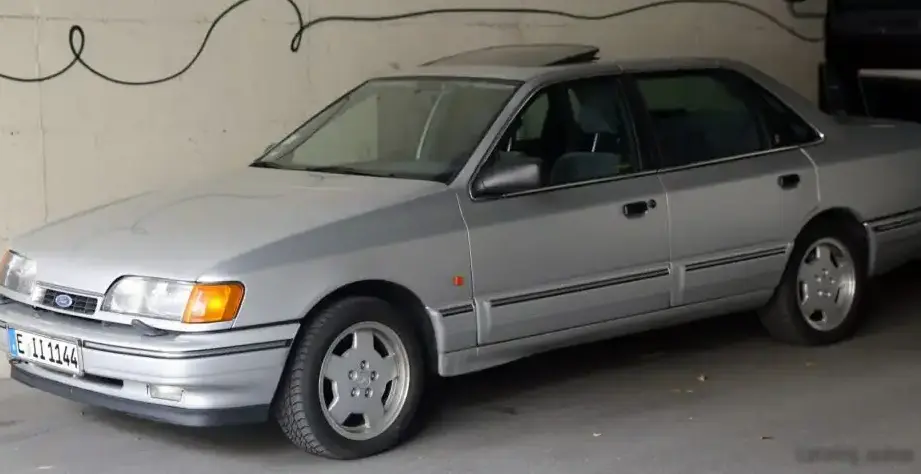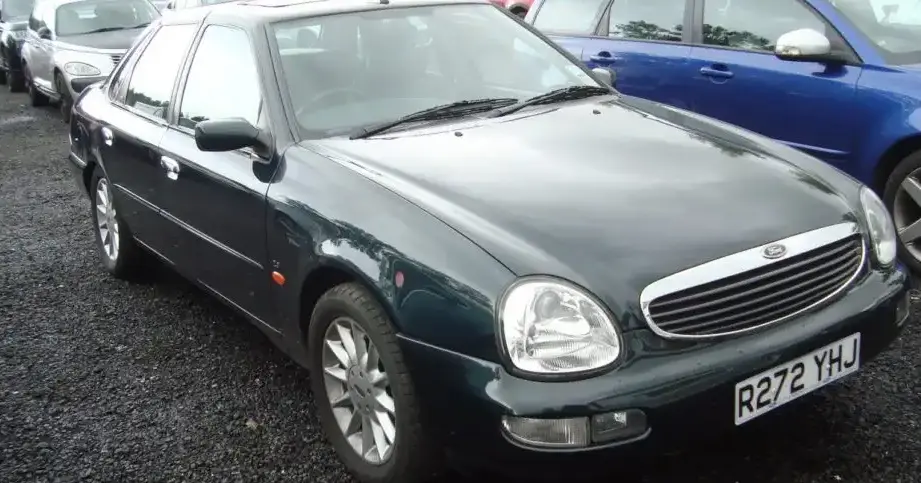
The Ford Scorpio II 2.0i 16V, produced between 1994 and 1998, represented a mid-range offering within the second generation (GFR, GGR) Scorpio lineup. Positioned above the base 2.0 models and below the flagship 2.9 V6, the 2.0i 16V aimed to provide a balance of performance and economy for the European executive car market. The Scorpio II, a successor to the popular but aging Granada, was Ford’s attempt to create a genuinely competitive large family car, boasting modern styling and a more sophisticated chassis. This variant, with its 16-valve engine and typically a five-speed manual transmission (though automatics were available), was intended to appeal to drivers seeking a more engaging driving experience than the standard 2.0L models.
Technical Specifications
| Brand | Ford |
| Model | Scorpio |
| Generation | Scorpio II (GFR,GGR) |
| Type (Engine) | 2.0i 16V (136 Hp) |
| Start of production | 1994 |
| End of production | 1998 |
| Powertrain Architecture | Internal Combustion engine |
| Body type | Sedan |
| Seats | 5 |
| Doors | 4 |
| Fuel consumption (combined) | 8.9 l/100 km (26.4 US mpg, 31.7 UK mpg, 11.2 km/l) |
| Fuel Type | Petrol (Gasoline) |
| Maximum speed | 207 km/h (128.62 mph) |
| Weight-to-power ratio | 10.6 kg/Hp, 94.4 Hp/tonne |
| Weight-to-torque ratio | 8.2 kg/Nm, 121.4 Nm/tonne |
| Power | 136 Hp @ 6000 rpm |
| Power per litre | 68.1 Hp/l |
| Torque | 175 Nm @ 4200 rpm (129.07 lb.-ft. @ 4200 rpm) |
| Engine layout | Front, Longitudinal |
| Engine Model/Code | N3A |
| Engine displacement | 1998 cm3 (121.93 cu. in.) |
| Number of cylinders | 4 |
| Engine configuration | Inline |
| Cylinder Bore | 86 mm (3.39 in.) |
| Piston Stroke | 86 mm (3.39 in.) |
| Compression ratio | 9.8:1 |
| Number of valves per cylinder | 4 |
| Fuel injection system | Multi-port manifold injection |
| Engine aspiration | Naturally aspirated engine |
| Valvetrain | DOHC |
| Engine oil capacity | 4.25 l (4.49 US qt | 3.74 UK qt) |
| Coolant | 7.5 l (7.93 US qt | 6.6 UK qt) |
| Kerb Weight | 1441 kg (3176.86 lbs.) |
| Max. weight | 1990 kg (4387.2 lbs.) |
| Max load | 549 kg (1210.34 lbs.) |
| Trunk (boot) space – minimum | 465 l (16.42 cu. ft.) |
| Trunk (boot) space – maximum | 833 l (29.42 cu. ft.) |
| Fuel tank capacity | 70 l (18.49 US gal | 15.4 UK gal) |
| Length | 4825 mm (189.96 in.) |
| Width | 1875 mm (73.82 in.) |
| Height | 1388 mm (54.65 in.) |
| Wheelbase | 2770 mm (109.06 in.) |
| Front track | 1478 mm (58.19 in.) |
| Rear (Back) track | 1495 mm (58.86 in.) |
| Drivetrain Architecture | Rear wheel drive |
| Number of gears and type of gearbox | 5 gears, manual transmission |
| Front suspension | Wishbone |
| Rear suspension | Coil spring |
| Front brakes | Ventilated discs |
| Rear brakes | Disc |
| Assisting systems | ABS (Anti-lock braking system), Hydraulic Steering |
| Tires size | 195/65 R15 |
Powertrain & Engine Architecture
The heart of the Scorpio II 2.0i 16V was the Ford N3A engine, a 1.998-liter inline-four cylinder powerplant. This engine was a significant upgrade over the earlier 2.0L eight-valve units, featuring dual overhead camshafts (DOHC) and four valves per cylinder. This configuration allowed for improved breathing and higher engine speeds, contributing to the increased power output. The N3A utilized multi-port fuel injection, carefully metering fuel into each cylinder for optimal combustion. The engine’s 9.8:1 compression ratio was a compromise between performance and the ability to run on readily available fuel grades. While a five-speed manual transmission was the most common pairing, a four-speed automatic transmission was also offered, though it impacted acceleration and fuel economy. The engine was mounted longitudinally in the front of the vehicle, driving the rear wheels.
Driving Characteristics
The 2.0i 16V Scorpio offered a noticeably more spirited driving experience compared to the base 2.0 models. The 136 horsepower and 175 Nm (129 lb-ft) of torque provided adequate acceleration for highway cruising and overtaking, though it wasn’t a particularly quick car by modern standards. The five-speed manual transmission allowed drivers to keep the engine in its optimal power band, while the automatic, though convenient, resulted in some power loss. The rear-wheel-drive layout contributed to balanced handling, although the Scorpio’s relatively large size and weight meant it wasn’t a particularly agile vehicle. Compared to the 2.9 V6, the 2.0i 16V felt less refined and lacked the V6’s effortless power delivery. However, it offered a better fuel economy and was generally considered more reliable.
Equipment & Trim Levels
The 2.0i 16V Scorpio typically came equipped with a reasonable level of standard features, positioning it as a comfortable and well-equipped family car. Standard equipment often included central locking, electric front windows, power steering, and an adjustable steering column. Higher trim levels, such as the Ghia, added features like leather upholstery, alloy wheels, a sunroof, and upgraded audio systems. Air conditioning was often an optional extra. Interior upholstery was typically cloth, though leather was available on higher-spec models. The dashboard layout was functional and straightforward, with clear instrumentation and logically placed controls.
Chassis & Braking
The Scorpio II utilized a robust chassis with independent wishbone suspension at the front and a coil spring rear suspension. This setup provided a comfortable ride, although it wasn’t particularly sporty. The 2.0i 16V models were equipped with ventilated disc brakes at the front and solid discs at the rear, providing adequate stopping power for the vehicle’s weight. Anti-lock braking system (ABS) was standard, enhancing safety. Stabilizer bars were fitted to both the front and rear axles to reduce body roll during cornering.
Market Reception & Comparison
The Scorpio II 2.0i 16V was generally well-received by automotive critics as a competent and practical family car. It was praised for its comfortable ride, spacious interior, and reasonable fuel economy. However, it was often criticized for its somewhat bland styling and lack of a truly engaging driving experience. Compared to rivals like the Opel Omega and BMW 5 Series, the Scorpio II was often seen as offering good value for money but lacking the prestige and refinement of its German competitors. The 2.0i 16V offered a better balance of performance and economy than the base 2.0 models, but the 2.9 V6 provided significantly more power and refinement.
Legacy
The Ford Scorpio II, while not a commercial success in the same vein as its predecessor, the Granada, remains a fondly remembered car among enthusiasts. The 2.0i 16V powertrain, while not without its quirks, proved to be relatively reliable, and well-maintained examples are still found on the road today. The N3A engine is known for its durability, although regular maintenance is essential. In the used car market, the Scorpio II 2.0i 16V represents an affordable and spacious classic car, offering a glimpse into 1990s Ford engineering. Parts availability can be a challenge, but a dedicated community of owners and specialists helps to keep these cars running.