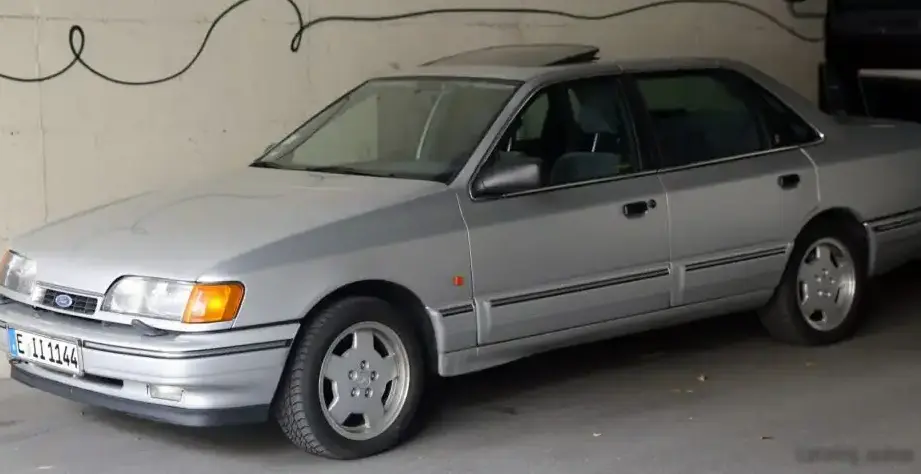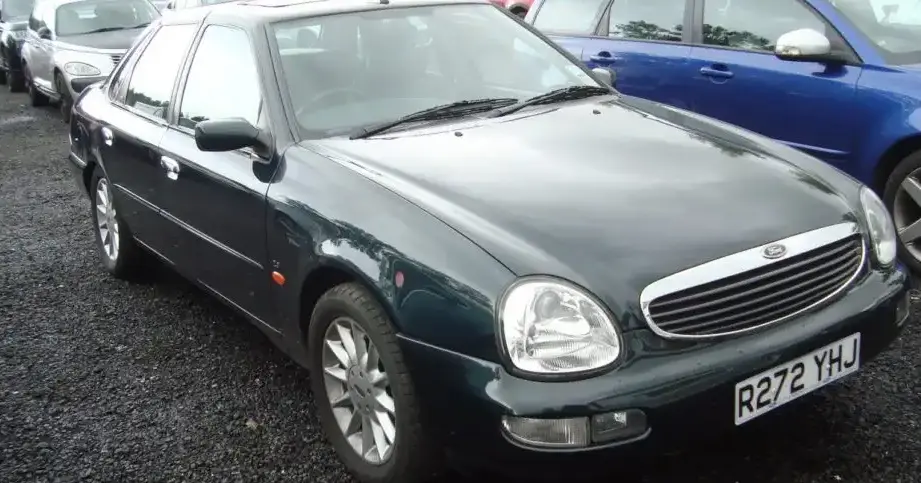
The Ford Scorpio II 2.5 TD, produced between 1996 and 1998, represented a significant offering in Ford’s European executive car lineup. Falling within the GFR and GGR chassis codes, this variant aimed to provide a blend of performance and economy for buyers seeking a spacious, comfortable, and capable saloon. Positioned as a mid-range option within the Scorpio II range, it slotted between the lower-powered petrol engines and the flagship V6 models. The Scorpio II, as a whole, was intended to replace the aging Granada and Scorpio I, offering a more modern design and improved technology. This 2.5-liter turbodiesel version was particularly popular in markets where diesel fuel was more affordable and long-distance driving was common.
Technical Specifications
| Brand | Ford |
| Model | Scorpio |
| Generation | Scorpio II (GFR,GGR) |
| Type (Engine) | 2.5 TD (125 Hp) |
| Start of production | 1996 |
| End of production | 1998 |
| Powertrain Architecture | Internal Combustion engine |
| Body type | Sedan |
| Seats | 5 |
| Doors | 4 |
| Fuel consumption (urban) | 11.2 l/100 km (21 US mpg, 25.2 UK mpg, 8.9 km/l) |
| Fuel consumption (extra urban) | 6.6 l/100 km (35.6 US mpg, 42.8 UK mpg, 15.2 km/l) |
| Fuel Type | Diesel |
| Acceleration 0 – 100 km/h | 11.1 sec |
| Acceleration 0 – 62 mph | 11.1 sec |
| Acceleration 0 – 60 mph | 10.5 sec |
| Maximum speed | 198 km/h (123.03 mph) |
| Weight-to-power ratio | 12.4 kg/Hp, 80.9 Hp/tonne |
| Weight-to-torque ratio | 5.3 kg/Nm, 189.6 Nm/tonne |
| Power | 125 Hp @ 4200 rpm |
| Power per litre | 50 Hp/l |
| Torque | 293 Nm @ 2000 rpm (216.11 lb.-ft. @ 2000 rpm) |
| Engine layout | Front, Longitudinal |
| Engine Model/Code | SCD |
| Engine displacement | 2500 cm3 (152.56 cu. in.) |
| Number of cylinders | 4 |
| Engine configuration | Inline |
| Cylinder Bore | 92 mm (3.62 in.) |
| Piston Stroke | 94 mm (3.7 in.) |
| Compression ratio | 21.5:1 |
| Number of valves per cylinder | 2 |
| Fuel injection system | Precombustion chamber injection |
| Engine aspiration | Turbocharger, Intercooler |
| Valvetrain | SOHC |
| Engine oil capacity | 6.6 l (6.97 US qt | 5.81 UK qt) |
| Kerb Weight | 1545 kg (3406.14 lbs.) |
| Max. weight | 2125 kg (4684.82 lbs.) |
| Max load | 580 kg (1278.68 lbs.) |
| Trunk (boot) space – minimum | 490 l (17.3 cu. ft.) |
| Trunk (boot) space – maximum | 1300 l (45.91 cu. ft.) |
| Fuel tank capacity | 70 l (18.49 US gal | 15.4 UK gal) |
| Length | 4825 mm (189.96 in.) |
| Width | 1760 mm (69.29 in.) |
| Height | 1388 mm (54.65 in.) |
| Wheelbase | 2770 mm (109.06 in.) |
| Front track | 1478 mm (58.19 in.) |
| Rear (Back) track | 1495 mm (58.86 in.) |
| Minimum turning circle | 10.4 m (34.12 ft.) |
| Drivetrain Architecture | Rear wheel drive |
| Number of gears | 5 gears, manual transmission |
| Front suspension | Independent type McPherson, Transverse stabilizer |
| Rear suspension | Transverse stabilizer, Trailing arm, Coil spring |
| Front brakes | Ventilated discs |
| Rear brakes | Disc |
| Assisting systems | ABS (Anti-lock braking system) |
| Steering type | Steering rack and pinion |
| Power steering | Hydraulic Steering |
| Tires size | 195/65 R15 |
| Wheel rims size | 6J x 15 |
Powertrain & Engine Architecture
The heart of the Scorpio II 2.5 TD was the SCD engine, a 2.5-liter inline-four cylinder diesel. This engine utilized precombustion chamber injection, a system common in European diesels of the era. This system involved injecting fuel into a precombustion chamber connected to the main cylinder, promoting more complete combustion and reducing noise. A turbocharger with an intercooler was employed to boost power output to 125 horsepower and 293 Nm (216 lb-ft) of torque. The engine’s longitudinal mounting allowed for a rear-wheel-drive configuration, a traditional layout for executive cars of this type. The five-speed manual transmission was the standard offering, providing a balance between fuel efficiency and driver control. While an automatic transmission was available on some Scorpio II models, it was less commonly paired with the 2.5 TD engine.
Driving Characteristics
The 2.5 TD Scorpio offered a distinctly different driving experience compared to its petrol-powered siblings. While lacking the outright acceleration of the V6 models, the turbodiesel provided ample torque from low engine speeds, making it well-suited for relaxed cruising and effortless overtaking on highways. The 0-60 mph time of around 10.5 seconds was respectable for the period, but the engine’s character was more about usability than outright speed. The manual transmission, while offering good control, had a relatively long throw. The rear-wheel-drive configuration provided balanced handling, although it wasn’t particularly sporty. The focus was on comfort and stability, making it a capable long-distance tourer.
Equipment & Trim Levels
The 2.5 TD Scorpio typically came equipped with a reasonable level of standard features. This included central locking, electric front windows, power steering, and an adjustable steering column. Interior upholstery was generally cloth, although leather options were available. Higher trim levels added features such as air conditioning, a sunroof, and upgraded audio systems. The dashboard layout was functional and straightforward, prioritizing ease of use over stylistic flair. Optional extras included alloy wheels, a trip computer, and heated front seats.
Chassis & Braking
The Scorpio II utilized an independent McPherson strut suspension at the front, providing a comfortable ride and predictable handling. The rear suspension employed a trailing arm setup with coil springs and a transverse stabilizer bar. Braking was handled by ventilated discs at the front and solid discs at the rear. Anti-lock braking system (ABS) was standard, enhancing safety and control during emergency braking. The chassis was designed to provide a good balance between ride comfort and handling stability, catering to the needs of a discerning driver.
Market Reception & Comparison
The Scorpio II 2.5 TD was generally well-received by automotive critics, particularly for its fuel efficiency and comfortable ride. It offered a compelling alternative to other executive cars in the European market, such as the BMW 5 Series and the Mercedes-Benz E-Class. Compared to the petrol-powered Scorpio variants, the 2.5 TD offered significantly better fuel economy, making it a popular choice for high-mileage drivers. However, it lacked the refinement and performance of the V6 models. The 2.5 TD was often seen as a more practical and economical choice, appealing to buyers who prioritized value and usability over outright performance.
Legacy
The Ford Scorpio II 2.5 TD, while not a particularly rare or collectible car today, has developed a following among enthusiasts who appreciate its robust engineering and practical design. The SCD engine, while not known for being particularly high-tech, is generally considered reliable and durable when properly maintained. Finding well-maintained examples can be challenging, as many have accumulated high mileage. However, the Scorpio II 2.5 TD remains a capable and comfortable classic car, offering a unique driving experience and a glimpse into the era of large, rear-wheel-drive saloons. Parts availability can be an issue, but a dedicated network of owners and suppliers helps to keep these cars on the road.