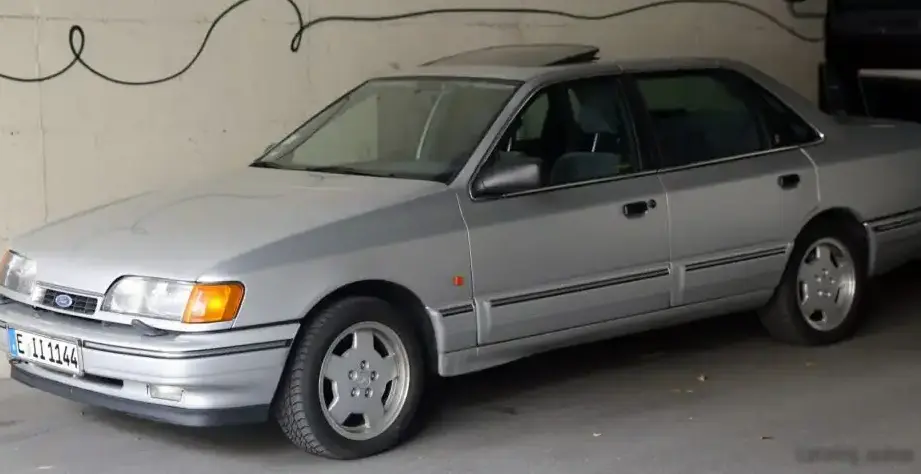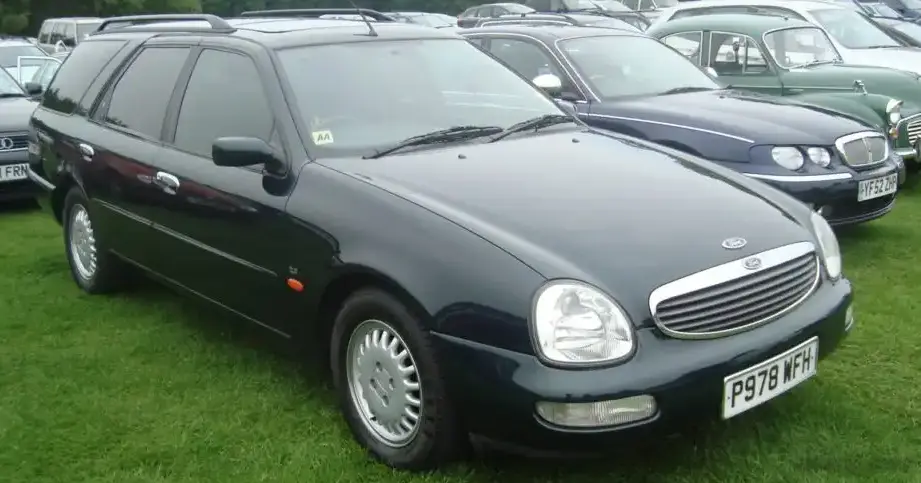
The Ford Scorpio II Turnier 2.9i 24V, produced between 1994 and 1998, represented the top-of-the-line performance variant of Ford’s large executive estate car. Part of the second generation Scorpio (Mk II), the Turnier – Ford’s designation for its station wagon models – aimed to combine practicality with a sporting driving experience. This particular model, equipped with the 2.9-liter V6 engine and a four-speed automatic transmission, occupied the premium segment of the Scorpio lineup, positioned above the four-cylinder models and below the more specialized, high-performance options available in some European markets. The Scorpio II, and the Turnier in particular, was primarily aimed at the European market, offering a spacious and well-equipped alternative to rivals like the Volvo 960 Estate and the BMW 5 Series Touring.
Technical Specifications
| Brand | Ford |
| Model | Scorpio |
| Generation | Scorpio II Turnier |
| Type (Engine) | 2.9 i 24V (207 Hp) |
| Start of production | 1994 |
| End of production | 1998 |
| Powertrain Architecture | Internal Combustion engine |
| Body type | Station wagon (estate) |
| Seats | 5 |
| Doors | 5 |
| Fuel consumption (combined) | 10.9 l/100 km (21.6 US mpg, 25.9 UK mpg, 9.2 km/l) |
| Fuel Type | Petrol (Gasoline) |
| Acceleration 0 – 100 km/h | 9.2 sec |
| Acceleration 0 – 62 mph | 9.2 sec |
| Acceleration 0 – 60 mph | 8.7 sec |
| Maximum speed | 215 km/h (133.59 mph) |
| Weight-to-power ratio | 8 kg/Hp, 124.7 Hp/tonne |
| Weight-to-torque ratio | 5.9 kg/Nm, 169.3 Nm/tonne |
| Power | 207 Hp @ 6000 rpm |
| Power per litre | 70.5 Hp/l |
| Torque | 281 Nm @ 4200 rpm (207.25 lb.-ft. @ 4200 rpm) |
| Engine layout | Front, Longitudinal |
| Engine Model/Code | BOB |
| Engine displacement | 2935 cm3 (179.1 cu. in.) |
| Number of cylinders | 6 |
| Engine configuration | V-engine |
| Cylinder Bore | 93 mm (3.66 in.) |
| Piston Stroke | 72 mm (2.83 in.) |
| Compression ratio | 9.7:1 |
| Number of valves per cylinder | 4 |
| Fuel injection system | Multi-port manifold injection |
| Engine aspiration | Naturally aspirated engine |
| Valvetrain | DOHC |
| Engine oil capacity | 4.5 l (4.76 US qt | 3.96 UK qt) |
| Coolant | 9.5 l (10.04 US qt | 8.36 UK qt) |
| Kerb Weight | 1660 kg (3659.67 lbs.) |
| Max. weight | 2200 kg (4850.17 lbs.) |
| Max load | 540 kg (1190.5 lbs.) |
| Trunk (boot) space – minimum | 550 l (19.42 cu. ft.) |
| Trunk (boot) space – maximum | 1020 l (36.02 cu. ft.) |
| Fuel tank capacity | 70 l (18.49 US gal | 15.4 UK gal) |
| Length | 4826 mm (190 in.) |
| Width | 1760 mm (69.29 in.) |
| Width including mirrors | 1875 mm (73.82 in.) |
| Height | 1442 mm (56.77 in.) |
| Wheelbase | 2770 mm (109.06 in.) |
| Front track | 1478 mm (58.19 in.) |
| Rear (Back) track | 1495 mm (58.86 in.) |
| Drivetrain Architecture | Rear wheel drive |
| Number of gears and type of gearbox | 4 gears, automatic transmission |
| Front suspension | Wishbone |
| Rear suspension | Coil spring |
| Front brakes | Ventilated discs |
| Rear brakes | Ventilated discs |
| Assisting systems | ABS (Anti-lock braking system), Hydraulic Power steering |
| Tires size | 205/60 R15 |
Powertrain & Engine Architecture
The heart of the Scorpio II Turnier 2.9i 24V is the Ford BOB engine, a 2.9-liter, 60-degree V6. This engine, a descendant of the Cologne V6 family, featured a dual overhead camshaft (DOHC) design with four valves per cylinder, contributing to its relatively high output for the time. The engine utilized multi-port fuel injection, carefully managing fuel delivery for optimal combustion. The 24-valve configuration, combined with a compression ratio of 9.7:1, allowed for a respectable 207 horsepower at 6000 rpm and 281 Nm (207.25 lb-ft) of torque at 4200 rpm. Paired with this engine was a four-speed automatic transmission, designed to provide smooth shifts and convenient operation. While not known for its outright speed compared to manual transmission variants or later, more advanced automatics, this transmission was reliable and well-suited to the Scorpio’s grand touring character.
Driving Characteristics
The 2.9i 24V automatic Scorpio Turnier offered a comfortable and refined driving experience. The automatic transmission, while not offering the driver engagement of a manual, provided smooth gear changes and made the car easy to drive in a variety of conditions. Acceleration from 0-60 mph took approximately 8.7 seconds, which was adequate for the time but not particularly sporty. The engine delivered its peak torque at a relatively low 4200 rpm, providing good mid-range punch for overtaking and cruising. Compared to the manual transmission versions, the automatic felt slightly less responsive, but the convenience factor was a significant draw for many buyers. The rear-wheel-drive layout contributed to balanced handling, although the Scorpio’s considerable weight (1660 kg / 3659.67 lbs) meant it wasn’t a particularly nimble vehicle.
Equipment & Trim Levels
The 2.9i 24V Turnier typically came well-equipped, reflecting its position as a premium trim level. Standard features often included central locking, electric windows, power steering, an anti-lock braking system (ABS), and a decent audio system. Interior upholstery was typically cloth, although leather options were available. Dashboard design was functional and straightforward, with a focus on ergonomics. Optional extras could include a sunroof, upgraded audio systems, and climate control. The Turnier’s estate body style added to its practicality, offering a generous 550-1020 liter cargo capacity.
Chassis & Braking
The Scorpio II utilized a traditional body-on-frame construction, contributing to its robust feel. Front suspension employed a wishbone setup, while the rear featured a coil spring arrangement. Braking was handled by ventilated discs on all four wheels, providing adequate stopping power for a vehicle of its weight. The ABS system enhanced safety by preventing wheel lockup during hard braking. Stabilizer bars were fitted to both the front and rear axles to reduce body roll during cornering.
Market Reception & Comparison
The Scorpio II, and particularly the 2.9i 24V automatic variant, received mixed reviews. Critics praised its spacious interior, comfortable ride, and well-equipped nature. However, its styling was often considered bland and uninspired, and its handling wasn’t as sharp as some of its rivals. Fuel economy, at 10.9 l/100 km (21.6 US mpg), was also a point of criticism. Compared to the lower-spec four-cylinder models, the 2.9i 24V offered significantly more performance but at a higher price point and with increased fuel consumption. Against competitors like the Volvo 960 Estate, the Scorpio offered a more affordable option, but lacked the Volvo’s reputation for safety and build quality.
Legacy
The Ford Scorpio II Turnier 2.9i 24V, while not a sales success in the same vein as some of its competitors, remains a fondly remembered vehicle by enthusiasts. The BOB V6 engine is generally considered to be a durable and reliable unit, although regular maintenance is essential. Today, well-maintained examples are becoming increasingly rare and are sought after by collectors and classic car enthusiasts. The automatic transmission, while not the most exciting, has proven to be relatively robust. The Scorpio II Turnier 2.9i 24V represents a unique blend of practicality, comfort, and performance from a bygone era of Ford’s European lineup.