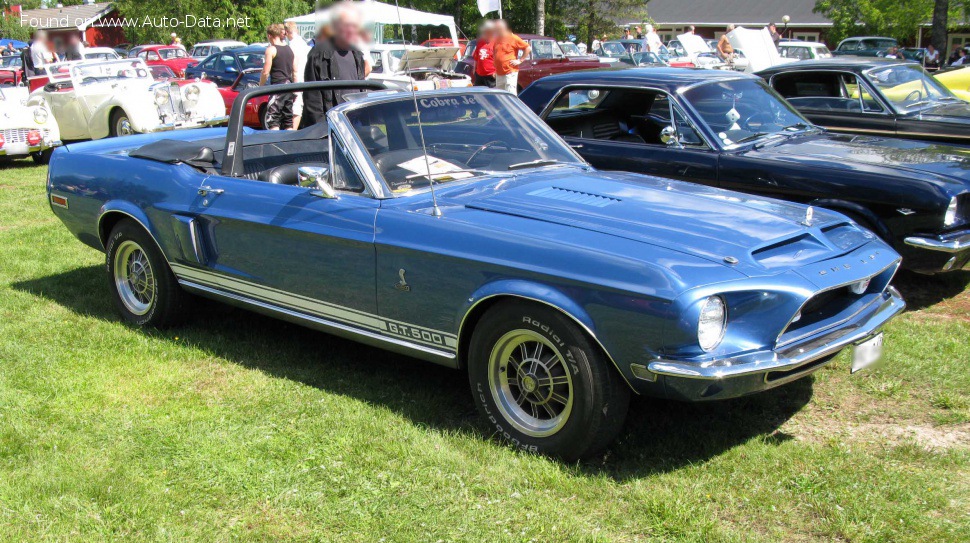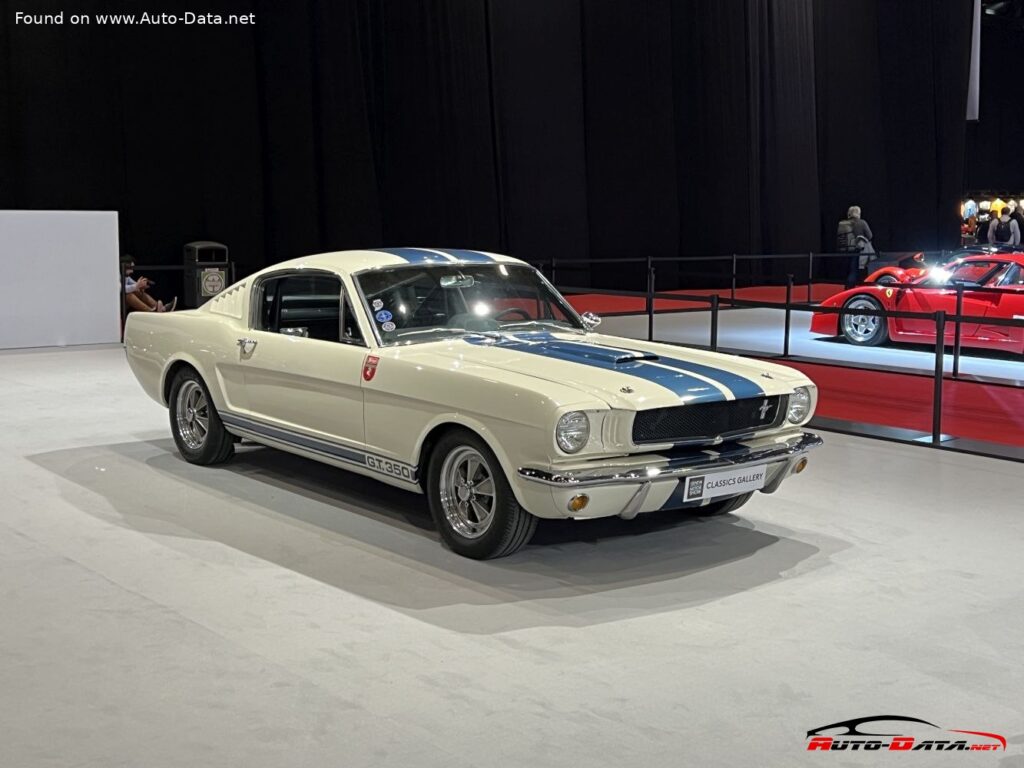
The late 1960s represented the zenith of the American muscle car era, a period defined by raw power, audacious styling, and an unyielding pursuit of performance. At the forefront of this automotive revolution stood the legendary collaboration between Ford Motor Company and the iconic racer and visionary, Carroll Shelby. The result of this formidable partnership was a series of high-performance Mustangs that transcended mere transportation to become symbols of an era. Among the most revered of these machines was the Ford Shelby I Cobra GT 500 7.0 V8 (365 Hp) Automatic, produced from 1968 to 1970.
Representing the first generation of Shelby’s GT 500 lineage based on the redesigned “Cobra Jet” Mustang, this particular model was a formidable grand tourer designed for both blistering straight-line speed and a more refined, albeit still aggressive, driving experience. It carved out a significant niche in the highly competitive muscle car market, appealing to enthusiasts who craved immense power without sacrificing a degree of comfort and road-going sophistication. The GT 500 was not merely a Mustang with a bigger engine; it was a comprehensively re-engineered vehicle, imbued with Shelby’s distinct performance philosophy and aesthetic touches, solidifying its place as an American automotive icon.
The Heart of the Ford Shelby I Cobra GT 500 7.0 V8 (365 Hp) Automatic
At the core of the Ford Shelby I Cobra GT 500 7.0 V8 (365 Hp) Automatic’s formidable reputation was its colossal 7.0-liter (426.98 cubic inch, or approximately 427 cubic inches) V8 engine. This powerplant, mounted longitudinally in the front, was a true marvel of American engineering for its time, belonging to Ford’s venerable FE-series big-block family. Known for its robust construction and immense torque output, this engine delivered a potent 365 horsepower at 5400 rpm. While this figure was impressive for the era, it was often considered conservative, a common practice to appease insurance companies and regulatory bodies, with many believing its true output to be significantly higher.
The engine’s torque characteristics were equally impressive, peaking at a massive 569 Nm (equivalent to 419.67 lb.-ft.) at a relatively low 3200 rpm. This prodigious low-end grunt was crucial for the GT 500’s exhilarating acceleration, allowing it to launch with incredible force and maintain momentum through its broad powerband. The V-engine configuration, with 8 cylinders and 4 valves per cylinder, was fed by a robust carburetor fuel injection system, typical of high-performance engines before the widespread adoption of electronic fuel injection. Its naturally aspirated design further emphasized the raw, unadulterated power delivery, providing an visceral driving experience.
Power was channeled to the rear wheels via a durable 3-speed automatic transmission. While some purists might prefer a manual gearbox, the automatic offered a smooth, effortless driving experience, perfectly suiting the GT 500’s grand touring aspirations. This setup allowed drivers to focus on the road and the sheer power at their disposal, making it a comfortable cruiser for longer distances while still capable of blistering quarter-mile times. The car’s weight-to-power ratio of 4.3 kg/Hp (231.7 Hp/tonne) and weight-to-torque ratio of 2.8 kg/Nm (361.3 Nm/tonne) underscored its exceptional performance capabilities, especially for a vehicle weighing 3472.28 lbs. (1575 kg), making it a truly dominant force on the road.
Iconic Cobra Aesthetic and Design Features
The Ford Shelby I Cobra GT 500 7.0 V8 (365 Hp) Automatic was instantly recognizable, thanks to its aggressive and purposeful design, which skillfully blended the Mustang’s refreshed 1968 body with Shelby’s signature performance cues. As a two-door coupe with seating for four, it retained the Mustang’s essential silhouette but was significantly enhanced to reflect its high-performance nature. Key design elements included a unique front fascia with a blacked-out grille, integrated driving lights (often large, inboard lamps), and a prominent fiberglass hood with functional scoops that hinted at the massive engine beneath. The rear featured sequential turn signals, a design element borrowed from the Ford Thunderbird, and a fiberglass trunk lid with an integrated spoiler for improved aerodynamics and a distinctive visual signature.
The car’s dimensions contributed to its commanding presence: 186.61 inches in length, 70.91 inches in width, and a height of 50.20 inches. The wheelbase measured 108 inches, providing a stable platform for high-speed driving. The GT 500’s suspension was also upgraded from the standard Mustang, featuring stiffer springs, heavy-duty shock absorbers, and a larger diameter front sway bar to improve handling and reduce body roll. Power steering was standard, making the car more manageable despite its considerable size and power. Brakes were power-assisted discs at the front and drums at the rear, a common configuration for the era, though not necessarily optimized for the car’s performance potential by modern standards.
Inside, the GT 500 featured a driver-focused cockpit with bolstered seats, a wood-rimmed steering wheel, and a comprehensive array of gauges, including a tachometer and oil pressure gauge. While not lavishly appointed, the interior was designed to provide a comfortable and functional environment for spirited driving. The emphasis was on providing the driver with the information needed to control the car’s immense power. The overall aesthetic reflected the era’s blend of performance and style, creating a driving experience that was both exhilarating and engaging.
Legacy and Impact
The Ford Shelby I Cobra GT 500 7.0 V8 (365 Hp) Automatic quickly became a cultural icon, representing the pinnacle of American muscle car performance. Its combination of raw power, aggressive styling, and relative comfort made it a desirable vehicle for enthusiasts and collectors alike. The GT 500’s success cemented the Shelby-Ford partnership as one of the most significant collaborations in automotive history. The car’s influence can still be seen in modern performance vehicles, which continue to draw inspiration from its bold design and uncompromising performance.
Today, original GT 500s are highly sought after by collectors, commanding significant prices at auction. They represent a tangible link to a bygone era of automotive excess and innovation, a time when horsepower reigned supreme and the open road beckoned. The Shelby GT 500 remains a symbol of American automotive ingenuity and a testament to the enduring appeal of the muscle car.
| Engine Type | 7.0 L (427 cu in) V8 |
| Horsepower | 365 hp @ 5400 rpm |
| Torque | 569 Nm (419.67 lb-ft) @ 3200 rpm |
| Transmission | 3-speed Automatic |
| Drive Type | Rear-Wheel Drive |
| Weight | 1575 kg (3472.28 lbs) |
| Weight-to-Power Ratio | 4.3 kg/Hp (231.7 Hp/tonne) |
| Weight-to-Torque Ratio | 2.8 kg/Nm (361.3 Nm/tonne) |
| Length | 186.61 in (4740 mm) |
| Width | 70.91 in (1801 mm) |
| Height | 50.20 in (1275 mm) |
| Wheelbase | 108 in (2743 mm) |