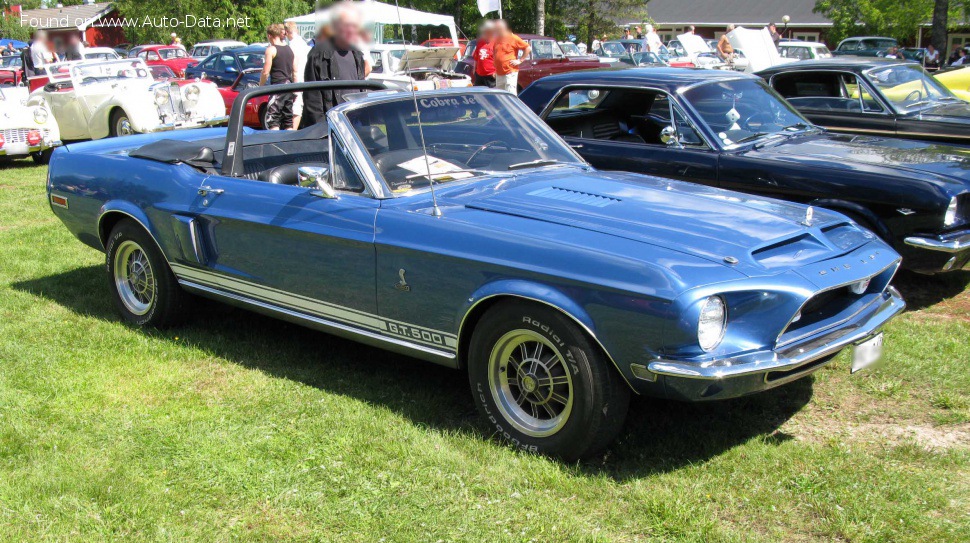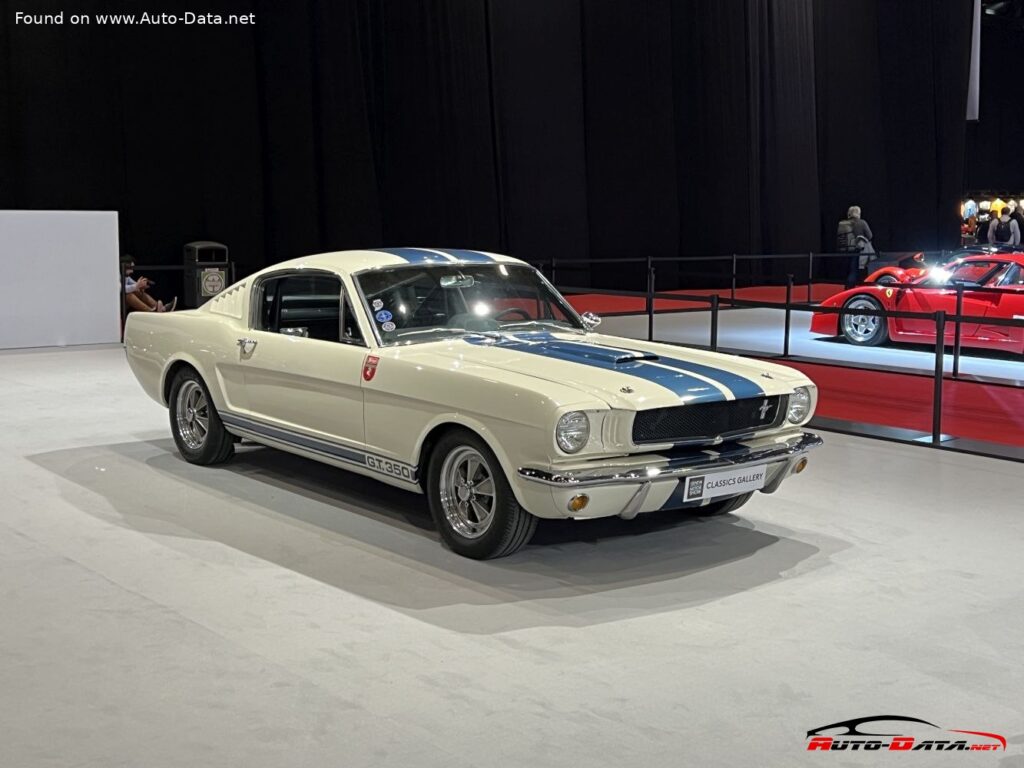
The Ford Shelby GT 350 5.8 V8 (294 Hp), produced between 1969 and 1970, represents a pivotal chapter in American muscle car history. As part of the first-generation Shelby Mustang lineage, this particular iteration, often referred to as the “69-70 Shelby,” marked a significant evolution from its earlier, more minimalist brethren. While still bearing the legendary Shelby name, these cars were increasingly integrated into Ford’s mainstream production, reflecting a shift in strategy while retaining their high-performance DNA. Positioned at the apex of the performance Mustang hierarchy, the GT 350 offered a potent combination of raw power, distinctive styling, and enhanced comfort, aiming to deliver a more refined yet equally thrilling driving experience for the discerning enthusiast. This generation of the Shelby GT 350 competed fiercely in a burgeoning market segment defined by powerful V8 engines, aggressive aesthetics, and a burgeoning youth culture eager for speed and style.
The 1969-1970 Ford Shelby GT 350: A Refined Muscle Car
The late 1960s witnessed the height of the American muscle car era, and the Shelby GT 350 occupied a prominent position within this competitive landscape. These models represented a transition for the Shelby Mustang, moving away from the more raw, race-focused approach of the earlier GT350s and towards a more grand touring experience. While still undeniably powerful, the 1969-1970 versions offered increased refinement and a broader appeal, catering to drivers who desired both performance and a degree of everyday usability. The Shelby name, synonymous with performance tuning and racing success, continued to draw enthusiasts, but the cars themselves were becoming more integrated into Ford’s standard production processes.
Engine & Performance: The Windsor V8
At the core of the 1969-1970 Ford Shelby GT 350 was a 5.8-liter (351.86 cubic inch) naturally aspirated V8 engine, specifically the “Windsor” variant. This engine was chosen for its durability and strong power delivery characteristics. The V8 configuration, with eight cylinders arranged in a V-shape and two valves per cylinder, produced 294 horsepower at 4800 rpm. The engine’s power-per-liter ratio was a respectable 51 horsepower per liter for the period.
However, the GT 350’s true strength lay in its torque output. The engine generated 522 Nm, or 385.01 lb.-ft. of torque, peaking at a relatively low 3200 rpm. This substantial torque provided strong acceleration from a standstill and impressive mid-range responsiveness. Fuel delivery was managed by a traditional carburetor system, contributing to the engine’s distinctive V8 rumble and immediate throttle response.
Power was transmitted to the rear wheels through a robust 4-speed manual transmission, offering drivers direct control over the engine’s output. The rear-wheel-drive layout, combined with a kerb weight of 3600.15 lbs., resulted in a weight-to-power ratio of 5.6 kg per horsepower (approximately 180 horsepower per tonne) and a weight-to-torque ratio of 3.1 kg per Nm (319.7 Nm per tonne). These figures underscored the GT 350’s capability to deliver strong acceleration and a thrilling driving experience. The engine’s front, longitudinal layout contributed to a balanced weight distribution, enhancing handling dynamics.
Design & Features: Aggression and Style
The 1969-1970 Ford Shelby GT 350 boasted a distinctive and aggressive aesthetic that differentiated it from standard Mustangs. The body style was a two-door coupe, designed to accommodate four occupants, although the rear seats were best suited for occasional use. This generation featured a significant restyling compared to earlier Shelbys, with more pronounced scoops, a unique front fascia incorporating a full-width grille and integrated driving lights, and a distinctive rear treatment with sequential turn signals.
The GT 350 measured 185.98 inches in length, 71.3 inches in width, and 51.3 inches in height, with a wheelbase of 107.99 inches. The front and rear tracks were identical at 58.5 inches, contributing to the car’s stable stance. The drag coefficient (Cd) was 0.47, a respectable figure for a performance car of its era, considering its prominent styling cues. Functional elements, such as air scoops on the hood and side panels, were intended to aid in engine cooling and brake ventilation, though their effectiveness was often more aesthetic than practical.
The interior of the Shelby GT 350 was driver-focused, featuring performance-oriented instrumentation. Typical features included high-back bucket seats, a sport steering wheel, and additional gauges to monitor engine vital signs. The GT 350 was also relatively advanced for its time in terms of braking, equipped with disc brakes on all four wheels, providing superior stopping power compared to the drum brakes common on many contemporary vehicles. The minimum turning circle was 37.6 feet, typical for a car of its size and rear-wheel-drive configuration. A 20.08 US gallon fuel tank provided a reasonable cruising range for a powerful V8.
Technical Specifications: Ford Shelby I GT 350 5.8 V8 (294 Hp)
| Category | Specification |
| General Information | |
| Brand | Ford |
| Model | Shelby |
| Generation | Shelby I |
| Engine Type | GT 350 5.8 V8 (294 Hp) |
| Production Start | 1969 |
| Production End | 1970 |
| Powertrain Architecture | Internal Combustion Engine |
| Body Type | Coupe |
| Seats | 4 |
| Doors | 2 |
| Performance Specs | |
| Fuel Type | Petrol (Gasoline) |
| Weight-to-power ratio | 5.6 kg/Hp (180 Hp/tonne) |
| Weight-to-torque ratio | 3.1 kg/Nm (319.7 Nm/tonne) |
| Engine Specs | |
| Power | 294 Hp @ 4800 rpm |
| Power per liter | 51 Hp/l |
| Torque | 522 Nm @ 3200 rpm (385.01 lb.-ft. @ 3200 rpm) |
| Engine Layout | Front, Longitudinal |
| Engine Displacement | 5766 cm3 (351.86 cu. in.) |
| Number of Cylinders | 8 |
| Engine Configuration | V-engine |
| Cylinder Bore | 101.6 mm (4 in.) |
| Piston Stroke | 88.9 mm (3.5 in.) |
| Compression Ratio | 10.7:1 |
| Valves per Cylinder | 2 |
| Fuel Injection System | Carburettor |
| Engine Aspiration | Naturally aspirated engine |
| Space, Volume and Weights | |
| Kerb Weight | 1633 kg (3600.15 lbs.) |
| Fuel Tank Capacity | 76 l (20.08 US gal) |
| Dimensions | |
| Length | 4724 mm (185.98 in.) |
| Width | 1811 mm (71.3 in.) |
| Height | 1303 mm (51.3 in.) |
| Wheelbase | 2743 mm (107.99 in.) |
| Front Track | 1486 mm (58.5 in.) |
| Rear Track | 1486 mm (58.5 in.) |
| Drag Coefficient (Cd) | 0.47 |
| Minimum Turning Circle | 11.46 m (37.6 ft.) |
| Drivetrain, Brakes and Suspension Specs | |
| Drivetrain Architecture | Internal combustion engine drives the rear wheels. |
| Drive Wheel | Rear-wheel drive |
| Number of Gears/Gearbox Type | 4 gears, manual transmission |
| Front Brakes | Disc |
| Rear Brakes | Disc |
The 1969-1970 Ford Shelby GT 350 holds a significant place in the pantheon of American muscle cars. These models were the last to be directly overseen by Carroll Shelby himself, marking the end of an era before the Shelby name was temporarily retired from the Mustang lineup. Their production period coincided with the peak of the muscle car wars, a fiercely competitive time when manufacturers vied for dominance with ever-increasing horsepower figures and aggressive styling.
In the United States, the GT 350 faced competition from rivals such as the Chevrolet Camaro Z/28, Pontiac Firebird Trans Am, Plymouth Barracuda, and Dodge Challenger R/T. While some competitors offered higher horsepower numbers, the GT 350 distinguished itself with a blend of performance, handling (for its time), and the prestige of the Shelby name. Its larger and more luxurious interior, compared to earlier Shelby models, also broadened its appeal.
Despite being produced for only two years, the 1969-1970 Shelby GT 350 has achieved legendary status among collectors and enthusiasts. Its distinct styling, potent V8 engine, and connection to Carroll Shelby ensure its enduring appeal. These vehicles are highly sought after in the classic car market, representing a tangible link to a golden age of American automotive engineering where power, passion, and personality ruled the road. The GT 350’s legacy lies in being one of the final expressions of Shelby’s original vision for the Mustang, making it a cherished piece of automotive history.