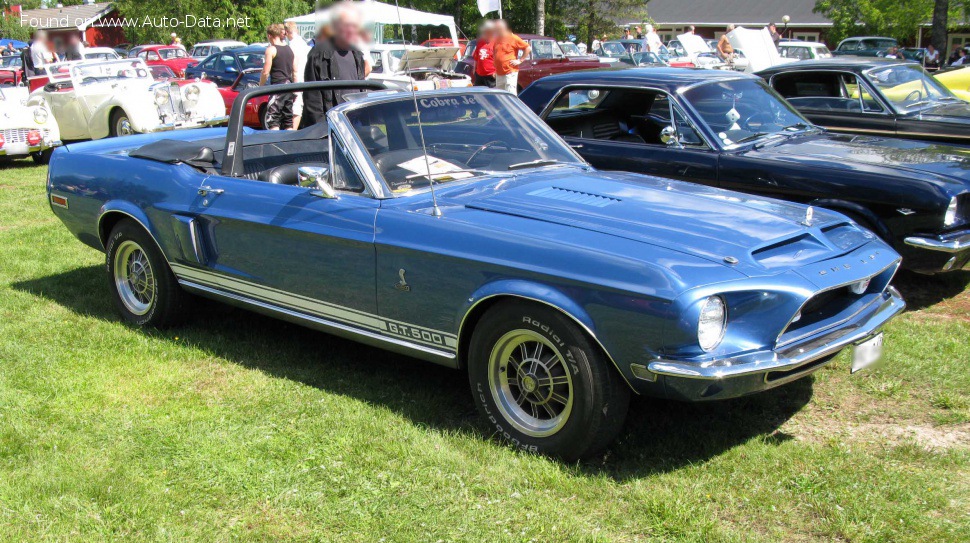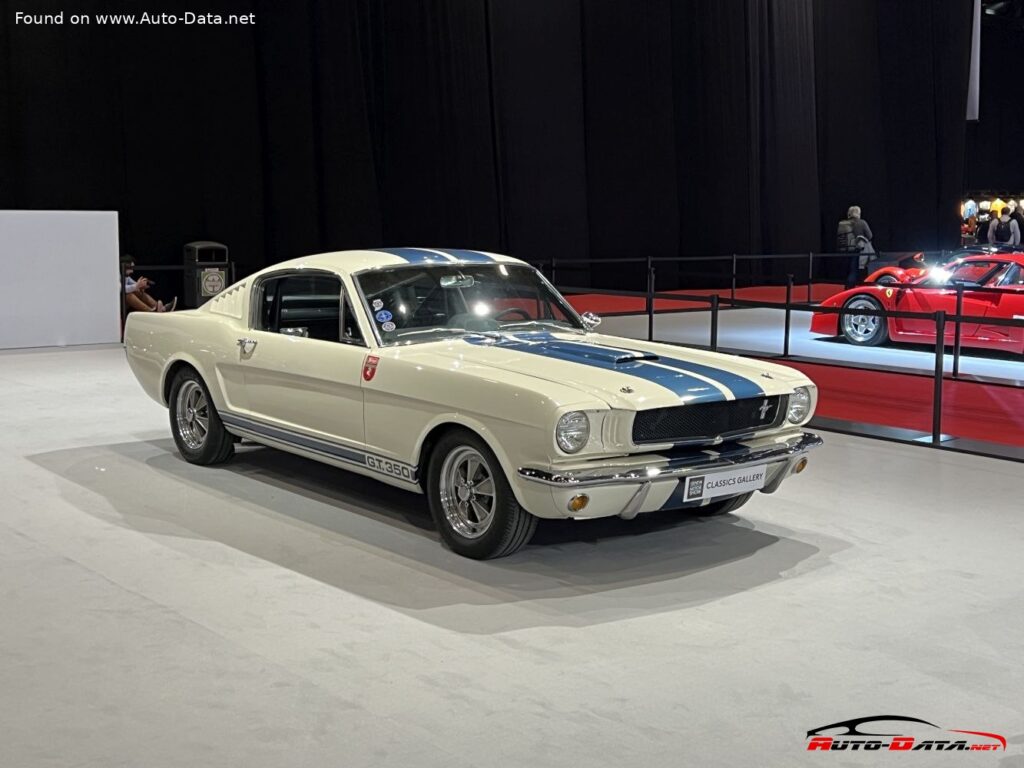
The Ford Shelby I GT 500 7.0 V8 (360 Hp) represents the pinnacle of American muscle car engineering and design during the late 1960s. Produced from 1967 to 1970, this legendary vehicle was a high-performance variant of the Ford Mustang, meticulously re-engineered and enhanced by the iconic Carroll Shelby. Belonging to the first generation of Shelby Mustangs, often referred to as ‘Shelby I,’ the GT 500 was conceived to dominate both the street and the track, offering a potent blend of raw power, distinctive styling, and a driving experience unlike any other.
The Ford Shelby I GT 500: An American Icon
Positioned at the top of the performance hierarchy, the GT 500 was more than just a powerful engine crammed into a Mustang body; it was a comprehensive performance package. It became an instant classic, embodying the spirit of American automotive ingenuity and a fierce competitor in the burgeoning muscle car wars. Its legacy continues to resonate today, making it one of the most sought-after and revered vehicles in automotive history.
Engine & Performance
At the core of the Ford Shelby I GT 500’s formidable reputation was its powertrain. The GT 500 7.0 V8 variant featured a naturally aspirated, front-longitudinal 7.0-liter (6997 cm3 or 426.98 cu. in.) V-engine. This colossal eight-cylinder engine was engineered for brute force, delivering an impressive 360 horsepower at 5400 rpm.
Equally significant was the engine’s torque output, peaking at a massive 420.41 lb.-ft. (570 Nm) at a relatively low 3200 rpm. This characteristic ensured exhilarating acceleration and immense pulling power across a wide rev range. The power per liter stood at a respectable 51.5 Hp/l, showcasing the efficiency of this large-displacement unit for its era. Fueling this engine was a carburettor system, a common and effective method for delivering gasoline in the 1960s.
With a compression ratio of 10.5:1 and four valves per cylinder, the engine was designed for optimal combustion and power delivery. Power was channeled to the rear wheels via a robust 4-speed manual transmission, providing the driver with direct control over the engine’s immense output. The drivetrain architecture, with its rear-wheel-drive setup, was quintessential for American muscle cars, offering thrilling dynamics and a visceral connection between driver and machine.
Weighing in at 3287.09 lbs. (1491 kg), the GT 500 boasted a favorable weight-to-power ratio of 4.1 kg/Hp (241.4 Hp/tonne) and a weight-to-torque ratio of 2.6 kg/Nm (382.3 Nm/tonne). These figures underscored its exceptional performance capabilities, allowing it to accelerate with startling ferocity and maintain impressive speed.
Design & Features
The design of the Ford Shelby I GT 500 was as aggressive and purposeful as its performance. As a 2-door coupe with seating for four, it retained the fundamental lines of the Mustang but was significantly enhanced with Shelby’s signature styling cues. Its length of 186.61 inches (4740 mm), width of 70.91 inches (1801 mm), and height of 51.61 inches (1311 mm) gave it a commanding presence on the road, further accentuated by its wide stance with both front and rear tracks measuring 57.99 inches (1473 mm).
Aesthetically, the GT 500 featured unique fiberglass body panels, including an extended nose, integrated spoiler, and distinctive scoops that were not merely decorative but functional, aiding in engine cooling and aerodynamic stability. The iconic racing stripes, optional on many Shelby models, became synonymous with its high-performance persona. The drag coefficient, recorded at 0.47, reflected the era’s understanding of aerodynamics, prioritizing muscular aesthetics.
The GT 500 was equipped with ventilated disc brakes at the front, a significant upgrade for improved stopping power, while the rear utilized drum brakes. While not as sophisticated as modern systems, this setup was considered advanced for its time and capable of handling the car’s considerable speeds. The suspension was tuned for a more aggressive ride and better handling than a standard Mustang, reflecting its racing pedigree. The minimum turning circle of 38.06 ft. (11.6 m) further indicated its status as a powerful, road-focused machine.
Technical Specifications
| Category | Specification |
| General Information | |
| Brand | Ford |
| Model | Shelby |
| Generation | Shelby I |
| Type (Engine) | GT 500 7.0 V8 (360 Hp) |
| Start of production | 1967 year |
| End of production | 1970 year |
| Powertrain Architecture | Internal Combustion engine |
| Body type | Coupe |
| Seats | 4 |
| Doors | 2 |
| Performance Specs | |
| Fuel Type | Petrol (Gasoline) |
| Weight-to-power ratio | 4.1 kg/Hp, 241.4 Hp/tonne |
| Weight-to-torque ratio | 2.6 kg/Nm, 382.3 Nm/tonne |
| Engine Specs | |
| Power | 360 Hp @ 5400 rpm |
| Power per liter | 51.5 Hp/l |
| Torque | 570 Nm @ 3200 rpm (420.41 lb.-ft. @ 3200 rpm) |
| Engine layout | Front, Longitudinal |
| Engine displacement | 6997 cm3 (426.98 cu. in.) |
| Number of cylinders | 8 |
| Engine configuration | V-engine |
| Cylinder Bore | 104.9 mm (4.13 in.) |
| Piston Stroke | 101.19 mm (3.98 in.) |
| Compression ratio | 10.5:1 |
| Number of valves per cylinder | 4 |
| Fuel injection system | Carburettor |
| Engine aspiration | Naturally aspirated engine |
| Space, Volume and Weights | |
| Kerb Weight | 1491 kg (3287.09 lbs.) |
| Fuel tank capacity | 64 l (16.91 US gal) |
| Dimensions | |
| Length | 4740 mm (186.61 in.) |
| Width | 1801 mm (70.91 in.) |
| Height | 1311 mm (51.61 in.) |
| Wheelbase | 2743 mm (107.99 in.) |
| Front track | 1473 mm (57.99 in.) |
| Rear (Back) track | 1473 mm (57.99 in.) |
| Drag coefficient (Cd) | 0.47 |
| Minimum turning circle (turning diameter) | 11.6 m (38.06 ft.) |
| Drivetrain, Brakes and Suspension Specs | |
| Drivetrain Architecture | The Internal combustion engine (ICE) drives the rear wheels of the vehicle. |
| Drive wheel | Rear wheel drive |
| Number of gears and type of gearbox | 4 gears, manual transmission |
| Front brakes | Ventilated discs |
| Rear brakes | Drum |
Legacy and Market Impact
The Ford Shelby I GT 500 7.0 V8 (360 Hp) was not just a car; it was a cultural phenomenon that profoundly impacted the American automotive landscape. Its introduction in 1967 came at the height of the muscle car era, where manufacturers vied for supremacy in horsepower, speed, and street presence. The GT 500 quickly carved out its niche as a premium, high-performance option, offering a level of exclusivity and performance that set it apart.
Competitors of the GT 500 included the Chevrolet Corvette, Pontiac GTO, Plymouth Barracuda, and Dodge Charger R/T. However, the Shelby GT 500, with its direct ties to Carroll Shelby’s racing heritage and the Mustang’s burgeoning popularity, offered a unique blend of track-proven performance and road-going comfort. It served as a halo car for Ford, demonstrating the capabilities of its performance division and attracting enthusiasts.
Beyond its raw performance, the GT 500 became an icon in popular culture, appearing in numerous films, television shows, and songs, further cementing its status as a symbol of American power and freedom. Its aggressive styling, coupled with its thunderous engine note, made it instantly recognizable and deeply desirable. Carroll Shelby’s vision was to create a car that could be driven daily but was also capable of winning races, and the GT 500 embodied this philosophy perfectly.
Today, the Ford Shelby I GT 500 is a highly prized collectible, with well-preserved examples fetching significant prices at auction. Its rarity, historical significance, and enduring appeal among collectors and enthusiasts ensure its place as one of the most important and celebrated American performance cars ever built. The legacy of the GT 500 continues to inspire new generations of muscle cars and performance vehicles, standing as a testament to an era when horsepower reigned supreme and automotive legends were forged on the street and the track.