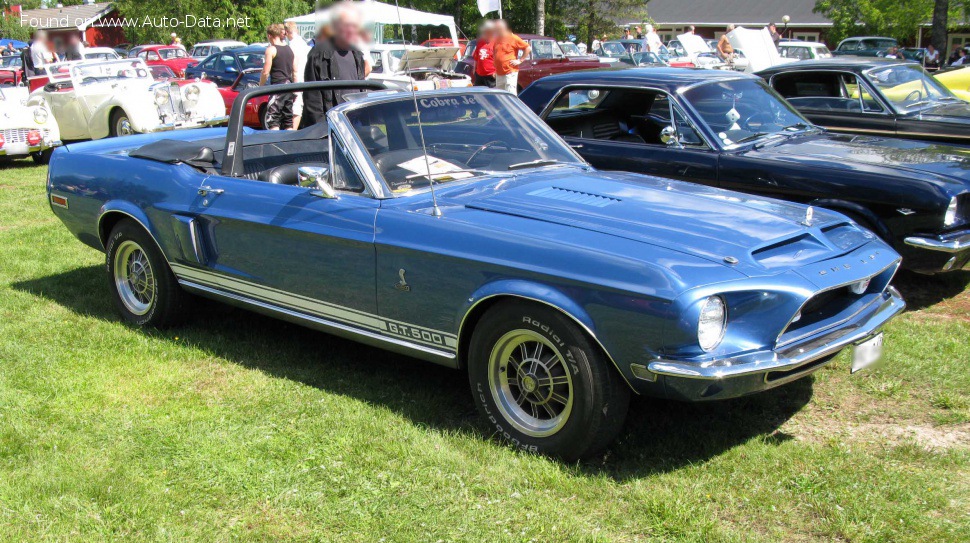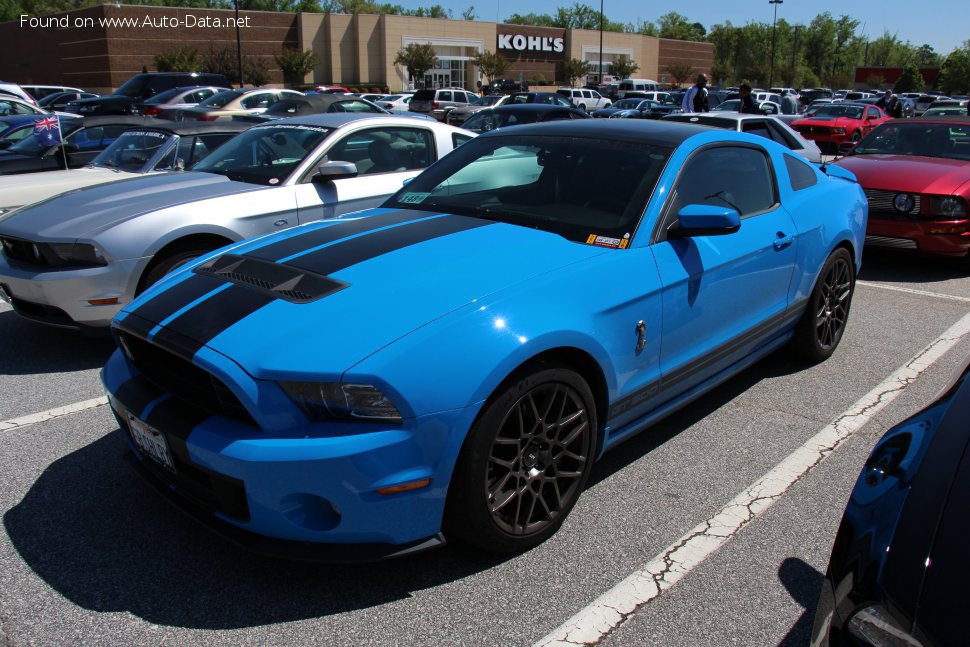
The Ford Shelby GT500, specifically the Shelby II (facelift) produced from 2010 to 2014, represents the pinnacle of Ford’s Mustang performance heritage. This iteration of the GT500 was a significant leap forward in terms of power, handling, and overall refinement compared to its predecessors. Positioned as the highest-performance variant of the fifth-generation Mustang (S197), the Shelby GT500 targeted enthusiasts seeking a track-capable muscle car with aggressive styling and a commanding presence. While the Mustang was a staple in the American pony car market, the Shelby GT500 elevated the platform to compete with higher-end sports cars.
The 2010-2014 Ford Shelby GT500: A Performance Icon
The 2010 facelift brought substantial changes to the GT500, solidifying its reputation as a serious performance machine. Beyond the visual updates, Ford engineers focused on improving the car’s dynamics and cooling capabilities to handle the increased power output. The Shelby GT500 wasn’t just about straight-line speed; it was engineered to deliver a more engaging and controlled driving experience, making it a favorite among both street and track enthusiasts. The model continued through 2014 with incremental improvements, maintaining its position as a dominant force in the muscle car segment.
Engine & Performance
At the heart of the 2010-2014 Shelby GT500 lies a 5.4-liter supercharged V8 engine, designated as the Modular engine family. This powerplant produced a formidable 548 horsepower at 6,200 rpm and 692 Nm (510.39 lb.-ft.) of torque at 4,500 rpm. The supercharger, coupled with an intercooler, provided significant boost, contributing to the engine’s impressive output. Power per liter was an impressive 101.3 hp/l. The engine featured a longitudinal front-mounted layout, utilizing multi-port fuel injection and a double overhead camshaft (DOHC) valvetrain with four valves per cylinder. The 8.4:1 compression ratio was carefully tuned to balance performance and reliability. The engine required 6.1 liters (6.45 US quarts / 5.37 UK quarts) of oil and 20 liters (21.13 US quarts / 17.6 UK quarts) of coolant. The GT500 was available with a 6-speed manual transmission, delivering a direct and engaging driving experience. The rear-wheel-drive configuration and a weight-to-power ratio of 3.2 kg/Hp (307.9 Hp/tonne) allowed for exhilarating acceleration and dynamic handling.
Design & Features
The Shelby GT500 is instantly recognizable by its aggressive styling cues. The 2010 facelift included a revised front fascia with a more prominent grille, a unique hood with functional vents, and distinctive side skirts. The rear featured a redesigned decklid spoiler and sequential taillights. The coupe body style, with two doors and seating for four, provided a sporty and practical layout. The car’s dimensions were substantial, measuring 4780 mm (188.19 in.) in length, 1877 mm (73.9 in.) in width, and 1384 mm (54.49 in.) in height, with a wheelbase of 2720 mm (107.09 in.). The front and rear tracks measured 1572 mm (61.89 in.) and 1587 mm (62.48 in.) respectively.
Beyond its aesthetics, the Shelby GT500 incorporated several performance-enhancing features. The braking system consisted of ventilated discs on all four wheels, complemented by an Anti-lock Braking System (ABS) for improved stopping power and control. The steering system utilized a rack and pinion setup for precise handling. The car rode on 18-inch wheels, fitted with high-performance tires – 255/45 ZR18 at the front and 285/40 ZR18 at the rear – to maximize grip. The drag coefficient of 0.35 contributed to its aerodynamic efficiency. The minimum turning circle was 11.27 m (36.98 ft.).
Technical Specifications
| Brand | Ford |
| Model | Shelby |
| Generation | Shelby II (facelift 2010) |
| Type (Engine) | GT 500 5.4 V8 (548 Hp) |
| Start of production | 2010 |
| End of production | 2014 |
| Powertrain Architecture | Internal Combustion engine |
| Body type | Coupe |
| Seats | 4 |
| Doors | 2 |
| Fuel consumption (economy) – urban | 16.8 l/100 km (14 US mpg / 16.8 UK mpg) |
| Fuel consumption (economy) – extra urban | 10.7 l/100 km (22 US mpg / 26.4 UK mpg) |
| Fuel consumption (economy) – combined | 13.8 l/100 km (17 US mpg / 20.5 UK mpg) |
| Fuel Type | Petrol (Gasoline) |
| Weight-to-power ratio | 3.2 kg/Hp |
| Weight-to-torque ratio | 2.6 kg/Nm |
| Power | 548 Hp @ 6200 rpm |
| Power per litre | 101.3 Hp/l |
| Torque | 692 Nm @ 4500 rpm (510.39 lb.-ft. @ 4500 rpm) |
| Engine layout | Front, Longitudinal |
| Engine displacement | 5408 cm3 (330.02 cu. in.) |
| Number of cylinders | 8 |
| Engine configuration | V-engine |
| Cylinder Bore | 90.2 mm (3.55 in.) |
| Piston Stroke | 105.8 mm (4.17 in.) |
| Compression ratio | 8.4:1 |
| Number of valves per cylinder | 4 |
| Fuel injection system | Multi-port manifold injection |
| Engine aspiration | Supercharger, Intercooler |
| Valvetrain | DOHC |
| Engine oil capacity | 6.1 l (6.45 US qt | 5.37 UK qt) |
| Coolant | 20 l (21.13 US qt | 17.6 UK qt) |
| Kerb Weight | 1780 kg (3924.23 lbs.) |
| Fuel tank capacity | 60 l (15.85 US gal | 13.2 UK gal) |
| Length | 4780 mm (188.19 in.) |
| Width | 1877 mm (73.9 in.) |
| Height | 1384 mm (54.49 in.) |
| Wheelbase | 2720 mm (107.09 in.) |
| Front track | 1572 mm (61.89 in.) |
| Rear (Back) track | 1587 mm (62.48 in.) |
| Drag coefficient (Cd) | 0.35 |
| Minimum turning circle (turning diameter) | 11.27 m (36.98 ft.) |
| Drivetrain Architecture | Rear wheel drive |
| Number of gears and type of gearbox | 6 gears, manual transmission |
| Front brakes | Ventilated discs |
| Rear brakes | Ventilated discs |
| Assisting systems | ABS (Anti-lock braking system) |
| Steering type | Steering rack and pinion |
| Tires size | 255/45 ZR18; 285/40 ZR18 |
| Wheel rims size | 18 |
The Ford Shelby GT500 (2010-2014) remains a highly sought-after muscle car, celebrated for its raw power, aggressive styling, and engaging driving experience. It represents a significant chapter in the Mustang’s history and continues to be a benchmark for performance in the American automotive landscape.