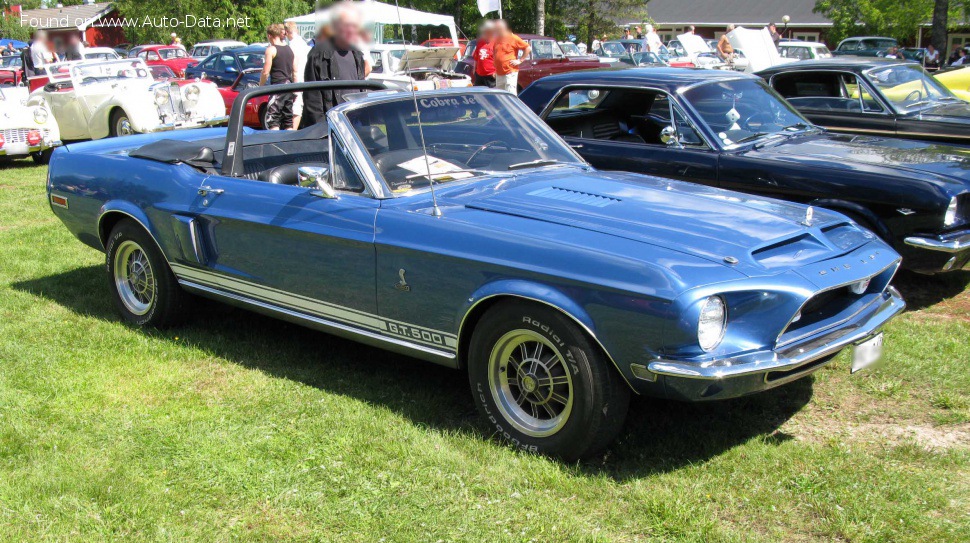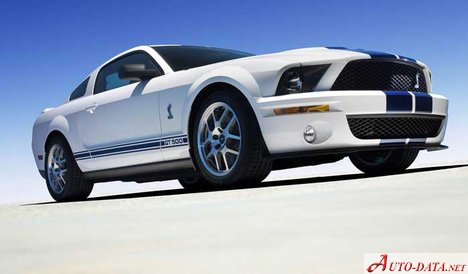
The Ford Shelby II GT, produced between 2007 and 2009, represents a continuation of the iconic Shelby Mustang lineage, though distinct from the original Shelby Mustangs of the 1960s. This model, based on the fifth-generation Ford Mustang, was primarily aimed at the European market, where it offered a high-performance American muscle car experience with a focus on handling and driver engagement. While not officially sold in the United States, the Shelby II GT filled a niche for enthusiasts seeking a powerful and visually striking coupe. It served as a bridge between the classic Shelby heritage and the modern Mustang platform, offering a unique blend of American power and European sensibilities.
The Ford Shelby II GT: A Modern Muscle Car
The Shelby II GT was conceived as a more focused and refined performance variant of the standard Mustang. It wasn’t a direct competitor to the Shelby GT500 sold in North America, instead targeting drivers who appreciated a more balanced driving experience. The vehicle’s development involved significant input from Shelby Automobiles, ensuring it adhered to the performance standards associated with the Shelby name. The Shelby II GT aimed to deliver a thrilling driving experience through a combination of a potent V8 engine, upgraded suspension components, and distinctive styling cues.
Engine & Performance
At the heart of the Shelby II GT lies a 4.6-liter V8 engine, producing 324 horsepower at 5750 rpm and 447 Newton-meters (329.69 lb.-ft.) of torque at 4500 rpm. This naturally aspirated engine, featuring multi-port fuel injection, delivers robust performance and a classic V8 soundtrack. The engine’s longitudinal front-engine layout contributes to a balanced weight distribution, enhancing handling characteristics. Power is transmitted to the rear wheels via a 5-speed manual transmission, providing drivers with complete control over the vehicle’s performance. The power-to-weight ratio of 4.7 kg/Hp (212.5 Hp/tonne) and torque-to-weight ratio of 3.4 kg/Nm (293.1 Nm/tonne) highlight the vehicle’s impressive performance capabilities. Fuel consumption is rated at 14.7 liters per 100 kilometers (16 US mpg, 19.2 UK mpg) in urban conditions, 10.2 liters per 100 kilometers (23.1 US mpg, 27.7 UK mpg) in extra-urban driving, and 12.4 liters per 100 kilometers (19 US mpg, 22.8 UK mpg) combined.
Design & Features
The Shelby II GT is a two-door coupe with seating for four passengers. Its exterior design incorporates distinctive Shelby styling elements, including a unique front fascia, side skirts, and a rear spoiler. These modifications not only enhance the vehicle’s visual appeal but also contribute to improved aerodynamics. The car’s dimensions are 4765 mm (187.6 in) in length, 1877 mm (73.9 in) in width, and 1372 mm (54.02 in) in height, with a wheelbase of 2720 mm (107.09 in). The interior features sport seats, a leather-wrapped steering wheel, and unique Shelby badging, creating a driver-focused environment. Safety features include an Anti-lock Braking System (ABS) and ventilated disc brakes on the front, with disc brakes on the rear, providing confident stopping power. The vehicle rides on 18-inch wheels fitted with 235/50 ZR18 tires, contributing to its sporty handling. The minimum turning circle is 11.5 meters (37.73 ft).
Technical Specifications
| Brand | Ford |
| Model | Shelby |
| Generation | Shelby II |
| Type (Engine) | GT 4.6 V8 (324 Hp) |
| Start of production | 2007 |
| End of production | 2009 |
| Powertrain Architecture | Internal Combustion engine |
| Body type | Coupe |
| Seats | 4 |
| Doors | 2 |
| Fuel consumption (urban) | 14.7 l/100 km (16 US mpg, 19.2 UK mpg) |
| Fuel consumption (extra urban) | 10.2 l/100 km (23.1 US mpg, 27.7 UK mpg) |
| Fuel consumption (combined) | 12.4 l/100 km (19 US mpg, 22.8 UK mpg) |
| Fuel Type | Petrol (Gasoline) |
| Weight-to-power ratio | 4.7 kg/Hp |
| Weight-to-torque ratio | 3.4 kg/Nm |
| Power | 324 Hp @ 5750 rpm |
| Power per litre | 70.4 Hp/l |
| Torque | 447 Nm @ 4500 rpm (329.69 lb.-ft. @ 4500 rpm) |
| Engine layout | Front, Longitudinal |
| Engine displacement | 4601 cm3 (280.77 cu. in.) |
| Number of cylinders | 8 |
| Engine configuration | V-engine |
| Cylinder Bore | 90.2 mm (3.55 in.) |
| Piston Stroke | 90 mm (3.54 in.) |
| Compression ratio | 9.8:1 |
| Number of valves per cylinder | 3 |
| Fuel injection system | Multi-port manifold injection |
| Engine aspiration | Naturally aspirated engine |
| Kerb Weight | 1525 kg (3362.05 lbs.) |
| Fuel tank capacity | 60 l (15.85 US gal | 13.2 UK gal) |
| Length | 4765 mm (187.6 in.) |
| Width | 1877 mm (73.9 in.) |
| Height | 1372 mm (54.02 in.) |
| Wheelbase | 2720 mm (107.09 in.) |
| Front track | 1582 mm (62.28 in.) |
| Rear track | 1587 mm (62.48 in.) |
| Minimum turning circle | 11.5 m (37.73 ft.) |
| Drivetrain Architecture | Rear wheel drive |
| Number of gears and type of gearbox | 5 gears, manual transmission |
| Front brakes | Ventilated discs |
| Rear brakes | Disc |
| Assisting systems | ABS (Anti-lock braking system) |
| Steering type | Steering rack and pinion |
| Tires size | 235/50 ZR18 |
| Wheel rims size | 18 |
The Ford Shelby II GT, while not a mainstream success in terms of sales volume, remains a significant vehicle in the Mustang’s history. It represents a unique attempt to blend American muscle car performance with European market preferences, offering a compelling alternative for enthusiasts seeking a distinctive and engaging driving experience. Its legacy lies in its contribution to the ongoing evolution of the Shelby brand and its demonstration of Ford’s commitment to delivering high-performance vehicles to a global audience.