
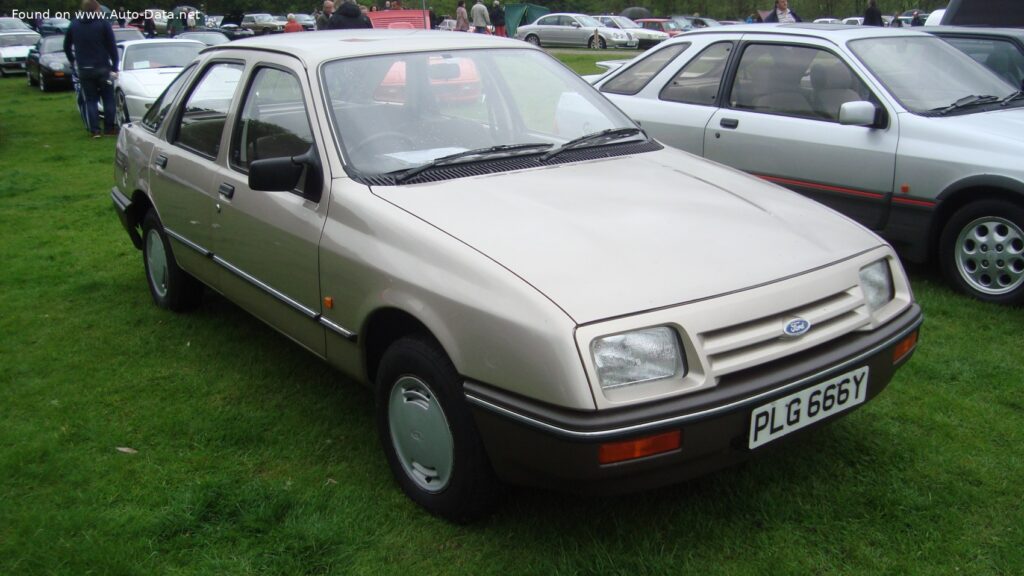
The Ford Sierra, launched in 1982, represented a significant departure for Ford of Europe, replacing the long-running and increasingly dated Cortina. The Sierra, particularly the Hatchback I 2.3 model, was a thoroughly modern design for its time, embracing aerodynamic styling and a new platform. While not officially sold in the United States, the Sierra was a crucial model for Ford in the European market, competing with vehicles like the Opel Ascona and Volkswagen Passat. The 2.3-liter variant, producing 114 horsepower, offered a balance of performance and economy, making it a popular choice for family transportation and everyday driving. The Sierra’s impact extended beyond its sales figures; it introduced new manufacturing techniques and a fresh design language that influenced subsequent Ford models.
Ford Sierra Hatchback I 2.3 (114 Hp): A Detailed Overview
The Sierra marked a shift in Ford’s design philosophy. Unlike the boxy, traditional styling of the Cortina, the Sierra featured a more streamlined, aerodynamic profile. This was not merely aesthetic; it was driven by a desire to improve fuel efficiency and reduce drag. The Hatchback I, specifically, offered the practicality of a five-door layout combined with the sporting appeal of a rear-wheel-drive platform. The 2.3-liter engine was positioned longitudinally within the engine bay, contributing to the car’s balanced handling characteristics. The Sierra’s introduction also coincided with a period of significant change in the automotive industry, with manufacturers increasingly focusing on fuel efficiency and safety.
Engine & Performance
The heart of the Sierra Hatchback I 2.3 was its 2.3-liter, naturally aspirated V6 engine. This engine, producing 114 horsepower at 5300 rpm and 176 Nm (129.81 lb.-ft.) of torque at 3000 rpm, provided adequate performance for the time. The power-to-litre ratio of 49.7 hp/l was respectable for a naturally aspirated engine of this displacement in the early 1980s. The engine utilized a carburetor fuel injection system, a common technology at the time, and featured an overhead camshaft (OHC) valvetrain with two valves per cylinder. The longitudinal engine layout and rear-wheel-drive configuration provided a driving experience that was engaging and responsive, particularly for enthusiasts. The 5-speed manual transmission allowed drivers to fully exploit the engine’s power band. While not a sports car, the Sierra 2.3 offered a comfortable and capable driving experience suitable for both commuting and longer journeys.
Design & Features
The Ford Sierra Hatchback I was characterized by its distinctive five-door hatchback body style. This configuration offered a good balance of practicality and accessibility. The car’s aerodynamic shape, with its sloping rear window and integrated spoiler, was a key design feature. Inside, the Sierra offered seating for five passengers and a reasonably spacious cargo area for its size. Safety features, while limited by the standards of today, included ventilated disc brakes on the front wheels and drum brakes on the rear. Hydraulic power steering was also included, making the car easier to maneuver. The interior design was functional and straightforward, reflecting the car’s focus on practicality and affordability. The Sierra’s design represented a significant step forward for Ford, moving away from the more conservative styling of previous models and embracing a more modern and aerodynamic aesthetic. The car’s relatively lightweight construction also contributed to its handling and fuel efficiency.
Technical Specifications
| Brand | Ford |
| Model | Sierra |
| Generation | Sierra Hatchback I |
| Type (Engine) | 2.3 (114 Hp) |
| Start of production | 1982 |
| End of production | 1986 |
| Powertrain Architecture | Internal Combustion engine |
| Body type | Hatchback |
| Seats | 5 |
| Doors | 5 |
| Fuel Type | Petrol (Gasoline) |
| Power | 114 Hp @ 5300 rpm |
| Power per litre | 49.7 Hp/l |
| Torque | 176 Nm @ 3000 rpm / 129.81 lb.-ft. @ 3000 rpm |
| Engine layout | Front, Longitudinal |
| Engine displacement | 2294 cm3 / 139.99 cu. in. |
| Number of cylinders | 6 |
| Engine configuration | V-engine |
| Cylinder Bore | 90.3 mm / 3.56 in. |
| Number of valves per cylinder | 2 |
| Fuel injection system | Carburettor |
| Engine aspiration | Naturally aspirated engine |
| Valvetrain | OHC |
| Fuel tank capacity | 60 l / 15.85 US gal | 13.2 UK gal |
| Length | 4425 mm / 174.21 in. |
| Width | 1694 mm / 66.69 in. |
| Height | 1407 mm / 55.39 in. |
| Wheelbase | 2608 mm / 102.68 in. |
| Front track | 1452 mm / 57.17 in. |
| Rear (Back) track | 1468 mm / 57.8 in. |
| Drivetrain Architecture | The Internal combustion engine (ICE) drives the rear wheels of the vehicle. |
| Drive wheel | Rear wheel drive |
| Number of gears and type of gearbox | 5 gears, manual transmission |
| Front brakes | Ventilated discs |
| Rear brakes | Drum |
| Power steering | Hydraulic Steering |
The Ford Sierra, and the Hatchback I 2.3 model in particular, represents a pivotal moment in Ford of Europe’s history. It was a car that embraced modernity, both in its design and its engineering. While it never officially reached American shores, its influence can be seen in subsequent Ford models and its legacy as a practical, reliable, and engaging family car remains strong among enthusiasts in Europe and beyond.
