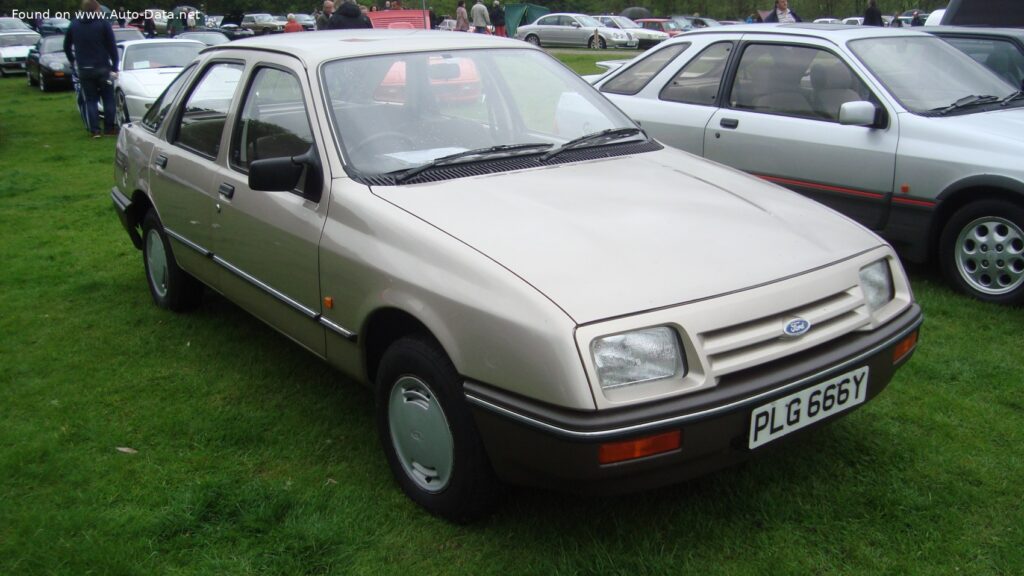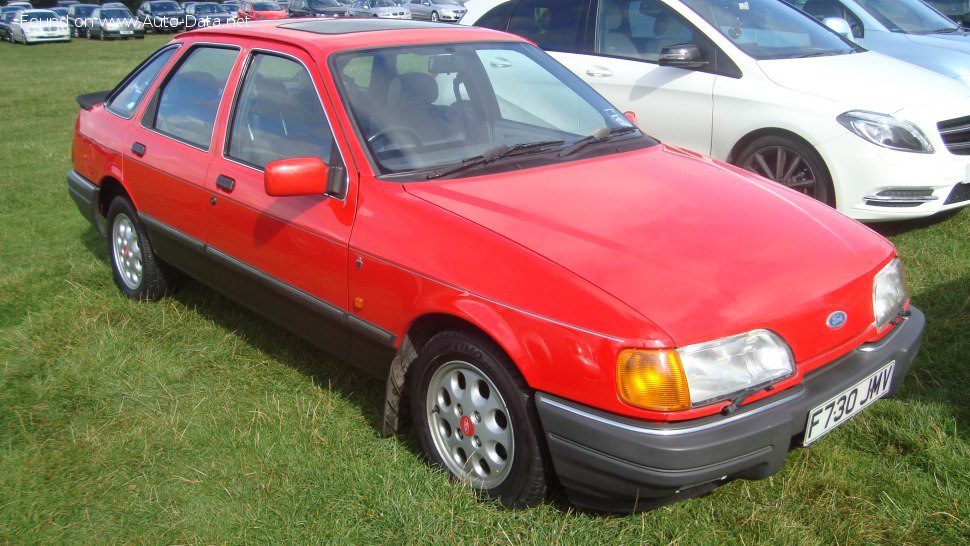
The Ford Sierra, launched in 1982, represented a significant departure from its predecessor, the Cortina. Designed to compete in the mid-size family car segment, the Sierra aimed for a more modern and aerodynamic profile. The Ford Sierra Hatchback II 1.6 i (90 Hp), produced from 1989 to 1993, was a key iteration of this model, offering a practical and relatively affordable option for European buyers. While never officially sold in the United States, the Sierra was a hugely popular vehicle in the UK and across Europe, known for its handling and spaciousness. It played a crucial role in establishing Ford’s presence in the competitive family car market during the late 1980s and early 1990s.
The Ford Sierra Hatchback II 1.6 i (90 Hp): A Detailed Overview
The Sierra underwent a significant facelift in 1986, resulting in the “Series 2” models, often referred to as the Hatchback II. This update brought revised styling, improved aerodynamics, and enhanced interior features. The 1.6 i variant, producing 90 horsepower, was a popular choice, balancing performance with fuel economy. It catered to drivers seeking a practical family car with a reasonable level of driving enjoyment. The Sierra’s rear-wheel-drive layout, while becoming less common in the era, contributed to its engaging handling characteristics, a trait appreciated by enthusiasts.
Engine & Performance
The heart of the Sierra 1.6 i is a 1.6-liter inline-four cylinder petrol engine. This engine, producing 90 horsepower at 5600 rpm and 119 Nm (87.77 lb.-ft.) of torque at 3500 rpm, utilized a single-point fuel injection system. While not a high-performance engine by modern standards, it provided adequate power for everyday driving and cruising. The engine’s longitudinal front-engine layout, coupled with rear-wheel drive, was a defining characteristic of the Sierra. This configuration contributed to a balanced weight distribution and responsive handling. The 5-speed manual transmission allowed drivers to effectively utilize the engine’s power band. Power per litre was rated at 56.4 Hp/l. The engine displacement is 1597 cm3 (97.45 cu. in.) with a cylinder bore of 80 mm (3.15 in.) and a piston stroke of 79.5 mm (3.13 in.). Each cylinder features 2 valves, and the engine is naturally aspirated.
Design & Features
The Sierra Hatchback II is instantly recognizable by its distinctive five-door hatchback body style. This body configuration offered excellent practicality, with a generous cargo area accessible through the rear hatch. The Sierra’s design, penned under the direction of Uwe Bahnsen, was considered quite radical for its time, moving away from the boxy aesthetics of earlier Ford models. The interior of the 1.6 i was functional and reasonably well-equipped for its price point. While not luxurious, it offered comfortable seating for five passengers. Safety features, while limited by the standards of today, included ventilated disc brakes on the front wheels and drum brakes on the rear. Steering was handled by a hydraulic power steering system connected to a steering rack and pinion. The Sierra’s relatively lightweight construction contributed to its nimble handling. The fuel tank capacity is 60 liters (15.85 US gal | 13.2 UK gal).
Technical Specifications
| Brand | Ford |
| Model | Sierra |
| Generation | Sierra Hatchback II |
| Type (Engine) | 1.6 i (90 Hp) |
| Start of production | 1989 year |
| End of production | 1993 year |
| Powertrain Architecture | Internal Combustion engine |
| Body type | Hatchback |
| Seats | 5 |
| Doors | 5 |
| Fuel Type | Petrol (Gasoline) |
| Power | 90 Hp @ 5600 rpm |
| Power per litre | 56.4 Hp/l |
| Torque | 119 Nm @ 3500 rpm |
| Torque (lb.-ft.) | 87.77 lb.-ft. @ 3500 rpm |
| Engine layout | Front, Longitudinal |
| Engine displacement | 1597 cm3 |
| Engine displacement (cu. in.) | 97.45 cu. in. |
| Number of cylinders | 4 |
| Engine configuration | Inline |
| Cylinder Bore | 80 mm |
| Cylinder Bore (in.) | 3.15 in. |
| Piston Stroke | 79.5 mm |
| Piston Stroke (in.) | 3.13 in. |
| Number of valves per cylinder | 2 |
| Fuel injection system | Single-point injection |
| Engine aspiration | Naturally aspirated engine |
| Fuel tank capacity | 60 l |
| Fuel tank capacity (US gal) | 15.85 US gal |
| Fuel tank capacity (UK gal) | 13.2 UK gal |
| Length | 4425 mm |
| Length (in.) | 174.21 in. |
| Width | 1694 mm |
| Width (in.) | 66.69 in. |
| Height | 1407 mm |
| Height (in.) | 55.39 in. |
| Wheelbase | 2608 mm |
| Wheelbase (in.) | 102.68 in. |
| Front track | 1452 mm |
| Front track (in.) | 57.17 in. |
| Rear (Back) track | 1468 mm |
| Rear (Back) track (in.) | 57.8 in. |
| Minimum turning circle (turning diameter) | 10 m |
| Minimum turning circle (turning diameter) (ft.) | 32.81 ft. |
| Drivetrain Architecture | The Internal combustion engine (ICE) drives the rear wheels of the vehicle. |
| Drive wheel | Rear wheel drive |
| Number of gears and type of gearbox | 5 gears, manual transmission |
| Front brakes | Ventilated discs |
| Rear brakes | Drum |
| Steering type | Steering rack and pinion |
| Power steering | Hydraulic Steering |
The Ford Sierra Hatchback II 1.6 i (90 Hp) remains a fondly remembered vehicle for many European drivers. Its blend of practicality, affordability, and engaging handling made it a popular choice in a competitive market. While not a performance icon, it represented a solid and reliable family car that contributed significantly to Ford’s success in the late 1980s and early 1990s. The Sierra paved the way for its successor, the Mondeo, which would continue Ford’s tradition of building well-rounded and popular family cars.