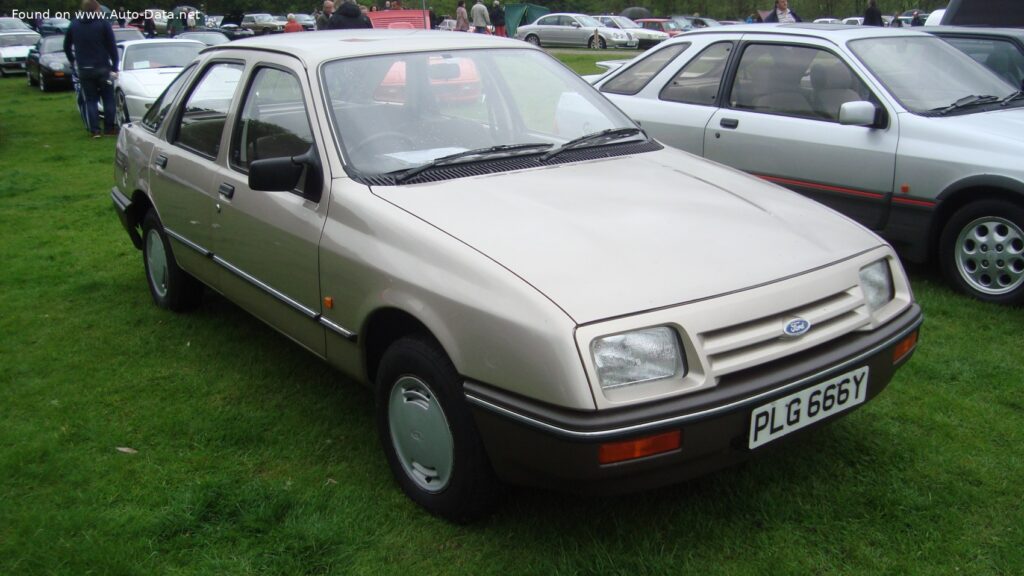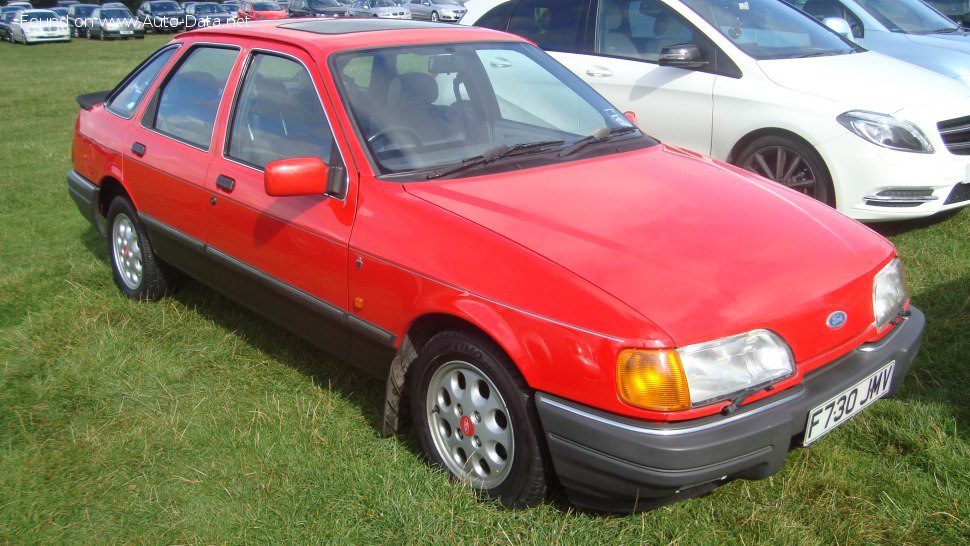
The Ford Sierra, launched in 1982, represented a significant departure from its predecessor, the Cortina. Designed to compete in the mid-size family car segment, the Sierra aimed for a more modern and aerodynamic profile. The Sierra Hatchback II 1.8, produced from 1987 to 1988, was a key iteration of this model, offering a practical and relatively affordable option for European buyers. While never officially sold in the United States, the Sierra was a hugely important vehicle for Ford in Europe, representing a shift towards more contemporary design and engineering. It served as a crucial stepping stone in Ford of Europe’s product lineup, paving the way for future models like the Mondeo.
Ford Sierra Hatchback II 1.8: A Detailed Overview
The Sierra Hatchback II 1.8 occupied a vital space in the European automotive market during the late 1980s. It was positioned as a versatile family vehicle, offering a blend of practicality, affordability, and reasonable performance. The hatchback body style, becoming increasingly popular at the time, provided enhanced accessibility and cargo space compared to traditional saloon (sedan) models. The 1.8-liter engine variant was a popular choice, balancing fuel economy with adequate power for everyday driving. The Sierra, in general, was known for its relatively lightweight construction and responsive handling, characteristics that appealed to drivers seeking a more engaging driving experience.
Engine & Performance
The Ford Sierra Hatchback II 1.8 was powered by Ford’s 1.8-liter inline-four cylinder engine, designated as the RED or REF engine code. This naturally aspirated engine produced 80 horsepower. While this output may seem modest by modern standards, it provided sufficient power for the Sierra’s weight and intended purpose. The engine featured a two-valve-per-cylinder configuration and utilized a carburetor fuel injection system, a common technology for the era. The engine’s power output translated to approximately 44.5 horsepower per liter, a respectable figure for a naturally aspirated engine of that displacement in the late 1980s. The engine was mounted longitudinally in the front of the vehicle, driving the rear wheels. This rear-wheel-drive configuration contributed to the Sierra’s balanced handling characteristics. The vehicle was equipped with a five-speed manual transmission, allowing drivers to optimize engine performance and fuel efficiency. The engine required 3.8 liters (4.02 US quarts, 3.34 UK quarts) of engine oil and 8 liters (8.45 US quarts, 7.04 UK quarts) of coolant.
Design & Features
The Sierra Hatchback II 1.8 featured a distinct five-door hatchback body style. This design offered a practical and versatile cargo area, accessible through a large rear hatch. The Sierra’s exterior design, penned under the direction of Uwe Bahnsen, was notable for its aerodynamic shape, a departure from the more boxy designs of previous Ford models. The car’s relatively low-slung profile and streamlined silhouette contributed to improved fuel efficiency and reduced wind noise. Inside, the Sierra offered seating for five passengers. The interior design was functional and straightforward, prioritizing practicality over luxury. Safety features, while limited by the standards of the time, included ventilated disc brakes on the front wheels and disc brakes on the rear. These braking systems provided adequate stopping power for the vehicle’s weight and performance capabilities. The Sierra’s suspension system was designed to provide a comfortable ride while maintaining responsive handling. The turning circle was a minimum of 10 meters (32.81 feet).
Technical Specifications
| Brand | Ford |
| Model | Sierra |
| Generation | Sierra Hatchback II |
| Type (Engine) | 1.8 (80 Hp) |
| Start of production | 1987 |
| End of production | 1988 |
| Powertrain Architecture | Internal Combustion engine |
| Body type | Hatchback |
| Seats | 5 |
| Doors | 5 |
| Fuel Type | Petrol (Gasoline) |
| Power | 80 Hp |
| Power per litre | 44.5 Hp/l |
| Engine layout | Front, Longitudinal |
| Engine Model/Code | RED, REF |
| Engine displacement | 1796 cm3 |
| Engine displacement (US/UK) | 109.6 cu. in. |
| Number of cylinders | 4 |
| Engine configuration | Inline |
| Number of valves per cylinder | 2 |
| Fuel injection system | Carburettor |
| Engine aspiration | Naturally aspirated engine |
| Engine oil capacity | 3.8 l |
| Engine oil capacity (US/UK) | 4.02 US qt | 3.34 UK qt |
| Coolant | 8 l |
| Coolant (US/UK) | 8.45 US qt | 7.04 UK qt |
| Fuel tank capacity | 60 l |
| Fuel tank capacity (US/UK) | 15.85 US gal | 13.2 UK gal |
| Length | 4425 mm |
| Length (US/UK) | 174.21 in. |
| Width | 1694 mm |
| Width (US/UK) | 66.69 in. |
| Height | 1407 mm |
| Height (US/UK) | 55.39 in. |
| Wheelbase | 2608 mm |
| Wheelbase (US/UK) | 102.68 in. |
| Front track | 1452 mm |
| Front track (US/UK) | 57.17 in. |
| Rear track | 1468 mm |
| Rear track (US/UK) | 57.8 in. |
| Minimum turning circle | 10 m |
| Minimum turning circle (US/UK) | 32.81 ft. |
| Drivetrain Architecture | Rear wheel drive |
| Drive wheel | Rear wheel drive |
| Number of gears | 5 |
| Type of gearbox | manual transmission |
| Front brakes | Ventilated discs |
| Rear brakes | Disc |
The Ford Sierra Hatchback II 1.8, while not a performance car, offered a compelling package of practicality, affordability, and reasonable driving dynamics. Its significance lies in its role as a modernizing force within Ford of Europe’s lineup, and its contribution to the evolution of the family hatchback segment. Though never sold in the US, it remains a fondly remembered vehicle for many European drivers of the era.