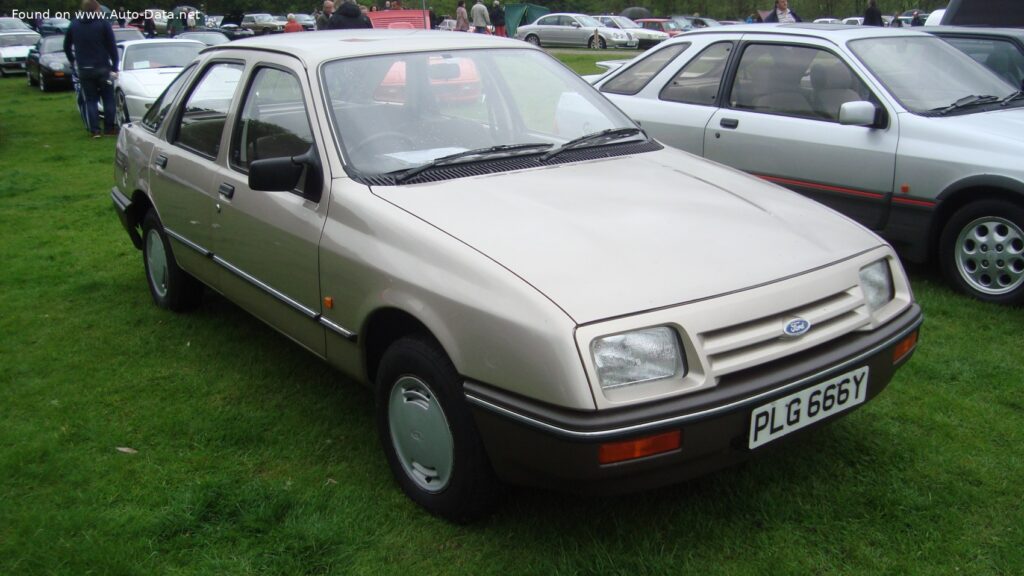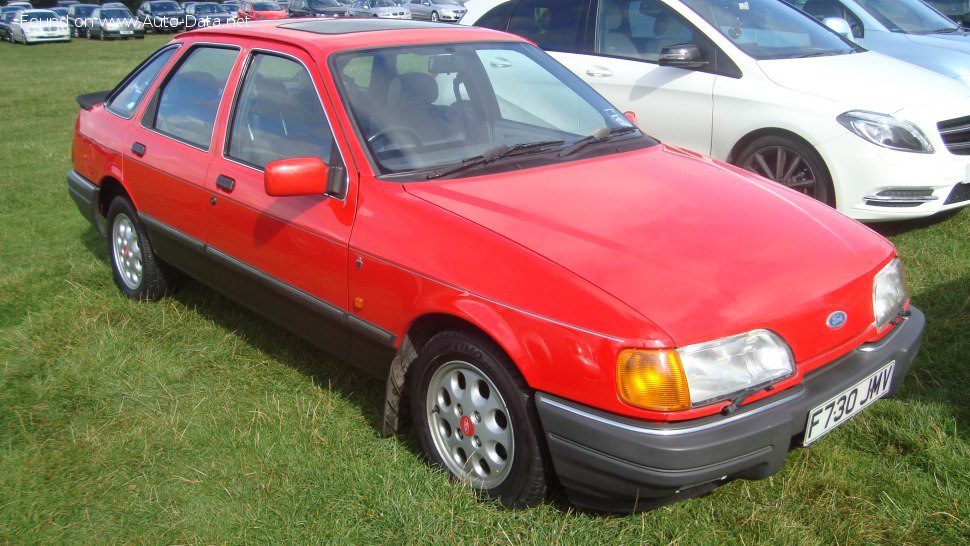
The Ford Sierra, launched in 1982, represented a significant departure from its predecessor, the Cortina. Designed to compete in the mid-size family car segment, the Sierra aimed for a more modern and aerodynamic profile. The Ford Sierra Hatchback II 1.8 (90 Hp) Automatic, produced between 1987 and 1988, was a refinement of the original Sierra, offering a practical and relatively affordable option for European buyers. While never officially sold in the United States, the Sierra was a crucial model for Ford in Europe, embodying the company’s shift towards more contemporary design and engineering. This particular variant, with its 1.8-liter engine and automatic transmission, catered to drivers seeking a balance between performance and convenience.
The Ford Sierra: A European Staple
The Sierra was Ford’s response to increasing competition in the European market from rivals like Opel (Vauxhall), Peugeot, and Renault. It was a clean-sheet design, moving away from the traditional, boxy shapes of earlier Ford models. The hatchback body style, while not entirely new, was becoming increasingly popular, offering greater practicality and versatility. The Sierra’s design was initially controversial, with some critics finding it too radical, but it ultimately proved successful, becoming one of the best-selling cars in Europe during the 1980s. The Sierra underwent several revisions during its production run, with the “Series 2” models, like the 1.8 Automatic, featuring subtle styling updates and mechanical improvements.
Engine & Performance
The Sierra Hatchback II 1.8 Automatic was powered by Ford’s R2A or RED engine, a 1.8-liter naturally aspirated four-cylinder petrol (gasoline) engine. This engine produced 90 horsepower, providing adequate performance for everyday driving. While not a sports car, the Sierra 1.8 offered reasonable acceleration and cruising ability. The engine was paired with a four-speed automatic transmission, making it a comfortable and easy-to-drive option, particularly in urban environments. The rear-wheel-drive configuration was a characteristic of many European cars of the era, offering a different driving experience compared to the front-wheel-drive layouts becoming more common. The engine’s simplicity and durability made it relatively easy to maintain, a key consideration for buyers in the 1980s. Fuel economy, while not exceptional by modern standards, was typical for a car of its size and class at the time.
Design & Features
The Sierra Hatchback II featured a five-door hatchback body style, providing easy access to the rear seats and a relatively spacious cargo area. The design emphasized aerodynamics, with a sloping roofline and flush-fitting windows. The interior was functional and straightforward, with a focus on practicality rather than luxury. The car offered seating for four passengers and was equipped with basic amenities such as a heater, windscreen wipers, and analog instrumentation. Safety features were relatively limited by today’s standards, but the inclusion of an Anti-lock Braking System (ABS) was a notable addition for the time, improving braking performance and stability, especially on slippery surfaces. The Sierra’s design was a significant departure from the more traditional styling of the Cortina, reflecting a broader trend towards more modern and aerodynamic car designs in the 1980s. The car’s relatively lightweight construction contributed to its agility and handling.
A Focus on Practicality
The Sierra’s hatchback configuration was a key selling point, offering greater versatility than traditional saloon (sedan) cars. The rear seats could be folded down to create a larger cargo area, making it suitable for carrying bulky items. The car’s relatively compact dimensions made it easy to maneuver in urban environments, while its comfortable ride quality made it suitable for longer journeys. The Sierra was designed to be a practical and reliable family car, and it fulfilled that role admirably for many European drivers.
Technical Specifications
| Brand | Ford |
| Model | Sierra |
| Generation | Sierra Hatchback II |
| Type (Engine) | 1.8 (90 Hp) Automatic |
| Start of production | 1987 |
| End of production | 1988 |
| Powertrain Architecture | Internal Combustion engine |
| Body type | Hatchback |
| Seats | 4 |
| Doors | 5 |
| Fuel Type | Petrol (Gasoline) |
| Power | 90 Hp |
| Engine Model/Code | R2A, RED |
| Engine aspiration | Naturally aspirated engine |
| Engine oil capacity | 3.8 l / 4.02 US qt | 3.34 UK qt |
| Coolant | 8 l / 8.45 US qt | 7.04 UK qt |
| Fuel tank capacity | 60 l / 15.85 US gal | 13.2 UK gal |
| Length | 4425 mm / 174.21 in. |
| Width | 1694 mm / 66.69 in. |
| Height | 1407 mm / 55.39 in. |
| Wheelbase | 2608 mm / 102.68 in. |
| Front track | 1452 mm / 57.17 in. |
| Rear (Back) track | 1468 mm / 57.8 in. |
| Minimum turning circle (turning diameter) | 10 m / 32.81 ft. |
| Drivetrain Architecture | The Internal combustion engine (ICE) drives the rear wheels of the vehicle. |
| Drive wheel | Rear wheel drive |
| Number of gears and type of gearbox | 4 gears, automatic transmission |
| Front brakes | Ventilated discs |
| Rear brakes | Drum |
| Assisting systems | ABS (Anti-lock braking system) |
The Ford Sierra, and specifically the Hatchback II 1.8 Automatic, represents a significant chapter in Ford’s European history. It was a car that embraced modern design principles and offered a practical and affordable solution for families. While it never reached American shores, its impact on the European automotive landscape was substantial, paving the way for future Ford models and influencing the design direction of its competitors.