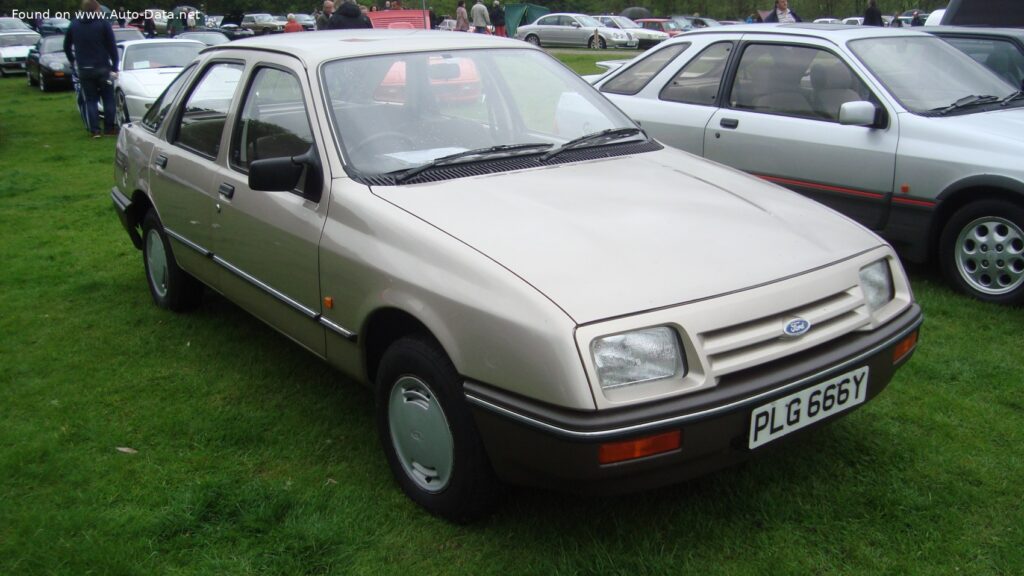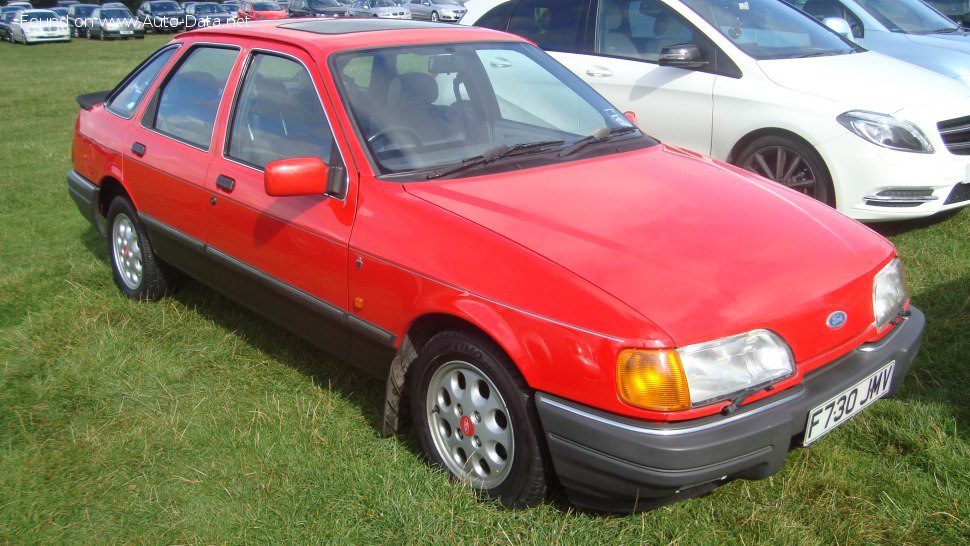
The Ford Sierra Hatchback II 1.8 TD (75 Hp), produced between 1990 and 1993, represents a significant evolution in Ford of Europe’s mid-size family car lineup. The Sierra, intended as a modern replacement for the aging Cortina and Taunus models, aimed to offer a more aerodynamic and technologically advanced package. While not officially sold in the United States, the Sierra was a crucial model for Ford in the European market, competing with vehicles like the Opel/Vauxhall Astra and Volkswagen Escort. The 1.8 TD variant, equipped with a turbocharged diesel engine, catered to buyers prioritizing fuel economy and practicality, a common need in the European automotive landscape.
The Ford Sierra Hatchback II: A European Staple
The Sierra underwent a substantial redesign in 1986, resulting in the “Series 2” or Hatchback II model. This facelift addressed criticisms of the original Sierra’s somewhat angular styling, softening the lines and improving the overall aesthetic. The Hatchback body style, offering five doors and seating for five passengers, became increasingly popular, providing a versatile option for families and individuals alike. The 1.8 TD model specifically targeted those seeking a cost-effective and reliable vehicle for both daily commuting and longer journeys.
Engine & Performance
The heart of the Sierra 1.8 TD is its 1753 cc (106.97 cu. in.) inline-four cylinder diesel engine. This engine, producing 75 horsepower at 4000 rpm and 150 Nm (110.63 lb.-ft.) of torque at 2500 rpm, wasn’t designed for outright speed but for efficiency and durability. The engine utilizes a precombustion chamber injection system, a common diesel technology of the era, and is turbocharged to enhance power output. The longitudinal engine layout, coupled with rear-wheel drive, was a traditional configuration for Ford at the time. Performance figures reflect the engine’s focus: acceleration from 0 to 100 km/h (0-62 mph) takes 16.7 seconds, while 0 to 60 mph is achieved in 15.9 seconds. The top speed is rated at 157 km/h (97.56 mph). Fuel economy is a strong point, with figures of 7.2 l/100 km (32.7 US mpg) in urban driving and 4.9 l/100 km (48 US mpg) on the open road.
Design & Features
The Sierra Hatchback II boasts a practical and functional design. Its five-door hatchback configuration provides easy access to the spacious interior and a reasonably sized cargo area. The exterior styling, while not overtly sporty, was considered modern for its time, with a focus on aerodynamic efficiency. Inside, the Sierra offered a relatively basic but comfortable cabin, typical of vehicles in its class during the early 1990s. Safety features were evolving during this period, and the Sierra included features such as seatbelts, though advanced safety systems like airbags were not yet commonplace. The hydraulic power steering contributed to ease of maneuverability, and the McPherson strut front suspension and trailing arm rear suspension aimed to provide a comfortable ride. The 185/65 R14 tires mounted on 5.5J x 14 steel wheels were standard for the model.
Technical Specifications
| Brand | Ford |
| Model | Sierra |
| Generation | Sierra Hatchback II |
| Type (Engine) | 1.8 TD (75 Hp) |
| Start of production | 1990 year |
| End of production | 1993 year |
| Powertrain Architecture | Internal Combustion engine |
| Body type | Hatchback |
| Seats | 5 |
| Doors | 5 |
| Fuel consumption (urban) | 7.2 l/100 km (32.7 US mpg) |
| Fuel consumption (extra urban) | 4.9 l/100 km (48 US mpg) |
| Fuel Type | Diesel |
| Acceleration 0 – 100 km/h | 16.7 sec |
| Acceleration 0 – 62 mph | 16.7 sec |
| Acceleration 0 – 60 mph | 15.9 sec |
| Maximum speed | 157 km/h (97.56 mph) |
| Power | 75 Hp @ 4000 rpm |
| Torque | 150 Nm @ 2500 rpm (110.63 lb.-ft. @ 2500 rpm) |
| Engine layout | Front, Longitudinal |
| Engine Model/Code | RFA, RFB, RFL |
| Engine displacement | 1753 cm3 (106.97 cu. in.) |
| Number of cylinders | 4 |
| Engine configuration | Inline |
| Cylinder Bore | 82.5 mm (3.25 in.) |
| Piston Stroke | 82 mm (3.23 in.) |
| Compression ratio | 21.5:1 |
| Number of valves per cylinder | 2 |
| Fuel injection system | Precombustion chamber injection |
| Engine aspiration | Turbocharger |
| Valvetrain | SOHC |
| Engine oil capacity | 5.6 l (5.92 US qt | 4.93 UK qt) |
| Coolant capacity | 9.5 l (10.04 US qt | 8.36 UK qt) |
| Fuel tank capacity | 60 l (15.85 US gal | 13.2 UK gal) |
| Permitted trailer load (braked) | 950 kg (2094.39 lbs.) |
| Permitted trailer load (unbraked) | 500 kg (1102.31 lbs.) |
| Length | 4425 mm (174.21 in.) |
| Width | 1694 mm (66.69 in.) |
| Height | 1407 mm (55.39 in.) |
| Wheelbase | 2608 mm (102.68 in.) |
| Front track | 1452 mm (57.17 in.) |
| Rear track | 1468 mm (57.8 in.) |
| Turning circle | 10 m (32.81 ft.) |
| Drivetrain | Rear wheel drive |
| Gearbox | 5 gears, manual transmission |
| Front suspension | Independent type McPherson, Transverse stabilizer |
| Rear suspension | Trailing arm, Coil spring |
| Front brakes | Disc |
| Rear brakes | Drum |
| Steering | Steering rack and pinion, Hydraulic Power Steering |
| Tire size | 185/65 R14 |
| Wheel rims size | 5.5J x 14 |
The Ford Sierra Hatchback II 1.8 TD, while not a performance icon, served as a practical and economical transportation solution for many European drivers. Its blend of fuel efficiency, reasonable space, and Ford’s established reputation for reliability made it a popular choice in a competitive market segment. The Sierra ultimately paved the way for the Ford Mondeo, which continued Ford of Europe’s commitment to modern, family-focused vehicles.