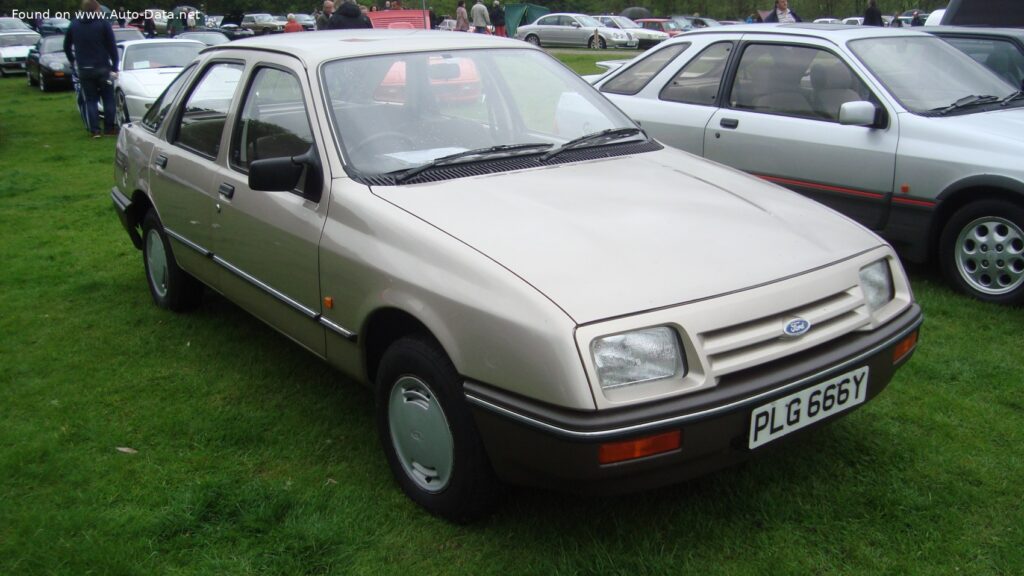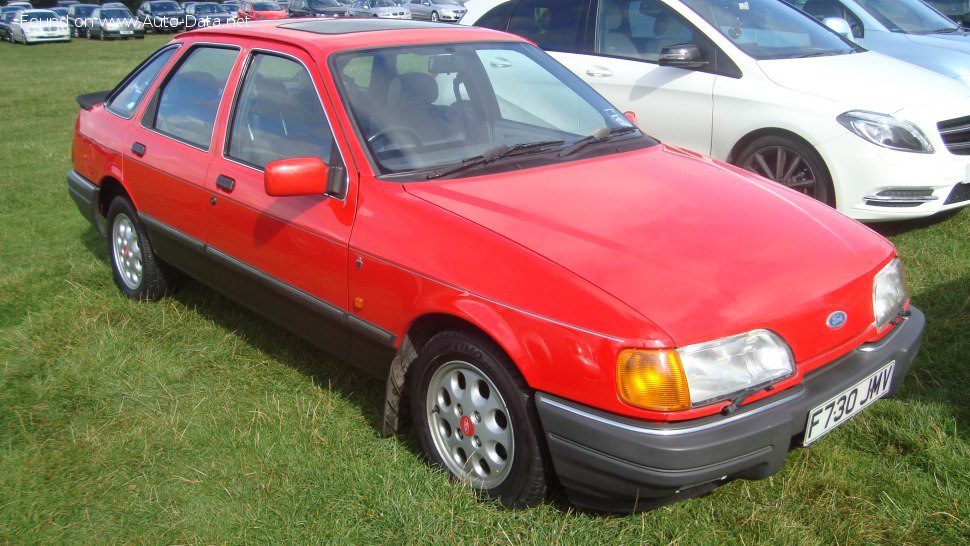
The Ford Sierra, produced between 1982 and 1993, represented a significant departure for Ford of Europe, replacing the long-running Cortina. The Sierra was a thoroughly modern design for its time, embracing aerodynamic styling and a new platform. The Ford Sierra Hatchback II 1.8 TD (75 Hp) Automatic, produced from 1988 to 1993, was a later iteration of the model, offering a diesel-powered option in a practical five-door hatchback body style. While not officially sold in the United States, the Sierra was a popular choice in Europe, competing with vehicles like the Opel/Vauxhall Astra and Volkswagen Escort. This model aimed to provide fuel efficiency and practicality for family and fleet buyers.
Engine & Performance
The Sierra Hatchback II 1.8 TD Automatic was powered by a 1.8-liter inline-four cylinder diesel engine. This engine, designated with codes RFA, RFB, or RFL, produced 75 horsepower at 4000 rpm and 175 Nm (129.07 lb.-ft.) of torque at 1800 rpm. While the horsepower figure might seem modest by modern standards, the diesel engine’s torque delivery provided reasonable performance for everyday driving. The engine featured a high compression ratio of 19.4:1 and utilized a turbocharger to enhance power output. Power per liter was rated at 42.8 Hp/l. The engine was longitudinally mounted at the front of the vehicle, driving the rear wheels through a four-speed automatic transmission. This rear-wheel-drive configuration was a hallmark of Ford’s larger European models at the time, offering a different driving experience compared to the increasingly common front-wheel-drive layouts.
Design & Features
The Sierra Hatchback II was characterized by its aerodynamic, angular design – a significant shift from the more boxy aesthetics of the Cortina it replaced. The five-door hatchback body style offered a practical combination of passenger space and cargo capacity. The interior was functional and designed with durability in mind, reflecting the car’s intended role as a family vehicle. Features were relatively basic compared to modern cars, but included hydraulic power steering as standard. Safety features of the era, such as seatbelts, were present, but advanced safety systems like airbags were not yet commonplace. The Sierra’s design prioritized practicality and affordability, making it a popular choice for those seeking a reliable and economical vehicle. The 60-liter (15.85 US gal) fuel tank provided a good range for longer journeys. The vehicle’s dimensions – 4425 mm (174.21 in) in length, 1694 mm (66.69 in) in width, and 1407 mm (55.39 in) in height – positioned it within the compact family car segment.
Market Context
The Ford Sierra was a crucial model for Ford in Europe, representing a significant investment in a new platform and design philosophy. It was designed to appeal to a broad range of buyers, from families to company car drivers. The introduction of the diesel-powered 1.8 TD Automatic variant broadened the Sierra’s appeal, offering a fuel-efficient option for those covering high mileages. The Sierra’s success helped Ford maintain its position as a leading manufacturer in the European market. The rear-wheel-drive layout, while becoming less common, was appreciated by some drivers for its handling characteristics.
Technical Specifications
| Brand | Ford |
| Model | Sierra |
| Generation | Sierra Hatchback II |
| Type (Engine) | 1.8 TD (75 Hp) Automatic |
| Start of production | 1988 year |
| End of production | 1993 year |
| Powertrain Architecture | Internal Combustion engine |
| Body type | Hatchback |
| Seats | 5 |
| Doors | 5 |
| Fuel Type | Diesel |
| Power | 75 Hp @ 4000 rpm |
| Power per litre | 42.8 Hp/l |
| Torque | 175 Nm @ 1800 rpm / 129.07 lb.-ft. @ 1800 rpm |
| Engine layout | Front, Longitudinal |
| Engine Model/Code | RFA, RFB, RFL |
| Engine displacement | 1753 cm3 / 106.97 cu. in. |
| Number of cylinders | 4 |
| Engine configuration | Inline |
| Cylinder Bore | 82.5 mm / 3.25 in. |
| Piston Stroke | 82 mm / 3.23 in. |
| Compression ratio | 19.4:1 |
| Number of valves per cylinder | 2 |
| Fuel injection system | Diesel Commonrail |
| Engine aspiration | Turbocharger |
| Valvetrain | OHC |
| Engine oil capacity | 5.6 l / 5.92 US qt | 4.93 UK qt |
| Coolant | 9.5 l / 10.04 US qt | 8.36 UK qt |
| Fuel tank capacity | 60 l / 15.85 US gal | 13.2 UK gal |
| Length | 4425 mm / 174.21 in. |
| Width | 1694 mm / 66.69 in. |
| Height | 1407 mm / 55.39 in. |
| Wheelbase | 2608 mm / 102.68 in. |
| Front track | 1452 mm / 57.17 in. |
| Rear (Back) track | 1468 mm / 57.8 in. |
| Minimum turning circle (turning diameter) | 10 m / 32.81 ft. |
| Drivetrain Architecture | The Internal combustion engine (ICE) drives the rear wheels of the vehicle. |
| Drive wheel | Rear wheel drive |
| Number of gears and type of gearbox | 4 gears, automatic transmission |
| Front brakes | Disc |
| Rear brakes | Drum |
| Steering type | Steering rack and pinion |
| Power steering | Hydraulic Steering |