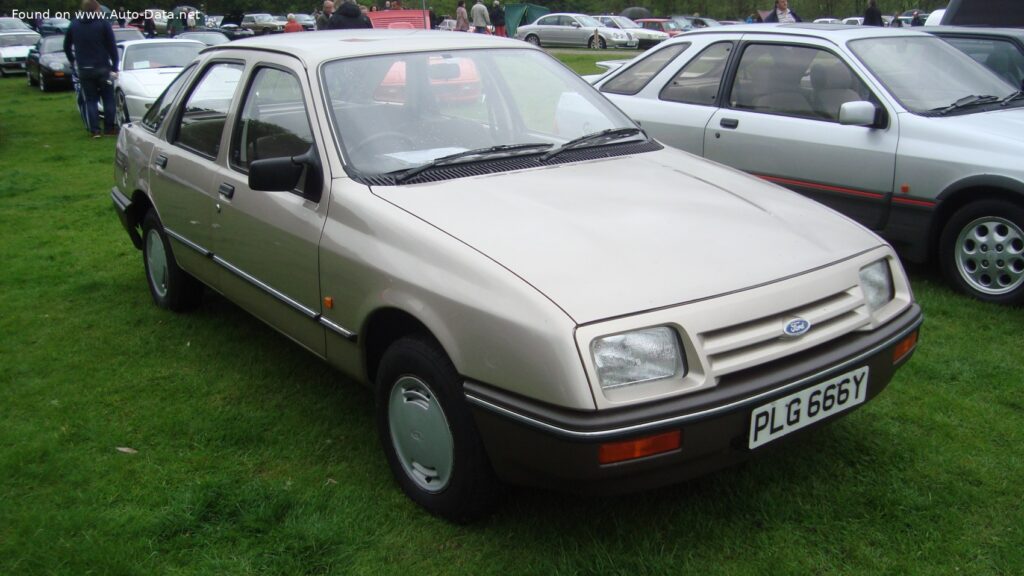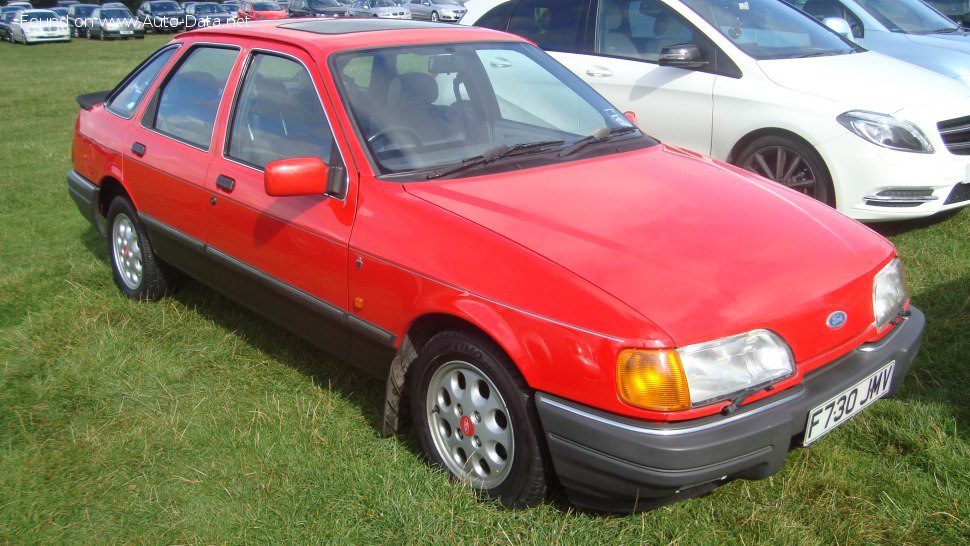
The Ford Sierra Cosworth 4×4, specifically the 2.0 16V CAT variant produced from 1990 to 1993, represents a pivotal moment in Ford’s performance car history. While the Sierra itself was a mainstream family car designed to replace the aging Cortina and Taunus, the Cosworth versions were homologation specials – built to allow Ford to compete in Group A touring car racing. The Sierra Cosworth wasn’t widely sold in the United States, as Ford’s performance focus in the North American market at the time centered around the Mustang and other domestically produced models. However, it achieved legendary status in Europe as a potent and technologically advanced rally and touring car contender, and a desirable road car for enthusiasts. This particular 220 horsepower, catalytic converter-equipped version was the final iteration of the Sierra Cosworth, addressing emissions regulations while maintaining a significant performance edge.
The Ford Sierra Cosworth: A Rally-Bred Icon
The Sierra Cosworth’s development was intrinsically linked to Ford’s motorsport ambitions. The original Sierra, launched in 1982, was a thoroughly modern design for its time, featuring aerodynamic styling and a spacious interior. However, it lacked the sporting pedigree needed to challenge rivals like the BMW E30 and the increasingly competitive offerings from other manufacturers in touring car racing. Ford turned to Cosworth, a renowned engine specialist with a long history in Formula 1 and rally racing, to develop a high-performance engine and associated components. The result was the YB series 2.0-liter, 16-valve engine, initially producing around 150 horsepower in naturally aspirated form, but significantly boosted when turbocharged. The 4×4 variant, introduced later, further enhanced the car’s handling and performance, making it a formidable competitor on both the road and the track.
Engine & Performance
The heart of the Sierra Cosworth 2.0 16V CAT is its naturally aspirated 1,994 cc (2.0L) YB series engine. While the earlier Cosworths were turbocharged, this version opted for a naturally aspirated configuration to meet stricter emissions standards, particularly with the inclusion of a catalytic converter. Despite losing the turbocharger, the engine still produced a respectable 220 horsepower at 6,000 rpm and 195 lb-ft of torque at 4,500 rpm. This power was achieved through a combination of a high compression ratio, optimized cylinder head design, and individual throttle bodies. The engine is paired with a five-speed manual transmission, delivering power to all four wheels via a sophisticated all-wheel-drive system. This system, developed by Ferguson Technology, utilizes a viscous coupling to distribute torque between the front and rear axles, providing excellent traction in a variety of conditions. The 4×4 system was crucial for the car’s success in rallying and touring car racing, allowing it to put its power down effectively even on loose surfaces. Acceleration from 0 to 60 mph was achieved in approximately 6.5 seconds, and the car had a top speed of around 148 mph. While not as brutally fast as the turbocharged versions, the naturally aspirated Cosworth offered a more linear power delivery and a more engaging driving experience.
Design & Features
The Sierra Cosworth’s design was heavily influenced by its motorsport purpose. The most distinctive feature is its large rear wing, which provided significant downforce at high speeds. The car also featured a unique front bumper with integrated fog lights, flared wheel arches to accommodate the wider tires, and a rear diffuser to improve airflow. The hatchback body style offered practicality alongside performance, making it a usable everyday car. Inside, the Cosworth featured supportive Recaro seats, a leather-wrapped steering wheel, and a distinctive instrument cluster with additional gauges to monitor engine performance. The interior, while functional, was relatively spartan, reflecting the car’s focus on driving dynamics. Safety features for the era included seatbelts and a reinforced safety cell, but modern safety systems like airbags and ABS were not available. The Sierra Cosworth was primarily aimed at driving enthusiasts who appreciated its performance capabilities and its connection to Ford’s motorsport heritage. The 4×4 system added weight, but the improved handling and stability were considered worthwhile trade-offs by many drivers. The catalytic converter, while reducing emissions, also slightly impacted performance, but it was a necessary compromise to meet increasingly stringent regulations.
Technical Specifications
| Brand | Ford |
| Model | Sierra |
| Generation | Sierra Hatchback II |
| Type (Engine) | 2.0 16V Cosworth 4×4 CAT (220 Hp) |
| Start of production | 1990 |
| End of production | 1993 |
| Powertrain Architecture | Internal Combustion engine |
| Body type | Hatchback |
| Fuel Type | Petrol (Gasoline) |
| Engine Power | 220 Hp |
| Engine Aspiration | Naturally aspirated engine |
| Engine Displacement | 1,994 cc (2.0L) |
| Torque | 195 lb-ft |
| Transmission | 5-speed manual |
| Drivetrain | All-Wheel Drive (4×4) |
| 0-60 mph | Approximately 6.5 seconds |
| Top Speed | Approximately 148 mph |
The Ford Sierra Cosworth 4×4 CAT remains a highly sought-after classic car, particularly among Ford enthusiasts and motorsport fans. Its combination of performance, handling, and iconic styling has cemented its place in automotive history. While it wasn’t officially sold in the United States, its influence can be seen in subsequent Ford performance models, and it continues to be celebrated as a benchmark for affordable, rally-bred performance cars. The Sierra Cosworth represents a golden era of Ford’s engineering prowess and its commitment to motorsport, and it continues to provide an exhilarating driving experience for those fortunate enough to own one.