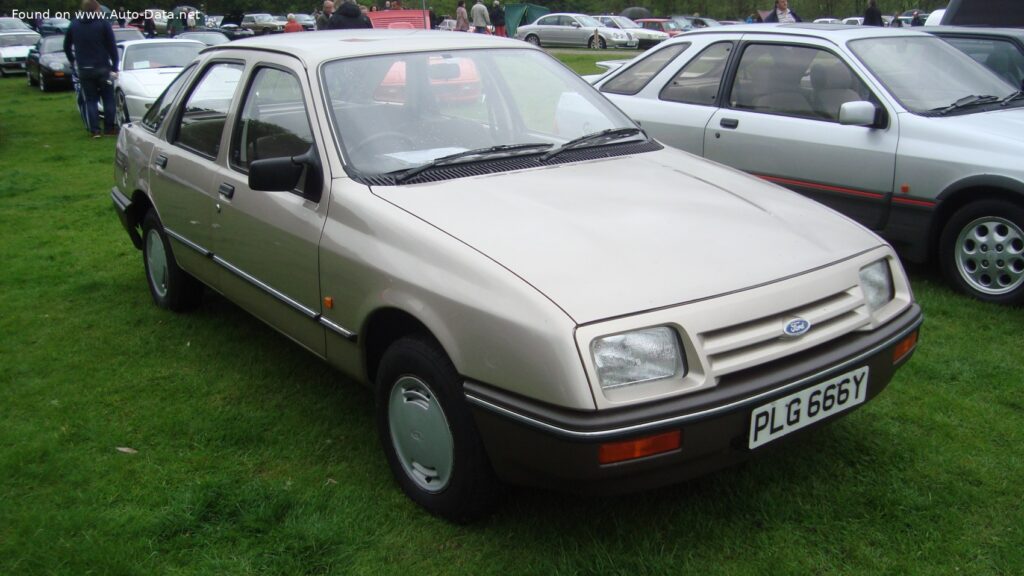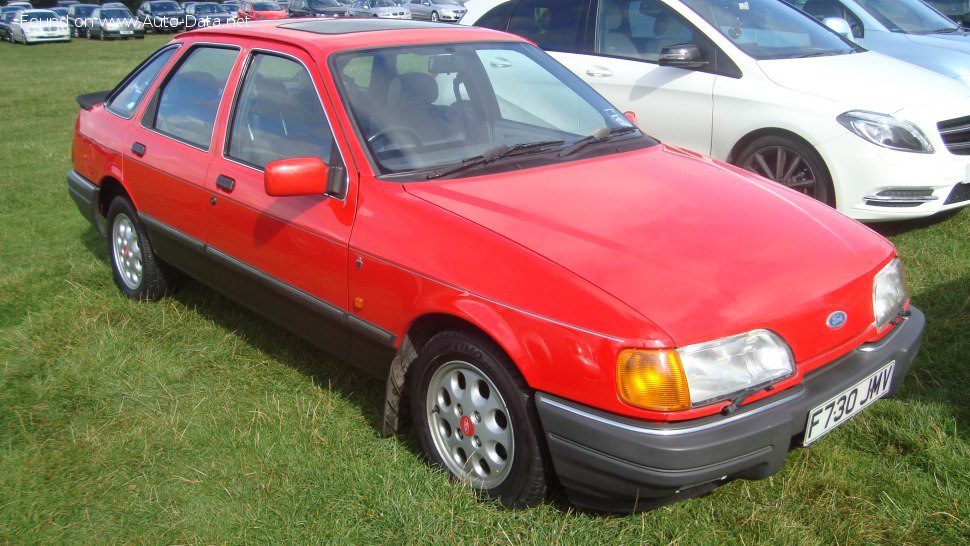
The Ford Sierra, launched in 1982, represented a significant departure for Ford of Europe, replacing the long-running and increasingly dated Cortina. The Sierra was a thoroughly modern design for its time, embracing aerodynamics and a monocoque chassis construction. The Ford Sierra Hatchback II 2.0i (101 Hp) Automatic, produced from 1987 to 1993, was a key iteration of the model, offering a blend of practicality, performance, and comfort. While not officially sold in the United States, the Sierra was a hugely popular vehicle in Europe, competing with models like the Opel/Vauxhall Vectra and Peugeot 405. It marked a shift towards more contemporary styling and engineering for Ford, paving the way for future models like the Mondeo.
The Ford Sierra Hatchback II: A European Success Story
The Sierra II, introduced in 1987, brought a substantial facelift to the original Sierra. This included revised front and rear styling, improved interior appointments, and refinements to the chassis and engine options. The hatchback body style, particularly, gained traction with buyers seeking a versatile and practical family car. The 2.0i variant, equipped with a 101 horsepower engine and an automatic transmission, was positioned as a comfortable and capable option for those prioritizing ease of driving over outright performance. The Sierra’s impact extended beyond just sales figures; it introduced new manufacturing techniques and design philosophies to Ford’s European operations.
Engine & Performance
The heart of the Sierra 2.0i Automatic is a 1993cc (121.62 cubic inches) inline-four cylinder petrol engine. This engine, designated as either NE5 or NEJ depending on specific production year and market, produces 101 horsepower at 5400 rpm and 148 Nm (109.16 lb.-ft.) of torque at 4000 rpm. Power per liter is rated at 50.7 hp/l. The engine utilizes single-point fuel injection, a common technology of the era, and is naturally aspirated. While not a high-performance engine by modern standards, it provided adequate power for comfortable cruising and everyday driving. The four-speed automatic transmission delivers smooth gear changes, making it a user-friendly option for a wide range of drivers. The longitudinal engine layout and rear-wheel drive configuration were traditional for Ford at the time, offering a balanced driving experience. Engine oil capacity is 3.75 liters (3.96 US quarts or 3.3 UK quarts), and the cooling system requires 8 liters (8.45 US quarts or 7.04 UK quarts) of coolant.
Design & Features
The Sierra Hatchback II is a five-door, five-seat hatchback. Its design, while initially controversial due to its departure from the more traditional styling of the Cortina, was aerodynamically efficient for its time. The hatchback configuration provides excellent practicality, with a generous 60-liter (15.85 US gallons or 13.2 UK gallons) fuel tank and a usable cargo area. Interior features, while not lavish, were functional and well-laid-out. Safety features were relatively basic by today’s standards, reflecting the era in which the car was designed. Ventilated disc brakes are fitted to the front wheels, while the rear utilizes disc brakes as well, providing adequate stopping power. The Sierra’s suspension system is designed to balance comfort and handling, offering a reasonably compliant ride on most road surfaces. The minimum turning circle is 10 meters (32.81 feet).
Technical Specifications
| Brand | Ford |
| Model | Sierra |
| Generation | Sierra Hatchback II |
| Type (Engine) | 2.0i (101 Hp) Automatic |
| Start of production | 1987 year |
| End of production | 1993 year |
| Powertrain Architecture | Internal Combustion engine |
| Body type | Hatchback |
| Seats | 5 |
| Doors | 5 |
| Fuel Type | Petrol (Gasoline) |
| Power | 101 Hp @ 5400 rpm |
| Power per litre | 50.7 Hp/l |
| Torque | 148 Nm @ 4000 rpm / 109.16 lb.-ft. @ 4000 rpm |
| Engine layout | Front, Longitudinal |
| Engine Model/Code | NE5, NEJ |
| Engine displacement | 1993 cm3 / 121.62 cu. in. |
| Number of cylinders | 4 |
| Engine configuration | Inline |
| Cylinder Bore | 90.8 mm / 3.57 in. |
| Piston Stroke | 77 mm / 3.03 in. |
| Number of valves per cylinder | 2 |
| Fuel injection system | Single-point injection |
| Engine aspiration | Naturally aspirated engine |
| Engine oil capacity | 3.75 l / 3.96 US qt | 3.3 UK qt |
| Coolant | 8 l / 8.45 US qt | 7.04 UK qt |
| Fuel tank capacity | 60 l / 15.85 US gal | 13.2 UK gal |
| Length | 4425 mm / 174.21 in. |
| Width | 1694 mm / 66.69 in. |
| Height | 1407 mm / 55.39 in. |
| Wheelbase | 2608 mm / 102.68 in. |
| Front track | 1452 mm / 57.17 in. |
| Rear (Back) track | 1468 mm / 57.8 in. |
| Minimum turning circle (turning diameter) | 10 m / 32.81 ft. |
| Drivetrain Architecture | The Internal combustion engine (ICE) drives the rear wheels of the vehicle. |
| Drive wheel | Rear wheel drive |
| Number of gears and type of gearbox | 4 gears, automatic transmission |
| Front brakes | Ventilated discs |
| Rear brakes | Disc |
The Ford Sierra Hatchback II 2.0i Automatic, while not a performance icon, remains a significant vehicle in Ford’s history. It represented a move towards more modern design and engineering, and its practicality and comfort made it a popular choice for families across Europe. Its legacy continues to influence Ford’s approach to vehicle development today.