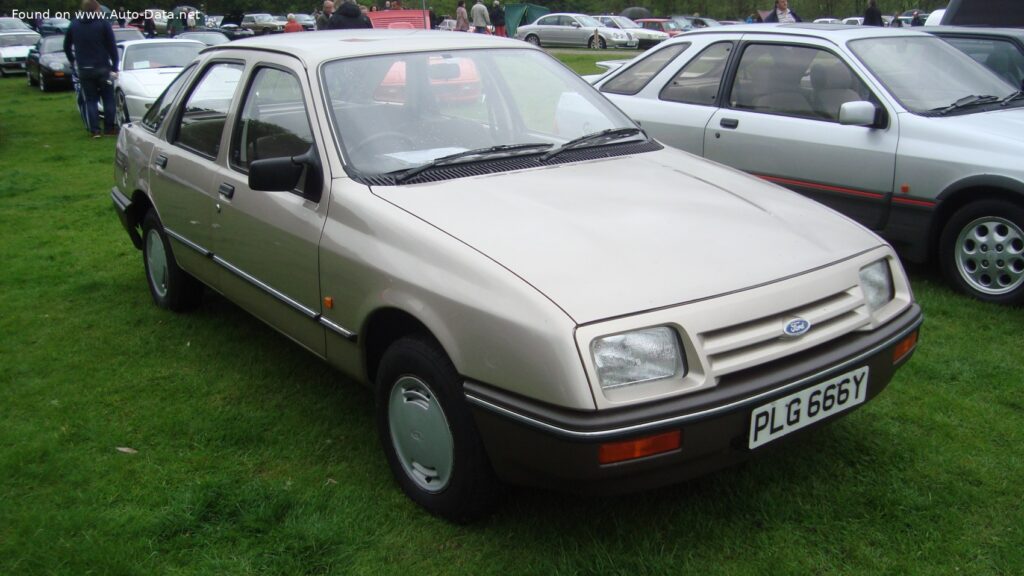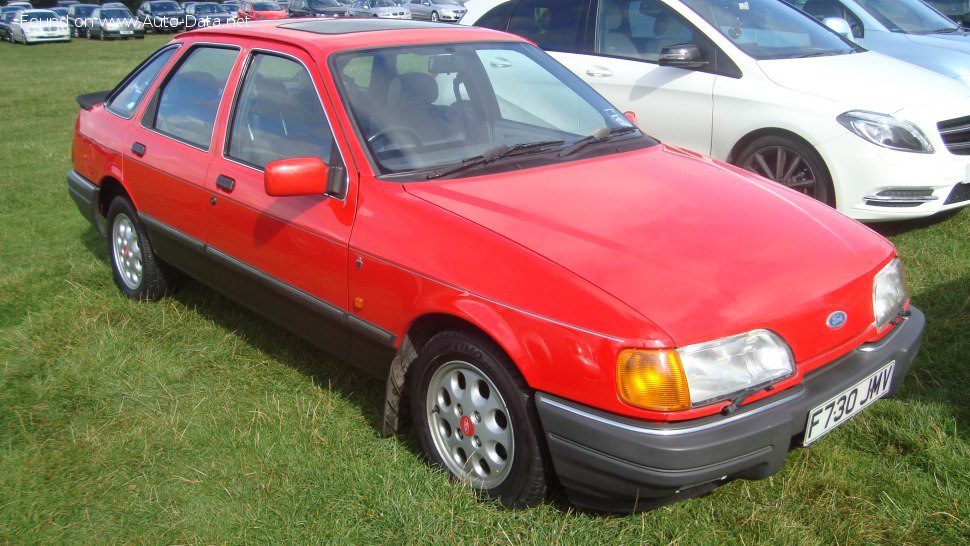
The Ford Sierra Hatchback II 2.0i (115 Hp), produced between 1987 and 1993, represents a significant evolution in Ford of Europe’s mid-size family car lineup. Replacing the aging Cortina, the Sierra was a thoroughly modern design for its time, embracing aerodynamic styling and a rear-wheel-drive layout that prioritized driving dynamics. While not officially sold in the United States, the Sierra was a hugely popular vehicle in Europe, competing with models like the Opel/Vauxhall Vectra, Peugeot 405, and Volkswagen Passat. The 2.0i variant, with its 115 horsepower engine, offered a balance of performance and fuel economy, making it a practical choice for families and commuters alike. The Sierra’s impact extended beyond its sales figures; it introduced new manufacturing techniques and a design philosophy that influenced subsequent Ford models.
The Ford Sierra Hatchback II 2.0i: A European Success Story
The Sierra marked a departure from Ford’s traditionally boxy designs. Its sleek, aerodynamic profile, penned under the direction of Uwe Bahnsen, was a deliberate attempt to reduce drag and improve fuel efficiency. This focus on aerodynamics was relatively novel for a family car in the 1980s. The second generation, introduced in 1987, brought refinements to the original Sierra, including updated interior trim, improved safety features, and subtle styling changes. The hatchback body style, offering increased practicality compared to the saloon (sedan) and estate (wagon) versions, proved particularly popular. The Sierra was a key model in Ford’s European lineup, and its success helped solidify the company’s position as a leading automotive manufacturer in the region.
Engine & Performance
The heart of the Sierra 2.0i is its naturally aspirated 2.0-liter inline-four cylinder engine, designated as either N4A or N4I depending on specific production variations. This engine produced 115 horsepower, providing a respectable level of performance for a family car of the era. While not a high-performance machine, the 2.0i offered sufficient power for comfortable cruising and overtaking. The engine’s relatively simple design contributed to its reliability and ease of maintenance. Power is delivered to the rear wheels via a five-speed manual transmission, a configuration that was becoming increasingly uncommon in the front-wheel-drive dominated European market. This rear-wheel-drive setup, while offering a more engaging driving experience, also presented challenges in terms of packaging and weight distribution. The engine requires 3.8 liters (4.02 US quarts, 3.34 UK quarts) of engine oil, specified to Ford’s standards for the period, and utilizes 8 liters (8.45 US quarts, 7.04 UK quarts) of coolant for optimal thermal management.
Design & Features
The Sierra Hatchback II is characterized by its five-door configuration and seating for five occupants. The hatchback body style provides a large and accessible cargo area, making it a practical choice for families. The exterior design, while aerodynamic, is relatively understated, reflecting the conservative tastes of the European market in the late 1980s and early 1990s. Interior features were focused on functionality and durability, with cloth upholstery and a simple dashboard layout. Safety features, while limited by the standards of today, were improved in the second-generation Sierra, including stronger body structures and optional anti-lock brakes (ABS) on some models. The Sierra’s suspension system, featuring independent front suspension and a live rear axle, provided a comfortable ride and decent handling characteristics. The vehicle’s dimensions – 4425 mm (174.21 inches) in length, 1694 mm (66.69 inches) in width, and 1407 mm (55.39 inches) in height – positioned it squarely within the mid-size family car segment. The wheelbase measured 2608 mm (102.68 inches), and the front and rear tracks were 1452 mm (57.17 inches) and 1468 mm (57.8 inches) respectively, contributing to its stable handling. The minimum turning circle is 10 meters (32.81 feet).
Technical Specifications
| Brand | Ford |
| Model | Sierra |
| Generation | Sierra Hatchback II |
| Type (Engine) | 2.0i (115 Hp) |
| Start of production | 1987 |
| End of production | 1993 |
| Powertrain Architecture | Internal Combustion engine |
| Body type | Hatchback |
| Seats | 5 |
| Doors | 5 |
| Fuel Type | Petrol (Gasoline) |
| Power | 115 Hp |
| Engine Model/Code | N4A, N4I |
| Engine aspiration | Naturally aspirated engine |
| Engine oil capacity | 3.8 l / 4.02 US qt / 3.34 UK qt |
| Coolant | 8 l / 8.45 US qt / 7.04 UK qt |
| Fuel tank capacity | 60 l / 15.85 US gal / 13.2 UK gal |
| Length | 4425 mm / 174.21 in. |
| Width | 1694 mm / 66.69 in. |
| Height | 1407 mm / 55.39 in. |
| Wheelbase | 2608 mm / 102.68 in. |
| Front track | 1452 mm / 57.17 in. |
| Rear (Back) track | 1468 mm / 57.8 in. |
| Minimum turning circle (turning diameter) | 10 m / 32.81 ft. |
| Drivetrain Architecture | The Internal combustion engine (ICE) drives the rear wheels of the vehicle. |
| Drive wheel | Rear wheel drive |
| Number of gears and type of gearbox | 5 gears, manual transmission |
| Front brakes | Ventilated discs |
| Rear brakes | Drum |
The Ford Sierra Hatchback II 2.0i, while never officially available in the US market, remains a significant vehicle in automotive history. It represented a bold step forward for Ford of Europe, embracing modern design principles and offering a compelling package of performance, practicality, and affordability. Its rear-wheel-drive layout and relatively simple mechanicals appeal to enthusiasts, while its spacious interior and hatchback configuration made it a popular choice for families. The Sierra’s legacy continues to influence Ford’s design and engineering philosophies to this day.