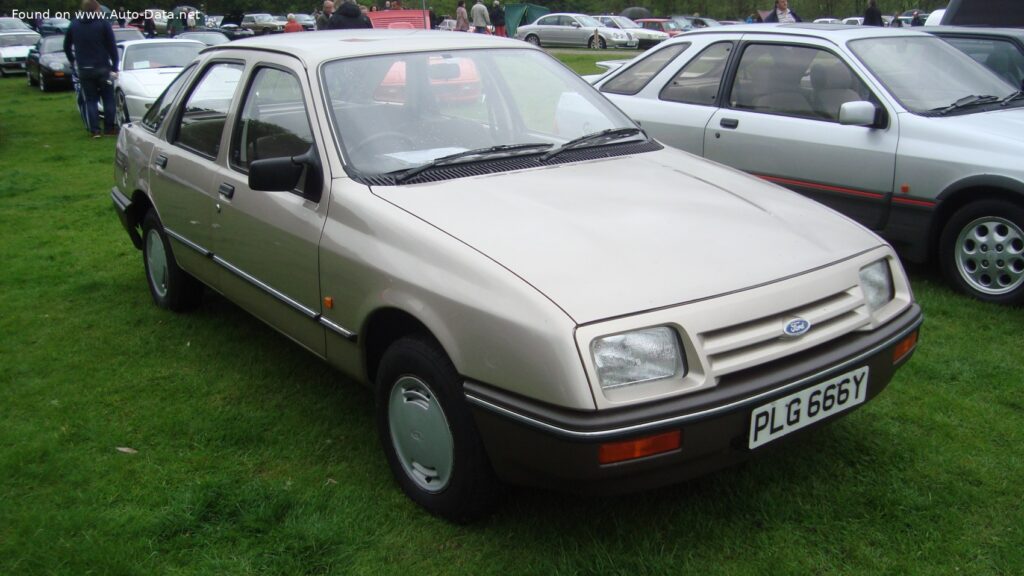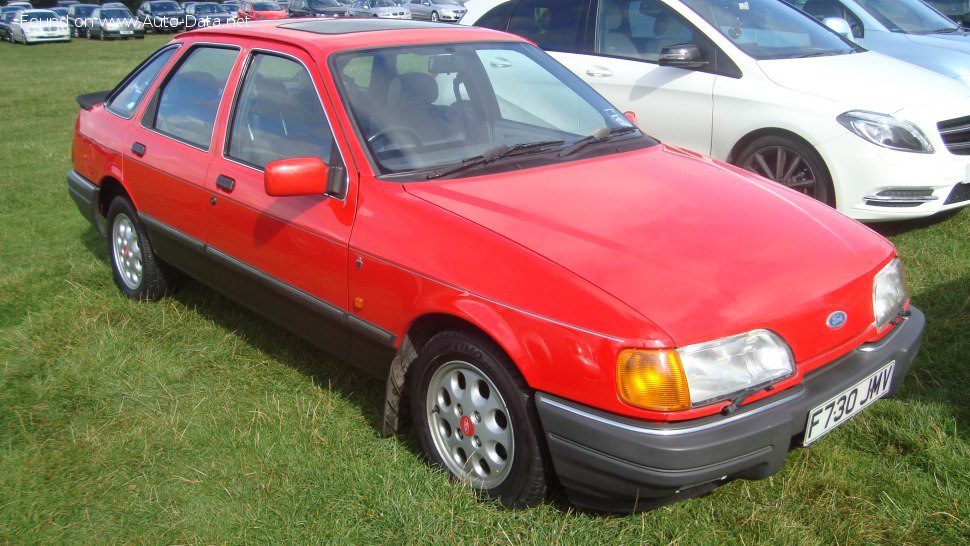
The Ford Sierra Hatchback II 2.3 D (67 Hp), produced between 1987 and 1989, represents a significant iteration in Ford of Europe’s mid-size offering. Replacing the aging Taunus and Cortina, the Sierra was a thoroughly modern design for its time, emphasizing aerodynamics and space efficiency. While not officially sold in the United States, the Sierra was a crucial model for Ford in the European market, competing with vehicles like the Opel Ascona and Volkswagen Passat. The 2.3 D variant, powered by a diesel engine, was aimed at buyers prioritizing fuel economy and durability, particularly in markets where diesel fuel was more affordable and readily available. This model occupied the practical, fleet-oriented end of the Sierra spectrum, offering a no-frills transportation solution.
The Ford Sierra Hatchback II: A European Success Story
The Sierra marked a departure from Ford’s traditionally boxy designs. Its sleek, aerodynamic profile, penned under the direction of Uwe Bahnsen, was a deliberate attempt to reduce drag and improve fuel efficiency. The hatchback body style, increasingly popular in Europe, offered enhanced practicality compared to traditional sedans. The Sierra II, introduced in 1987, featured subtle refinements to the exterior and interior, along with mechanical improvements. The 2.3 D model, while not the performance flagship of the range, played a vital role in broadening the Sierra’s appeal to a wider customer base. It was a workhorse, designed for high mileage and reliable service.
Engine & Performance
The heart of the Sierra 2.3 D is its naturally aspirated 2.3-liter diesel engine, designated with the engine codes YTR or YTT. This engine produced 67 horsepower, a modest output by modern standards, but sufficient for comfortable cruising and everyday transportation. The engine’s strength lay in its torque characteristics, providing ample pulling power at lower engine speeds. This made it well-suited for hauling loads or navigating hilly terrain. Power is delivered to the rear wheels via a five-speed manual transmission, a common configuration for European vehicles of this era. The rear-wheel-drive layout, while traditional, contributed to the Sierra’s balanced handling characteristics. Performance figures were not the focus of this variant; instead, fuel economy was prioritized. The 2.3 D offered a significant improvement in miles per gallon compared to the gasoline-powered Sierra models.
Design & Features
The Sierra Hatchback II’s design prioritized practicality and space efficiency. The five-door hatchback configuration provided easy access to the rear seats and a generously sized cargo area. While the interior was functional rather than luxurious, it offered comfortable seating for five occupants. Safety features, while limited by the standards of the time, included ventilated disc brakes on the front wheels and drum brakes on the rear. The Sierra’s suspension system, featuring independent front suspension and a live rear axle, provided a reasonable balance between ride comfort and handling. The exterior styling was characterized by clean lines and a relatively understated appearance. The 2.3 D model typically featured basic trim levels, focusing on essential features rather than cosmetic enhancements. The vehicle’s dimensions were carefully considered to maximize interior space while maintaining a manageable footprint for urban driving.
Technical Specifications: Ford Sierra Hatchback II 2.3 D (67 Hp)
| Brand | Ford |
| Model | Sierra |
| Generation | Sierra Hatchback II |
| Type (Engine) | 2.3 D (67 Hp) |
| Start of production | 1987 |
| End of production | 1989 |
| Powertrain Architecture | Internal Combustion engine |
| Body type | Hatchback |
| Seats | 5 |
| Doors | 5 |
| Fuel Type | Diesel |
| Power | 67 Hp |
| Engine Model/Code | YTR, YTT |
| Engine aspiration | Naturally aspirated engine |
| Engine oil capacity | 5.6 l (5.92 US qt | 4.93 UK qt) |
| Coolant capacity | 9.5 l (10.04 US qt | 8.36 UK qt) |
| Fuel tank capacity | 60 l (15.85 US gal | 13.2 UK gal) |
| Length | 4425 mm (174.21 in.) |
| Width | 1694 mm (66.69 in.) |
| Height | 1407 mm (55.39 in.) |
| Wheelbase | 2608 mm (102.68 in.) |
| Front track | 1452 mm (57.17 in.) |
| Rear track | 1468 mm (57.8 in.) |
| Minimum turning circle | 10 m (32.81 ft.) |
| Drivetrain Architecture | Rear wheel drive. Internal Combustion engine (ICE) drives the rear wheels. |
| Drive wheel | Rear wheel drive |
| Number of gears and type of gearbox | 5 gears, manual transmission |
| Front brakes | Ventilated discs |
| Rear brakes | Drum |
The Ford Sierra, and specifically the 2.3 D variant, represents a pivotal moment in Ford of Europe’s history. It was a vehicle designed to meet the evolving needs of European drivers, prioritizing fuel efficiency, practicality, and durability. While it never reached American shores, the Sierra’s influence can be seen in subsequent Ford models and its legacy as a well-engineered and reliable family car endures. The Sierra’s success helped solidify Ford’s position as a leading automotive manufacturer in Europe, paving the way for future generations of Ford vehicles.