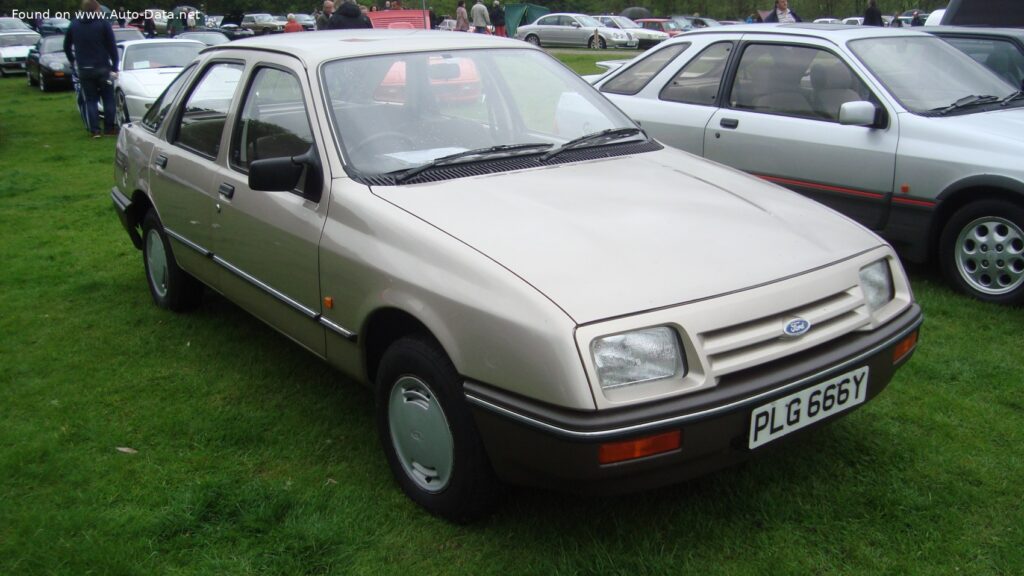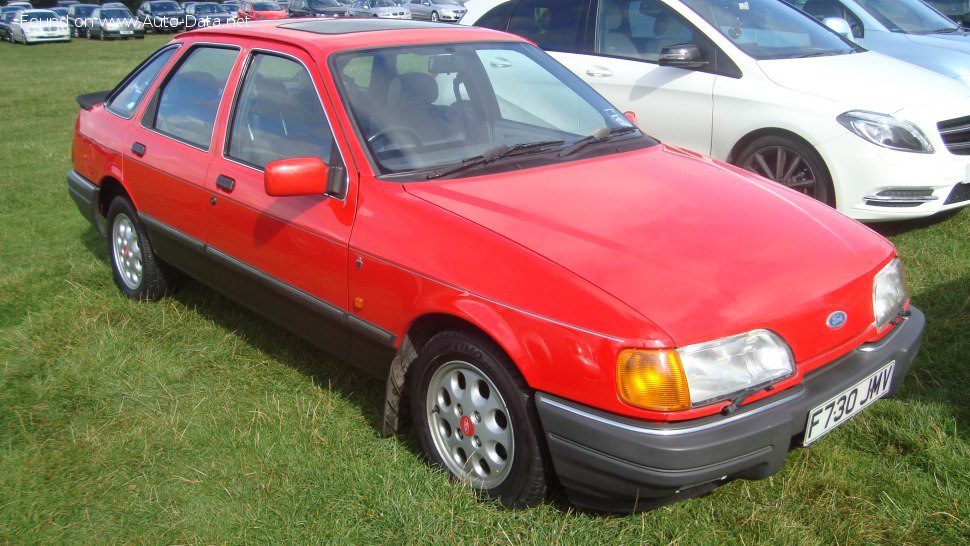
The Ford Sierra II 2.9i XR 4×4, produced between 1988 and 1993, represents a significant evolution in Ford of Europe’s mid-size offering. While never officially sold in the United States, the Sierra was a hugely popular vehicle in the UK and across Europe, serving as a direct replacement for the Cortina. The Sierra II, introduced in 1986, brought substantial aerodynamic improvements and a more modern interior compared to its predecessor. The 2.9i XR 4×4 variant, with its potent V6 engine and all-wheel-drive system, was positioned as the performance flagship of the range, appealing to drivers seeking a blend of practicality and driving excitement. It’s important to note the Sierra’s role as a key model in establishing Ford’s presence in the competitive European family car market.
Ford Sierra Hatchback II 2.9 i XR 4×4: A Detailed Overview
The Sierra II represented a departure from the boxy styling of the earlier models, embracing a more streamlined and aerodynamic design. This was a deliberate move to improve fuel efficiency and handling. The 2.9i XR 4×4 specifically targeted enthusiasts, offering a more powerful engine and the added security of all-wheel drive. It was a car designed to be both practical for everyday use and enjoyable on winding roads. The XR designation signified a higher trim level with additional features and a sportier aesthetic.
Engine & Performance
At the heart of the Sierra 2.9i XR 4×4 lies a 2.9-liter (2933 cm3 / 178.98 cu. in.) naturally aspirated V6 engine, designated as the B4B or B4C depending on the specific year and market. This engine produced 150 horsepower (Hp) at 5500 rpm and 229 Newton-meters (Nm) of torque at 3000 rpm, equating to 168.9 lb.-ft. The power-to-litre ratio stood at 51.1 Hp/l. The engine featured multi-port fuel injection and an overhead camshaft (OHC) valvetrain with two valves per cylinder. The longitudinal engine layout, coupled with a five-speed manual transmission, delivered power to all four wheels. This all-wheel-drive system provided enhanced traction, particularly in adverse weather conditions, making the XR 4×4 a capable and sure-footed vehicle. While not a sports car in the modern sense, the 2.9i XR 4×4 offered respectable performance for its time, providing a lively driving experience.
Design & Features
The Sierra II 2.9i XR 4×4 is a five-door hatchback, offering a practical and versatile body style. It comfortably seats five passengers. The exterior design, while modern for the late 1980s, is characterized by its clean lines and relatively understated styling. The XR trim level included features such as alloy wheels, a rear spoiler, and upgraded interior trim. Inside, the Sierra offered a functional and reasonably well-equipped cabin. Safety features, while limited by the standards of today, included seatbelts and a robust chassis. The focus was on providing a comfortable and practical vehicle for family use, with the added benefit of performance and all-weather capability. The 60-liter (15.85 US gal) fuel tank provided a reasonable driving range. The car’s dimensions – 4425 mm (174.21 in.) in length, 1694 mm (66.69 in.) in width, and 1407 mm (55.39 in.) in height – positioned it squarely within the mid-size segment.
Technical Specifications
| Brand | Ford |
| Model | Sierra |
| Generation | Sierra Hatchback II |
| Type (Engine) | 2.9 i XR 4×4 (150 Hp) |
| Start of production | 1988 year |
| End of production | 1993 year |
| Powertrain Architecture | Internal Combustion engine |
| Body type | Hatchback |
| Seats | 5 |
| Doors | 5 |
| Fuel Type | Petrol (Gasoline) |
| Power | 150 Hp @ 5500 rpm |
| Power per litre | 51.1 Hp/l |
| Torque | 229 Nm @ 3000 rpm |
| Torque (lb.-ft.) | 168.9 lb.-ft. @ 3000 rpm |
| Engine layout | Front, Longitudinal |
| Engine Model/Code | B4B, B4C |
| Engine displacement | 2933 cm3 |
| Engine displacement (cu. in.) | 178.98 cu. in. |
| Number of cylinders | 6 |
| Engine configuration | V-engine |
| Cylinder Bore | 93 mm |
| Cylinder Bore (in.) | 3.66 in. |
| Piston Stroke | 72 mm |
| Piston Stroke (in.) | 2.83 in. |
| Number of valves per cylinder | 2 |
| Fuel injection system | Multi-port manifold injection |
| Engine aspiration | Naturally aspirated engine |
| Valvetrain | OHC |
| Engine oil capacity | 4.25 l |
| Engine oil capacity (US qt) | 4.49 US qt |
| Engine oil capacity (UK qt) | 3.74 UK qt |
| Coolant | 8.5 l |
| Coolant (US qt) | 8.98 US qt |
| Coolant (UK qt) | 7.48 UK qt |
| Fuel tank capacity | 60 l |
| Fuel tank capacity (US gal) | 15.85 US gal |
| Fuel tank capacity (UK gal) | 13.2 UK gal |
| Length | 4425 mm |
| Length (in.) | 174.21 in. |
| Width | 1694 mm |
| Width (in.) | 66.69 in. |
| Height | 1407 mm |
| Height (in.) | 55.39 in. |
| Wheelbase | 2608 mm |
| Wheelbase (in.) | 102.68 in. |
| Front track | 1452 mm |
| Front track (in.) | 57.17 in. |
| Rear track | 1468 mm |
| Rear track (in.) | 57.8 in. |
| Minimum turning circle | 10 m |
| Minimum turning circle (ft.) | 32.81 ft. |
| Drive wheel | All wheel drive (4×4) |
| Number of gears | 5 gears |
| Type of gearbox | manual transmission |
| Front brakes | Ventilated discs |
| Rear brakes | Drum |
| Steering type | Steering rack and pinion |
| Power steering | Hydraulic Steering |