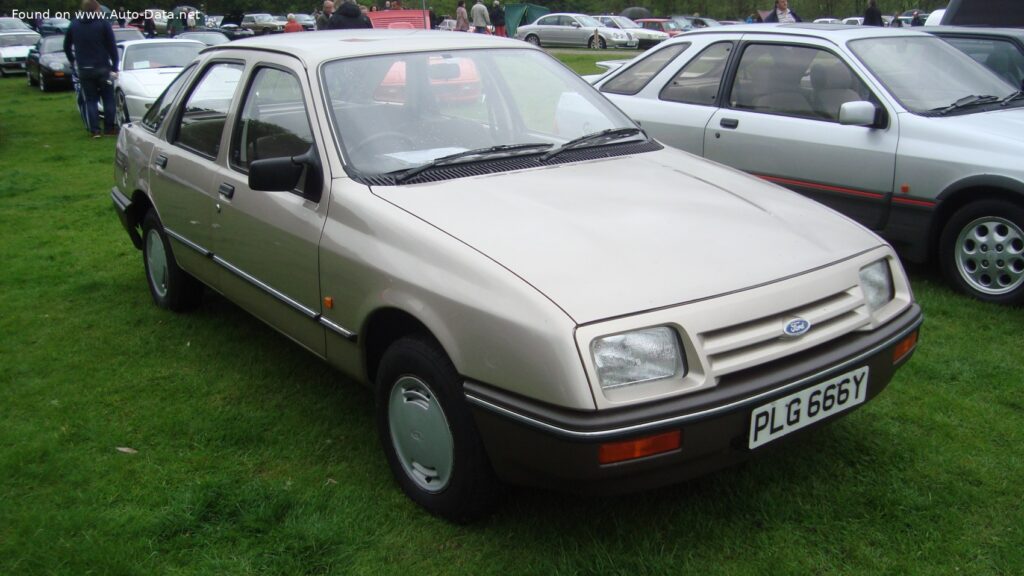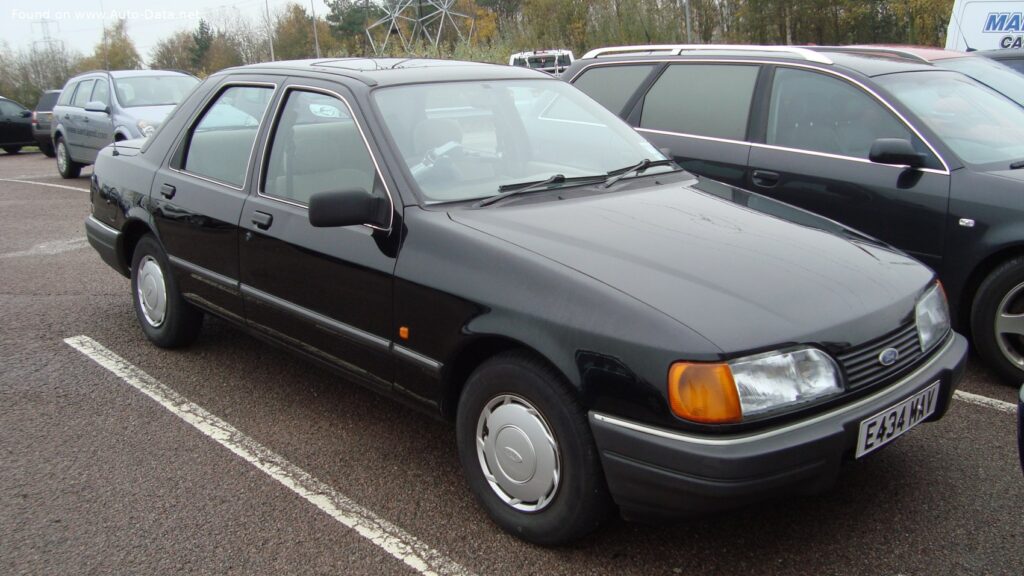
The Ford Sierra Sedan II 1.6, produced from 1987 to 1993, represents a significant evolution in Ford of Europe’s mid-size family car lineup. Replacing the aging Cortina, the Sierra was a thoroughly modern design for its time, embracing aerodynamic styling and a more spacious interior. The Sedan II designation refers to a series of updates and refinements applied during the model’s lifespan. While not officially sold in the United States, the Sierra was a hugely popular vehicle in Europe, competing with models like the Opel/Vauxhall Vectra, Peugeot 405, and Fiat Tempra. The 1.6-liter engine variant, producing 75 horsepower, was a common choice for buyers seeking a balance of affordability and reasonable performance.
The Ford Sierra Sedan II 1.6: A European Family Car
The Sierra marked a departure from Ford’s traditionally boxy designs. Its sleek, aerodynamic profile was a direct response to increasing fuel efficiency demands and a desire to modernize the Ford brand image. The Sedan II updates included minor cosmetic changes, improvements to interior trim, and refinements to the engine and suspension. The Sierra’s impact was substantial; it became one of the best-selling cars in the UK and other European markets during its production run. It was praised for its handling, spaciousness, and relatively modern features, establishing a new benchmark for family cars in Europe.
Engine & Performance
The heart of the Sierra Sedan II 1.6 was a 1.6-liter, naturally aspirated four-cylinder petrol (gasoline) engine. This engine, part of Ford’s ‘Pinto’ family, delivered 75 horsepower. While not a performance powerhouse, it provided adequate power for everyday driving and cruising on European motorways. The engine featured a single overhead camshaft and a two-barrel carburetor, typical for the era. Power was delivered to the rear wheels via a five-speed manual transmission, which was the standard configuration. The rear-wheel-drive layout contributed to the Sierra’s balanced handling characteristics, a trait appreciated by enthusiasts. Acceleration was modest, with a 0-60 mph time estimated around 12-13 seconds, but the engine was known for its reliability and relatively low running costs. The engine’s naturally aspirated design meant that peak torque was available across a relatively narrow band, requiring drivers to utilize the gearbox effectively to maintain momentum, especially when overtaking.
Design & Features
The Sierra Sedan II was a four-door, five-seater sedan. Its body style was characterized by clean lines, a sloping roofline, and a relatively long wheelbase. The design prioritized interior space and aerodynamic efficiency. Compared to its predecessor, the Cortina, the Sierra offered significantly more headroom and legroom for both front and rear passengers. Interior features, while not luxurious by modern standards, were practical and well-designed for the time. The dashboard layout was functional, with clearly labeled controls. Safety features were evolving during this period, and the Sierra included features such as seatbelts for all occupants, though anti-lock brakes (ABS) and airbags were not standard equipment on the 1.6-liter model. The car’s suspension system consisted of MacPherson struts at the front and a live axle with trailing arms at the rear. This setup provided a comfortable ride quality, although it wasn’t as sophisticated as independent rear suspension systems found on some competing models. The 60-liter (15.85 US gallons) fuel tank offered a reasonable driving range, making it suitable for long journeys.
Technical Specifications
| Brand | Ford |
| Model | Sierra |
| Generation | Sierra Sedan II |
| Type (Engine) | 1.6 (75 Hp) |
| Start of production | 1987 |
| End of production | 1993 |
| Powertrain Architecture | Internal Combustion engine |
| Body type | Sedan |
| Seats | 5 |
| Doors | 4 |
| Fuel Type | Petrol (Gasoline) |
| Power | 75 Hp |
| Engine aspiration | Naturally aspirated engine |
| Fuel tank capacity | 60 l / 15.85 US gal / 13.2 UK gal |
| Length | 4467 mm / 175.87 in. |
| Width | 1698 mm / 66.85 in. |
| Height | 1407 mm / 55.39 in. |
| Wheelbase | 2608 mm / 102.68 in. |
| Front track | 1452 mm / 57.17 in. |
| Rear track | 1468 mm / 57.8 in. |
| Minimum turning circle | 10 m / 32.81 ft. |
| Drivetrain Architecture | Rear wheel drive, Internal Combustion engine (ICE) |
| Drive wheel | Rear wheel drive |
| Number of gears | 5 |
| Type of gearbox | Manual transmission |
| Front brakes | Ventilated discs |
| Rear brakes | Drum |
The Ford Sierra Sedan II 1.6, while not a high-performance vehicle, offered a compelling package of practicality, affordability, and reasonable driving dynamics. Its success in the European market cemented Ford’s position as a leading manufacturer of family cars. The Sierra’s influence can be seen in subsequent Ford models, and it remains a fondly remembered vehicle for many European car enthusiasts. It represents a pivotal moment in Ford’s design and engineering history, bridging the gap between traditional, boxy designs and the more aerodynamic and efficient vehicles of the modern era.