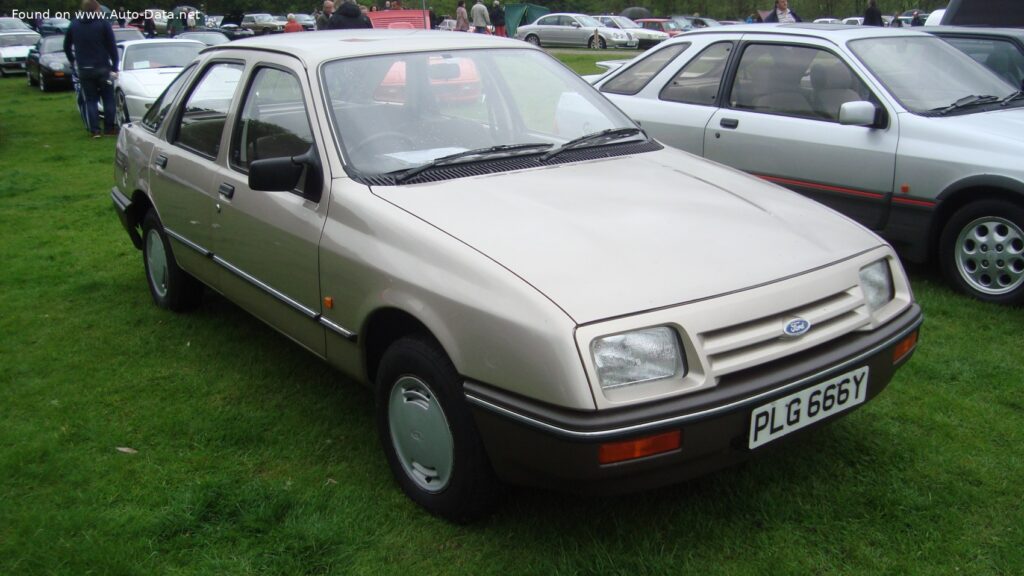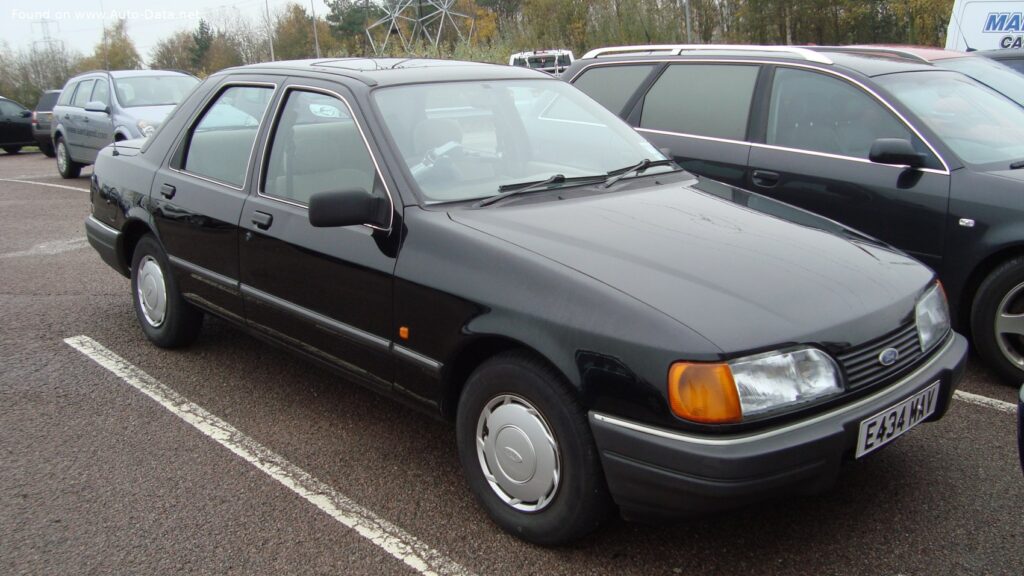
The Ford Sierra Sedan II 1.6 i, produced from 1989 to 1993, represents a significant evolution in Ford of Europe’s mid-size offering. Positioned as a family sedan, the Sierra aimed to modernize Ford’s lineup and compete with increasingly sophisticated vehicles from European manufacturers like Opel (Vauxhall), Peugeot, and Renault. While not officially sold in the United States, the Sierra was a crucial model for Ford in the UK and across continental Europe, offering a blend of practicality, affordability, and a more contemporary design compared to its predecessor, the Cortina. The “Sedan II” designation denotes a facelift and improvements over the original Sierra launched in 1982, focusing on refinement and addressing some initial criticisms of the first generation.
The Ford Sierra Sedan II 1.6 i: A European Family Car
The Sierra marked a departure from traditional Ford styling, embracing a more aerodynamic and modern aesthetic. It was one of the first Ford models to fully embrace front-wheel drive (though the 1.6 i retained rear-wheel drive), and its design influenced subsequent Ford models. The Sedan II version brought subtle but important changes to the exterior, including revised grilles, headlights, and interior trim. The 1.6 i variant, with its 80 horsepower engine, was positioned as the entry-level model, prioritizing fuel economy and affordability for the average family.
Engine & Performance
The heart of the Ford Sierra Sedan II 1.6 i is a naturally aspirated 1.6-liter inline-four cylinder gasoline engine. This engine produced 80 horsepower, which, while not exceptionally powerful by modern standards, was adequate for comfortable cruising and everyday driving in the late 1980s and early 1990s. The engine utilized a single overhead camshaft (SOHC) configuration and a two-barrel carburetor, a common setup for the time. Performance was characterized by smooth, predictable power delivery rather than outright acceleration. The rear-wheel drive configuration, while becoming less common in the segment, provided a balanced driving experience and contributed to the car’s relatively nimble handling.
The Sierra 1.6 i was equipped with a five-speed manual transmission, allowing drivers to optimize engine speed for fuel efficiency or performance. The gearing was relatively long, further emphasizing the car’s focus on economy. Top speed was around 95 miles per hour, and acceleration from 0 to 60 mph took approximately 12-13 seconds. While these figures aren’t impressive today, they were competitive within the Sierra’s price bracket and target market. The engine’s simplicity also meant relatively straightforward maintenance and repair, a key consideration for European buyers.
Design & Features
The Ford Sierra Sedan II was a four-door, five-seater sedan with a traditional three-box design. The Sedan II’s styling was a refinement of the original Sierra, with a more integrated front end and smoother lines. The interior was functional and practical, prioritizing space and usability over luxury. The dashboard layout was straightforward, with clearly labeled controls. Cloth upholstery was standard, and the seats offered reasonable comfort for long journeys.
Safety features, while limited by the standards of the time, included seatbelts for all occupants. However, features like airbags and anti-lock brakes were not typically available on the base 1.6 i model. The ventilated disc brakes on the front wheels provided adequate stopping power, while the rear drums were less effective. The steering was rack and pinion, offering precise and responsive handling. The Sierra’s relatively lightweight construction contributed to its agility. The 60-liter (15.85 US gallons) fuel tank provided a reasonable driving range, and the car’s fuel economy was a key selling point.
The Sierra’s design represented a significant step forward for Ford of Europe, moving away from the boxy, traditional styling of the Cortina. The car’s aerodynamic shape helped to reduce drag and improve fuel efficiency. The spacious interior and practical features made it a popular choice for families. The Sedan II’s refinements further enhanced its appeal, addressing some of the criticisms of the original Sierra and solidifying its position as a competitive offering in the European mid-size market.
Technical Specifications
| Brand | Ford |
| Model | Sierra |
| Generation | Sierra Sedan II |
| Type (Engine) | 1.6 i (80 Hp) |
| Start of production | 1989 |
| End of production | 1993 |
| Powertrain Architecture | Internal Combustion engine |
| Body type | Sedan |
| Seats | 5 |
| Doors | 4 |
| Fuel Type | Petrol (Gasoline) |
| Power | 80 Hp |
| Engine aspiration | Naturally aspirated engine |
| Fuel tank capacity | 60 l / 15.85 US gal / 13.2 UK gal |
| Length | 4467 mm / 175.87 in. |
| Width | 1698 mm / 66.85 in. |
| Height | 1407 mm / 55.39 in. |
| Wheelbase | 2608 mm / 102.68 in. |
| Front track | 1452 mm / 57.17 in. |
| Rear track | 1468 mm / 57.8 in. |
| Drivetrain Architecture | The Internal combustion engine (ICE) drives the rear wheels of the vehicle. |
| Drive wheel | Rear wheel drive |
| Number of gears and type of gearbox | 5 gears, manual transmission |
| Front brakes | Ventilated discs |
| Rear brakes | Drum |
| Steering type | Steering rack and pinion |