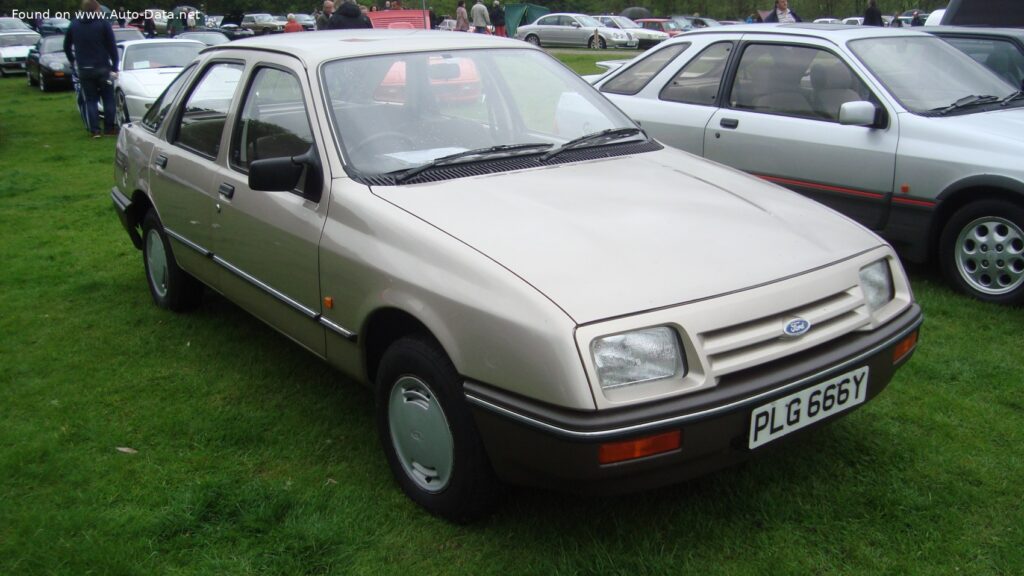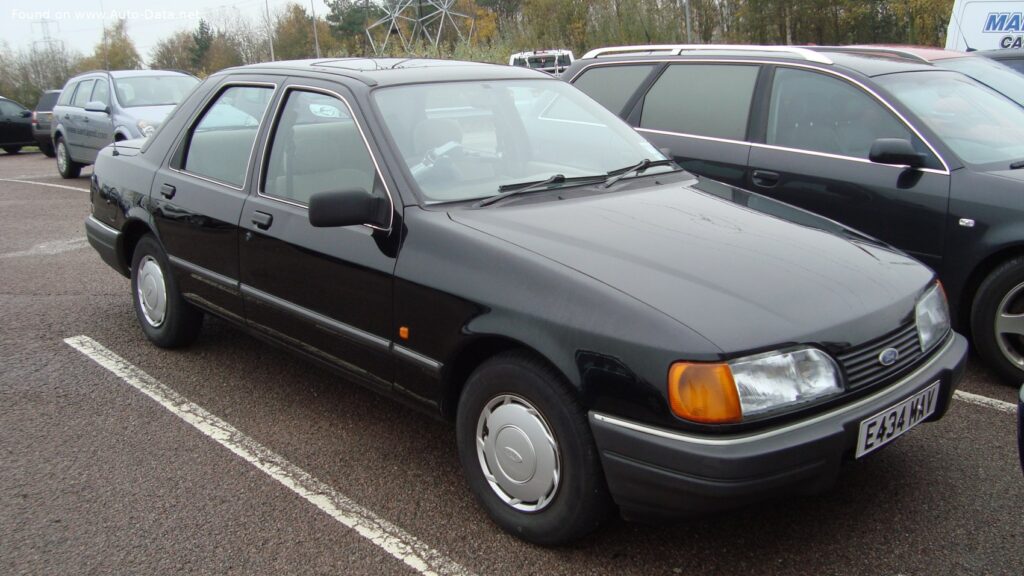
The Ford Sierra Sedan II 1.8, produced between 1987 and 1989, represents a significant refinement of the Sierra line, a vehicle that played a crucial role in Ford of Europe’s mid-size offerings. Replacing the aging Taunus and Cortina, the Sierra was a thoroughly modern design for its time, emphasizing aerodynamics and space efficiency. The Sedan II variant, specifically the 1.8-liter model producing 80 horsepower, was aimed at providing economical and practical transportation for families and commuters. While not sold in the North American market, the Sierra was a popular choice in Europe, competing with vehicles like the Opel Ascona and Volkswagen Passat.
The Ford Sierra Sedan II: A European Family Sedan
The Sierra marked a departure from Ford’s traditionally boxy designs, adopting a more streamlined and aerodynamic profile. This was a deliberate effort to improve fuel efficiency and reduce drag, reflecting the growing importance of these factors in the 1980s automotive landscape. The Sedan II iteration brought further improvements to the original Sierra, including subtle styling updates and refinements to the interior. The 1.8-liter engine option provided a balance between performance and fuel economy, making it a popular choice for buyers seeking a practical and affordable vehicle.
Engine & Performance
The Ford Sierra Sedan II 1.8 was powered by Ford’s RED or REF series 1.8-liter naturally aspirated inline-four cylinder gasoline engine. This engine, while not a powerhouse, delivered a respectable 80 horsepower. The engine’s design focused on reliability and fuel efficiency rather than outright performance. It featured a single overhead camshaft and a two-barrel carburetor, typical for engines of this era. The engine was mated to a five-speed manual transmission, which allowed drivers to optimize fuel economy or extract the most performance from the engine. The rear-wheel-drive configuration was a traditional layout for European sedans of the time, providing a balanced driving experience. While acceleration was not particularly brisk, the 1.8-liter engine provided sufficient power for everyday driving and highway cruising. The engine’s simplicity also made it relatively easy to maintain and repair.
Design & Features
The Sierra Sedan II was a four-door, five-seater sedan, offering a practical and spacious interior for families. The body style was characterized by its clean lines and relatively flat roofline, contributing to its aerodynamic efficiency. The interior was designed with functionality in mind, featuring durable materials and a straightforward layout. While not luxurious, the interior provided a comfortable and practical environment for passengers. Safety features, while limited by the standards of today, included seatbelts and a robust chassis structure. The Sierra’s design prioritized maximizing interior space, offering ample headroom and legroom for both front and rear passengers. The trunk was also generously sized, providing plenty of room for luggage and other cargo. The exterior styling was relatively understated, with a focus on practicality rather than flamboyant aesthetics. The Sierra’s design was a reflection of the prevailing automotive trends in Europe during the 1980s, emphasizing efficiency and functionality.
Technological Context
The Sierra, while not brimming with cutting-edge technology by modern standards, represented a significant step forward in automotive engineering for its time. The use of aerodynamic principles in its design was a notable innovation, and the relatively spacious interior was a testament to Ford’s engineering capabilities. The five-speed manual transmission offered drivers greater control over the vehicle’s performance and fuel economy. The ventilated disc brakes on the front wheels provided improved stopping power, while the drum brakes on the rear wheels offered a cost-effective solution for braking performance. The steering rack and pinion system provided precise and responsive steering, enhancing the driving experience. The Sierra’s design also incorporated features aimed at improving reliability and durability, such as a robust chassis and a relatively simple engine design.
Technical Specifications
| Brand | Ford |
| Model | Sierra |
| Generation | Sierra Sedan II |
| Type (Engine) | 1.8 (80 Hp) |
| Start of production | 1987 |
| End of production | 1989 |
| Powertrain Architecture | Internal Combustion engine |
| Body type | Sedan |
| Seats | 5 |
| Doors | 4 |
| Fuel Type | Petrol (Gasoline) |
| Power | 80 Hp |
| Engine Model/Code | RED, REF |
| Engine aspiration | Naturally aspirated engine |
| Engine oil capacity | 3.8 l / 4.02 US qt | 3.34 UK qt |
| Coolant | 8 l / 8.45 US qt | 7.04 UK qt |
| Fuel tank capacity | 60 l / 15.85 US gal | 13.2 UK gal |
| Length | 4467 mm / 175.87 in. |
| Width | 1698 mm / 66.85 in. |
| Height | 1407 mm / 55.39 in. |
| Wheelbase | 2608 mm / 102.68 in. |
| Front track | 1452 mm / 57.17 in. |
| Rear (Back) track | 1468 mm / 57.8 in. |
| Drivetrain Architecture | The Internal combustion engine (ICE) drives the rear wheels of the vehicle. |
| Drive wheel | Rear wheel drive |
| Number of gears and type of gearbox | 5 gears, manual transmission |
| Front brakes | Ventilated discs |
| Rear brakes | Drum |
| Steering type | Steering rack and pinion |
The Ford Sierra Sedan II 1.8, while not a performance icon, remains a significant vehicle in Ford’s history. It represented a modern and efficient approach to family transportation in Europe, and its design and engineering influenced subsequent Ford models. Its practicality, reliability, and affordability made it a popular choice for buyers seeking a sensible and well-rounded vehicle.