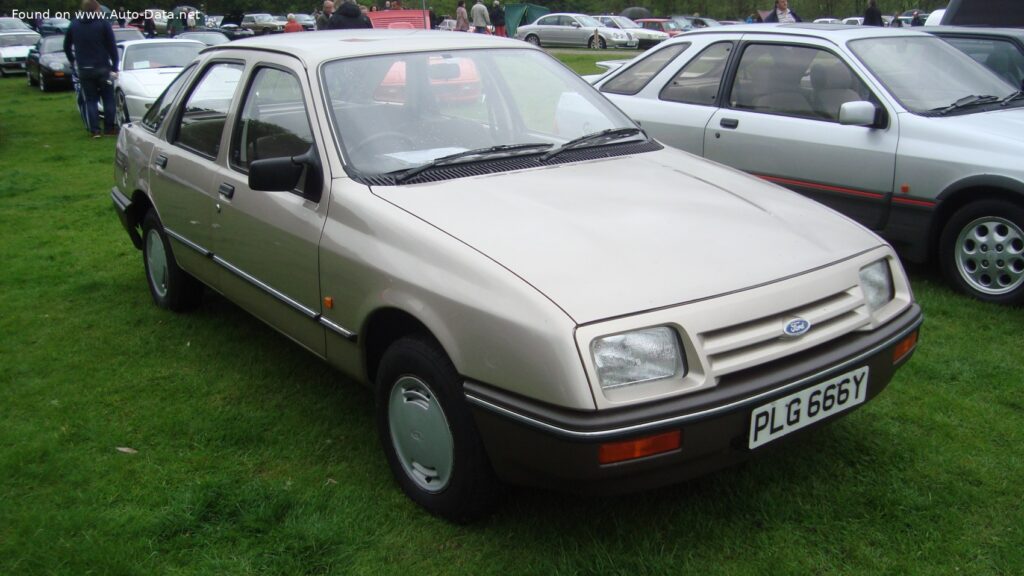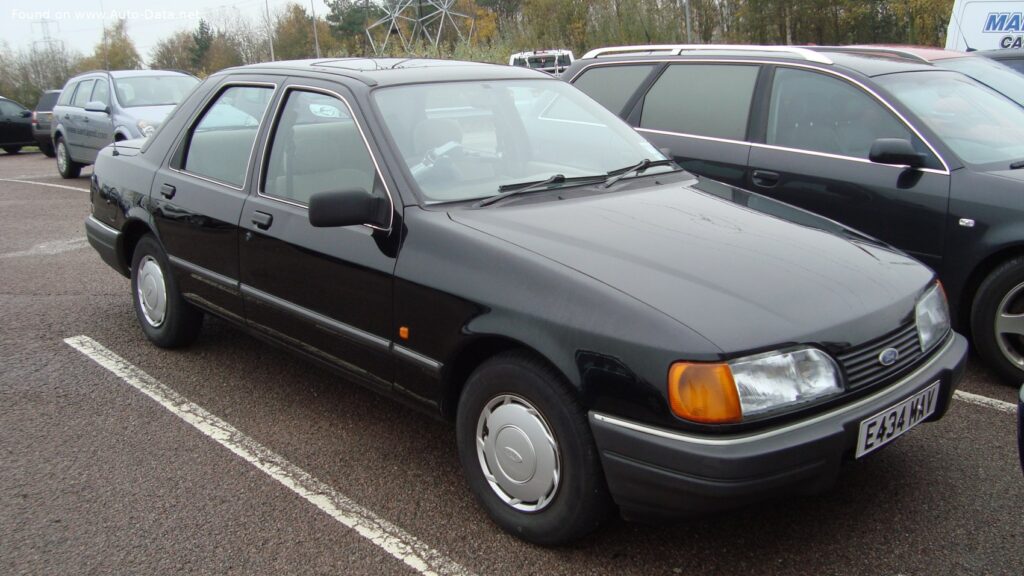
The Ford Sierra Sedan II 1.8 (80 Hp) Automatic, produced between 1987 and 1989, represents a refinement of Ford’s mid-size offering during a period of significant automotive change. The Sierra, launched in 1982, was a pivotal model for Ford of Europe, intended as a modern replacement for the aging Taunus and Cortina. The Sedan II iteration, specifically the 1.8-liter automatic version, aimed to provide comfortable, economical transportation for families and commuters. While not officially sold in the United States, the Sierra was a hugely important vehicle in the European market, competing with models like the Opel/Vauxhall Vectra, Peugeot 405, and Fiat Tempra. It marked a departure from traditional Ford designs, embracing a more aerodynamic and contemporary aesthetic. This model occupied the mainstream sedan segment, prioritizing practicality and affordability.
The Ford Sierra Sedan II: A European Family Car
The Sierra’s development was driven by the need for a unified Ford platform across Europe, reducing production costs and streamlining manufacturing. The Sedan II represented a mid-cycle update, incorporating minor styling revisions and mechanical improvements. The 1.8-liter engine, coupled with an automatic transmission, was positioned as a popular choice for drivers seeking ease of use and reasonable fuel economy. The Sierra’s design was controversial at its launch, with some critics finding it boxy and uninspired. However, its aerodynamic efficiency was a significant improvement over its predecessors, contributing to better fuel consumption and handling. The Sedan II continued this design language, refining the original shape and improving interior appointments.
Engine & Performance
The heart of the Ford Sierra Sedan II 1.8 Automatic is a naturally aspirated 1.8-liter inline-four cylinder gasoline engine. This engine, designated as either RED or REF depending on specific production variations, produced 80 horsepower. While not a performance-oriented powerplant, it provided adequate power for everyday driving. The engine’s relatively modest output was geared towards fuel efficiency and reliability, characteristics highly valued by European consumers during the late 1980s. The four-speed automatic transmission delivered smooth, if not particularly rapid, gear changes. This combination resulted in a comfortable driving experience, prioritizing ease of use over outright speed. The rear-wheel drive configuration, a traditional layout for Ford at the time, provided predictable handling characteristics, although it wasn’t as dynamically sophisticated as more modern front-wheel drive systems. The engine required 3.8 liters (4.02 US quarts, 3.34 UK quarts) of engine oil and 8 liters (8.45 US quarts, 7.04 UK quarts) of coolant for optimal operation.
Design & Features
The Ford Sierra Sedan II is a four-door, five-seat sedan. Its body style was typical of European family cars of the era – a practical, no-nonsense design focused on maximizing interior space and usability. The exterior featured a relatively simple, angular design, reflecting the styling trends of the 1980s. While not overtly luxurious, the interior offered a comfortable and functional environment. Features included basic instrumentation, cloth upholstery, and a reasonably sized trunk. Safety features, while limited by the standards of today, included ventilated disc brakes on the front wheels and drum brakes on the rear. The steering system employed a steering rack and pinion, providing reasonably precise control. The Sierra’s design prioritized practicality and affordability, making it a popular choice for families and commuters. The vehicle’s dimensions – 4467 mm (175.87 inches) in length, 1698 mm (66.85 inches) in width, and 1407 mm (55.39 inches) in height – positioned it squarely within the mid-size sedan segment.
Technical Specifications
| Brand | Ford |
| Model | Sierra |
| Generation | Sierra Sedan II |
| Type (Engine) | 1.8 (80 Hp) Automatic |
| Start of production | 1987 |
| End of production | 1989 |
| Powertrain Architecture | Internal Combustion engine |
| Body type | Sedan |
| Seats | 5 |
| Doors | 4 |
| Fuel Type | Petrol (Gasoline) |
| Power | 80 Hp |
| Engine Model/Code | RED, REF |
| Engine aspiration | Naturally aspirated engine |
| Engine oil capacity | 3.8 l / 4.02 US qt / 3.34 UK qt |
| Coolant | 8 l / 8.45 US qt / 7.04 UK qt |
| Fuel tank capacity | 60 l / 15.85 US gal / 13.2 UK gal |
| Length | 4467 mm / 175.87 in. |
| Width | 1698 mm / 66.85 in. |
| Height | 1407 mm / 55.39 in. |
| Wheelbase | 2608 mm / 102.68 in. |
| Front track | 1452 mm / 57.17 in. |
| Rear (Back) track | 1468 mm / 57.8 in. |
| Drivetrain Architecture | Rear wheel drive. Internal Combustion engine (ICE) |
| Drive wheel | Rear wheel drive |
| Number of gears and type of gearbox | 4 gears, automatic transmission |
| Front brakes | Ventilated discs |
| Rear brakes | Drum |
| Steering type | Steering rack and pinion |
The Ford Sierra Sedan II 1.8 Automatic, while not a groundbreaking vehicle, played a significant role in the European automotive landscape of the late 1980s. It represented a practical and affordable option for families and commuters, offering a comfortable driving experience and reasonable fuel economy. Its legacy lies in its contribution to Ford’s modernization efforts in Europe and its position as a popular and reliable family car during its production run. The Sierra paved the way for future Ford models, incorporating lessons learned in aerodynamics, manufacturing efficiency, and customer expectations.