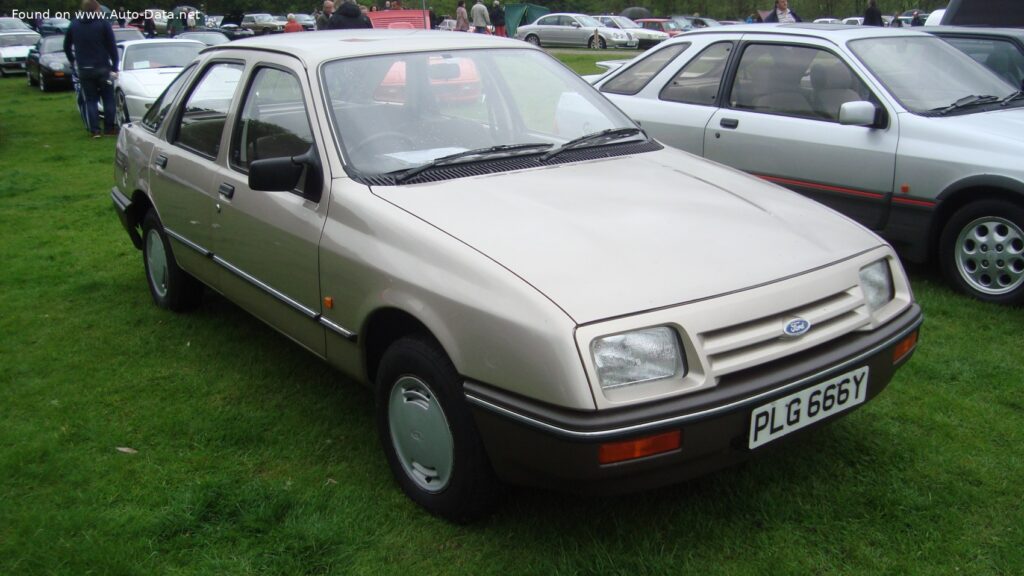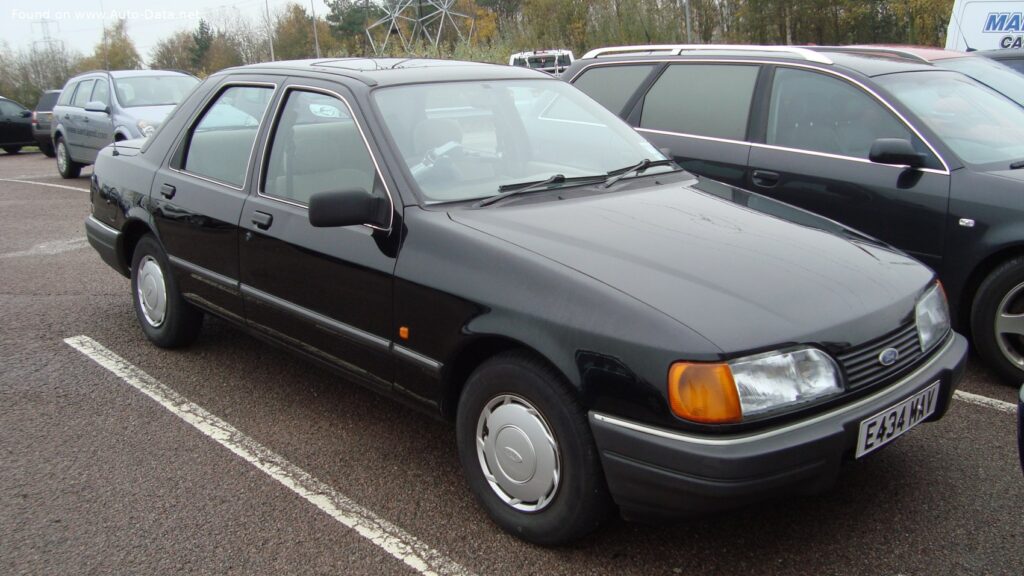
The Ford Sierra Sedan II 1.8, produced from 1988 to 1993, represents a significant evolution in Ford of Europe’s mid-size family car lineup. Positioned as a direct replacement for the aging Taunus and Cortina, the Sierra aimed to modernize Ford’s offerings with a focus on aerodynamic efficiency and contemporary styling. While not officially sold in the United States, the Sierra was a crucial model for Ford in the European market, competing with vehicles like the Opel/Vauxhall Vectra, Peugeot 405, and Fiat Tempra. The Sedan II designation refers to a mid-cycle refresh that brought subtle styling updates and mechanical improvements to the original Sierra design. This particular variant, equipped with a 1.8-liter engine and an automatic transmission, was geared towards buyers prioritizing comfort and ease of driving over outright performance.
The Ford Sierra Sedan II: A European Family Car
The Sierra marked a departure from Ford’s traditionally boxy designs, embracing a more streamlined and aerodynamic profile. This was a deliberate effort to improve fuel efficiency and reduce drag, reflecting the growing importance of these factors in the late 1980s. The Sedan II version refined this aesthetic, offering a more polished and sophisticated appearance. The car’s design was considered quite modern for its time, and it played a role in shaping the look of Ford’s subsequent models. The Sierra’s success in Europe was substantial, and it became a common sight on the continent’s roads throughout the 1980s and early 1990s. It was available in a variety of body styles, including saloon (sedan), hatchback, and estate (wagon), catering to a wide range of customer needs.
Engine & Performance
The Ford Sierra Sedan II 1.8 utilized a naturally aspirated 1.8-liter inline-four cylinder petrol (gasoline) engine. This engine produced 87 horsepower, which, while not exceptionally powerful by modern standards, was adequate for comfortable cruising and everyday driving. The engine’s design prioritized reliability and fuel economy over outright performance. The automatic transmission, featuring four forward gears, further emphasized the car’s focus on ease of use. Acceleration was modest, but the engine provided sufficient torque for typical driving conditions. The rear-wheel-drive configuration, a hallmark of Ford’s European models for many years, contributed to a balanced driving experience, although it wasn’t as common in the US market at the time. The engine’s simplicity meant relatively straightforward maintenance and repair, a key consideration for many buyers.
Design & Features
The Sierra Sedan II was a four-door, five-seater sedan. Its body style was typical of European family cars of the era, prioritizing practicality and passenger space. The interior was functional and reasonably well-equipped, although it lacked the luxury features found in some of its more expensive competitors. Features typically included cloth upholstery, basic instrumentation, and a radio. Safety features were relatively limited by today’s standards, but the Sierra did offer features such as seatbelts and a collapsible steering column. The car’s design emphasized visibility, with large windows and a relatively high seating position. The trunk offered a reasonable amount of space for luggage and other cargo. The exterior styling was characterized by clean lines and a relatively understated appearance. The Sedan II updates included minor revisions to the front and rear fascias, as well as updated interior trim.
Technological Context
While not technologically advanced by contemporary standards, the Sierra incorporated several features that were considered modern for its time. The use of a fuel-injected engine, although not standard on all models, improved fuel efficiency and reduced emissions compared to carbureted engines. The automatic transmission offered a level of convenience that was increasingly popular with buyers. The ventilated disc brakes on the front wheels provided effective stopping power, while the drum brakes on the rear were a cost-saving measure. The steering rack and pinion system offered precise and responsive steering. The Sierra’s design also incorporated aerodynamic principles, contributing to improved fuel economy and reduced wind noise. The car represented a significant step forward in terms of build quality and refinement compared to its predecessors.
Technical Specifications
| Brand | Ford |
| Model | Sierra |
| Generation | Sierra Sedan II |
| Type (Engine) | 1.8 (87 Hp) Automatic |
| Start of production | 1988 |
| End of production | 1993 |
| Powertrain Architecture | Internal Combustion engine |
| Body type | Sedan |
| Seats | 5 |
| Doors | 4 |
| Fuel Type | Petrol (Gasoline) |
| Power | 87 Hp |
| Engine aspiration | Naturally aspirated engine |
| Fuel tank capacity | 60 l / 15.85 US gal / 13.2 UK gal |
| Length | 4467 mm / 175.87 in. |
| Width | 1698 mm / 66.85 in. |
| Height | 1407 mm / 55.39 in. |
| Wheelbase | 2608 mm / 102.68 in. |
| Front track | 1452 mm / 57.17 in. |
| Rear (Back) track | 1468 mm / 57.8 in. |
| Minimum turning circle (turning diameter) | 10 m / 32.81 ft. |
| Drivetrain Architecture | The Internal combustion engine (ICE) drives the rear wheels of the vehicle. |
| Drive wheel | Rear wheel drive |
| Number of gears and type of gearbox | 4 gears, automatic transmission |
| Front brakes | Ventilated discs |
| Rear brakes | Drum |
| Steering type | Steering rack and pinion |
The Ford Sierra Sedan II 1.8 Automatic, while not a performance icon, served as a reliable and practical family car for many European drivers. Its blend of comfort, fuel efficiency, and affordability made it a popular choice in a competitive market segment. The Sierra’s legacy lies in its contribution to Ford’s modernization efforts and its role in shaping the design of subsequent Ford models. It remains a fondly remembered vehicle for those who experienced its practicality and understated charm.