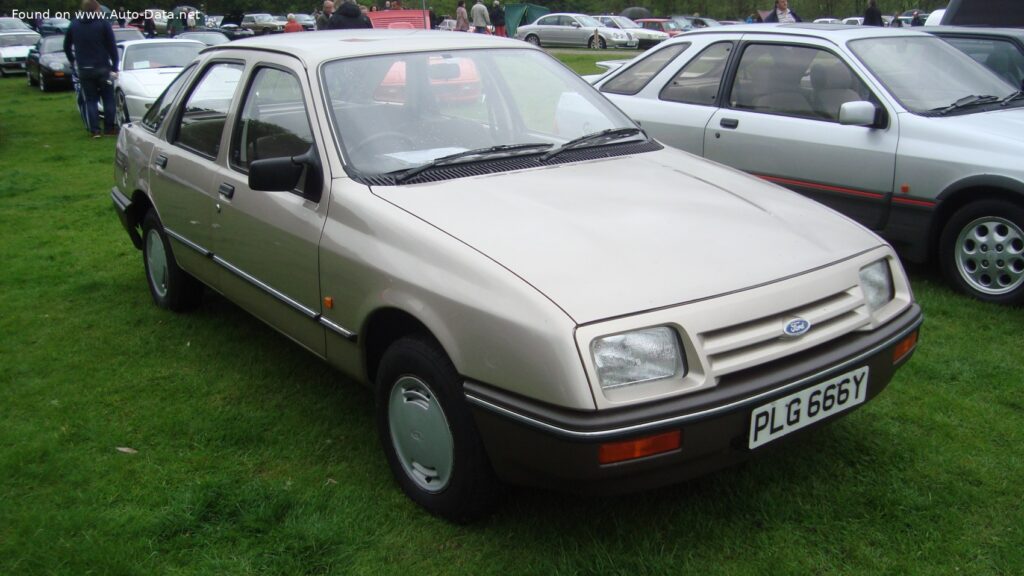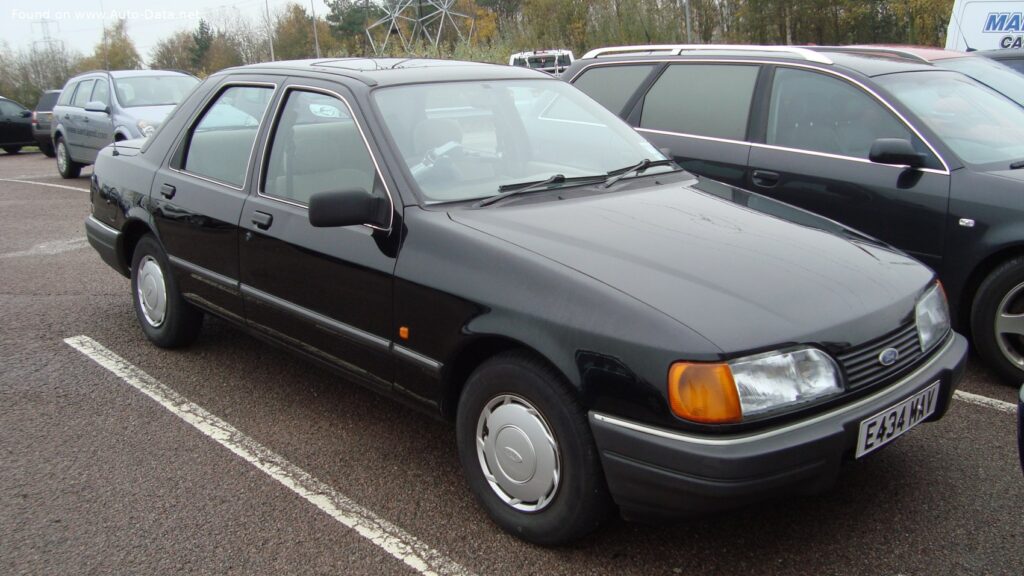
The Ford Sierra Sedan II 1.8 (90 Hp) Automatic, produced between 1987 and 1988, represents a refinement of Ford’s mid-size offering during a period of significant automotive change. The Sierra, launched in 1982, was a pivotal model for Ford of Europe, intended as a modern replacement for the aging Taunus and Cortina. While not officially sold in the United States, the Sierra was a hugely important vehicle in the European market, competing with models like the Opel Ascona, Volkswagen Passat, and Peugeot 505. The Sedan II designation denotes a series of updates and improvements made to the original Sierra design, focusing on refinement and addressing early criticisms. This particular variant, powered by a 1.8-liter engine paired with an automatic transmission, aimed to provide a comfortable and accessible option for family buyers.
The Ford Sierra Sedan II: A European Family Car
The Sierra marked a departure from Ford’s traditionally conservative styling, embracing a more aerodynamic and modern aesthetic. This was a deliberate move to improve fuel efficiency and appeal to a changing market. The Sedan II version continued this trend, with subtle revisions to the exterior and interior. The 1.8-liter engine, while not a performance powerhouse, offered a good balance of fuel economy and usability for everyday driving. The availability of an automatic transmission further enhanced its appeal to buyers prioritizing convenience.
Engine & Performance
The heart of the Ford Sierra Sedan II 1.8 Automatic is a naturally aspirated 1.8-liter inline-four cylinder engine, designated as the R2A or RED engine code. This engine produced 90 horsepower, providing adequate, though not exceptional, performance for the time. The engine’s design focused on reliability and fuel efficiency rather than outright power. The automatic transmission featured four forward gears, offering smooth shifts and ease of operation. While acceleration figures weren’t particularly impressive by modern standards, the Sierra 1.8 Automatic was capable of comfortably maintaining highway speeds and navigating urban traffic. The rear-wheel-drive configuration, typical of European sedans of this era, contributed to balanced handling characteristics. The engine required 3.8 liters (4.02 US quarts, 3.34 UK quarts) of engine oil, adhering to specific Ford oil specifications for optimal performance and longevity. The cooling system held 8 liters (8.45 US quarts, 7.04 UK quarts) of coolant, essential for maintaining stable engine temperatures.
Design & Features
The Ford Sierra Sedan II was a four-door, five-seater sedan, offering a practical and spacious interior for families. The body style was characterized by its clean lines and relatively low-slung profile, reflecting the design trends of the 1980s. While not brimming with luxury features, the Sierra offered a comfortable and functional interior. Standard equipment typically included cloth upholstery, basic instrumentation, and a radio. Safety features were relatively rudimentary by today’s standards, consisting primarily of seatbelts and a robust chassis structure. The ventilated disc brakes on the front wheels and drum brakes on the rear provided adequate stopping power. The steering employed a rack and pinion system, offering precise and responsive handling. The fuel tank capacity of 60 liters (15.85 US gallons, 13.2 UK gallons) provided a reasonable driving range between fill-ups. The Sierra’s design prioritized practicality and affordability, making it a popular choice for budget-conscious buyers.
Dimensions and Handling
The Sierra Sedan II measured 4467 mm (175.87 inches) in length, 1698 mm (66.85 inches) in width, and 1407 mm (55.39 inches) in height. Its wheelbase spanned 2608 mm (102.68 inches), contributing to a stable ride. The front and rear track widths were 1452 mm (57.17 inches) and 1468 mm (57.8 inches) respectively. These dimensions provided a good balance between interior space and maneuverability. The minimum turning circle was 10 meters (32.81 feet), making it relatively easy to navigate tight urban environments. The rear-wheel-drive layout, combined with the rack and pinion steering, delivered a responsive and engaging driving experience, characteristic of European sedans of the period.
Technical Specifications
| Brand | Ford |
| Model | Sierra |
| Generation | Sierra Sedan II |
| Type (Engine) | 1.8 (90 Hp) Automatic |
| Start of production | 1987 |
| End of production | 1988 |
| Powertrain Architecture | Internal Combustion engine |
| Body type | Sedan |
| Seats | 5 |
| Doors | 4 |
| Fuel Type | Petrol (Gasoline) |
| Power | 90 Hp |
| Engine Model/Code | R2A, RED |
| Engine aspiration | Naturally aspirated engine |
| Engine oil capacity | 3.8 l / 4.02 US qt / 3.34 UK qt |
| Coolant | 8 l / 8.45 US qt / 7.04 UK qt |
| Fuel tank capacity | 60 l / 15.85 US gal / 13.2 UK gal |
| Length | 4467 mm / 175.87 in. |
| Width | 1698 mm / 66.85 in. |
| Height | 1407 mm / 55.39 in. |
| Wheelbase | 2608 mm / 102.68 in. |
| Front track | 1452 mm / 57.17 in. |
| Rear (Back) track | 1468 mm / 57.8 in. |
| Minimum turning circle (turning diameter) | 10 m / 32.81 ft. |
| Drivetrain Architecture | Rear wheel drive, Internal Combustion engine (ICE) |
| Drive wheel | Rear wheel drive |
| Number of gears and type of gearbox | 4 gears, automatic transmission |
| Front brakes | Ventilated discs |
| Rear brakes | Drum |
| Steering type | Steering rack and pinion |
The Ford Sierra Sedan II 1.8 Automatic, while not a groundbreaking vehicle, played a significant role in the European automotive landscape of the late 1980s. It offered a practical, affordable, and reliable transportation solution for families, embodying Ford’s commitment to providing accessible motoring to a wide range of customers. Its legacy lies in its contribution to the evolution of the modern family sedan and its influence on subsequent Ford models.