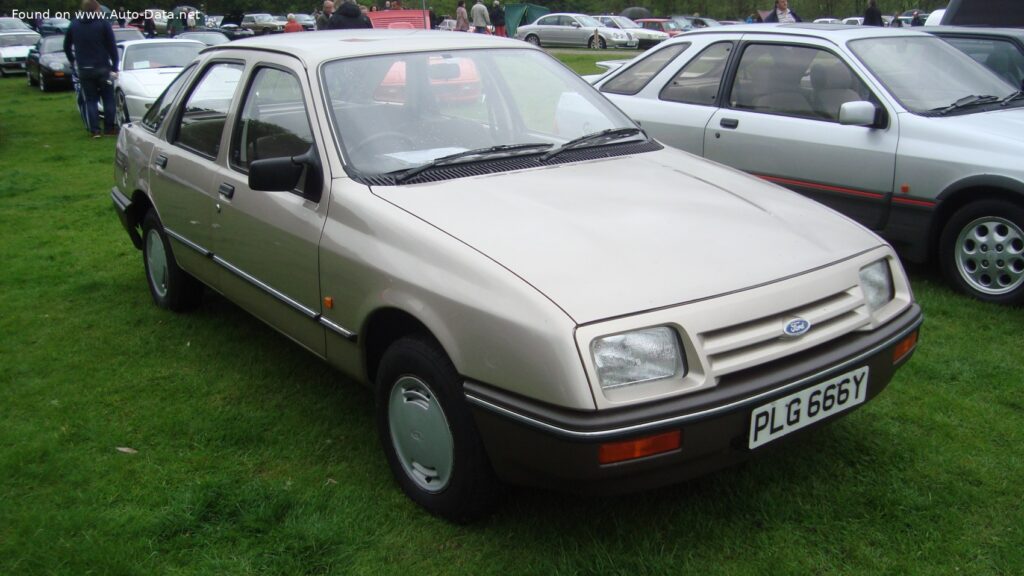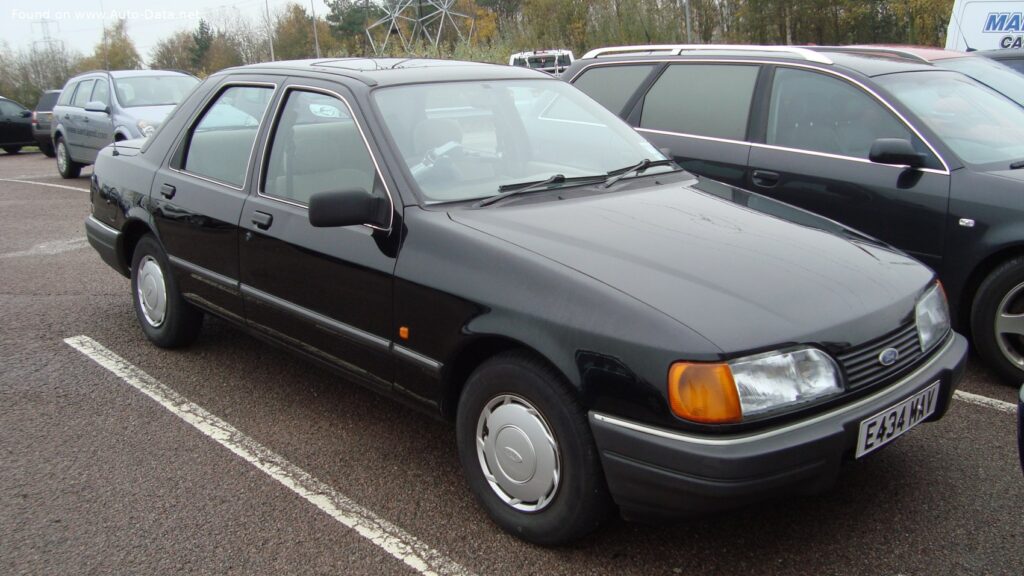
The Ford Sierra Sedan II 2.0 (105 Hp), produced between 1987 and 1993, represents a significant evolution in Ford of Europe’s mid-size family car lineup. The Sierra, intended as a modern replacement for the aging Taunus and Cortina, aimed to offer improved aerodynamics, fuel efficiency, and a more contemporary driving experience. While not officially sold in the United States, the Sierra was a crucial model for Ford in the European market, competing with vehicles like the Opel/Vauxhall Vectra, Peugeot 405, and Fiat Tempra. The Sedan II variant, specifically the 2.0-liter model, offered a balance of performance and practicality for family buyers, and played a key role in establishing Ford’s presence in the competitive European D-segment.
The Ford Sierra Sedan II: A European Success Story
The original Sierra, launched in 1982, was a radical departure from its predecessors. Its sleek, aerodynamic design, penned under the direction of Uwe Bahnsen, was a deliberate attempt to reduce drag and improve fuel economy – a growing concern in the late 1970s and early 1980s. The Sierra Sedan II, introduced with a series of updates in 1987, refined this design and addressed some of the criticisms leveled at the original, particularly regarding interior space and perceived build quality. The Sedan II retained the core aerodynamic principles of the original but featured subtle styling revisions and improvements to the cabin. It was a key model in Ford’s European strategy, offering a modern and competitive alternative to established rivals.
Engine & Performance
The Sierra Sedan II 2.0-liter model was powered by Ford’s N8C or NES engine, a naturally aspirated, inline-four cylinder gasoline engine. This engine produced 105 horsepower, providing adequate performance for everyday driving and comfortable cruising. While not a sports car, the 2.0-liter Sierra offered a reasonable level of acceleration and was capable of maintaining highway speeds with ease. The engine’s relatively simple design contributed to its reliability and ease of maintenance. Power was delivered to the rear wheels via a five-speed manual transmission, a common configuration for European cars of this era. The rear-wheel-drive layout provided a balanced driving experience, although it wasn’t as popular as front-wheel drive in some markets. The engine’s fuel consumption was typical for a vehicle of its size and era, offering a balance between performance and economy. The engine required 3.8 liters (4.02 US quarts, 3.34 UK quarts) of engine oil and 8 liters (8.45 US quarts, 7.04 UK quarts) of coolant for optimal operation.
Design & Features
The Sierra Sedan II was a four-door, five-seater sedan, offering a practical and spacious interior for families. The body style was typical of European sedans of the late 1980s and early 1990s, characterized by a relatively long wheelbase and a low-slung profile. The design prioritized aerodynamic efficiency, with a sloping hood and a fastback roofline. Interior features were focused on practicality and comfort, with cloth upholstery, basic instrumentation, and a functional dashboard layout. Safety features, while not as comprehensive as those found in modern vehicles, included ventilated disc brakes on the front wheels and drum brakes on the rear. The steering system utilized a steering rack and pinion for precise handling. The Sierra’s design represented a significant step forward for Ford in terms of aesthetics and aerodynamic performance, and it helped to establish the brand as a leader in the European market. The vehicle’s dimensions were 4467 mm (175.87 inches) in length, 1698 mm (66.85 inches) in width, and 1407 mm (55.39 inches) in height, with a wheelbase of 2608 mm (102.68 inches).
Technical Specifications
| Brand | Ford |
| Model | Sierra |
| Generation | Sierra Sedan II |
| Type (Engine) | 2.0 (105 Hp) |
| Start of production | 1987 |
| End of production | 1993 |
| Powertrain Architecture | Internal Combustion engine |
| Body type | Sedan |
| Seats | 5 |
| Doors | 4 |
| Fuel Type | Petrol (Gasoline) |
| Power | 105 Hp |
| Engine Model/Code | N8C, NES |
| Engine aspiration | Naturally aspirated engine |
| Engine oil capacity | 3.8 l / 4.02 US qt / 3.34 UK qt |
| Coolant | 8 l / 8.45 US qt / 7.04 UK qt |
| Fuel tank capacity | 60 l / 15.85 US gal / 13.2 UK gal |
| Length | 4467 mm / 175.87 in. |
| Width | 1698 mm / 66.85 in. |
| Height | 1407 mm / 55.39 in. |
| Wheelbase | 2608 mm / 102.68 in. |
| Front track | 1452 mm / 57.17 in. |
| Rear (Back) track | 1468 mm / 57.8 in. |
| Minimum turning circle (turning diameter) | 10 m / 32.81 ft. |
| Drivetrain Architecture | Rear wheel drive |
| Number of gears and type of gearbox | 5 gears, manual transmission |
| Front brakes | Ventilated discs |
| Rear brakes | Drum |
| Steering type | Steering rack and pinion |
The Ford Sierra Sedan II 2.0 (105 Hp) ultimately paved the way for the Mondeo, which replaced it in 1993. The Sierra’s legacy lies in its innovative design, its contribution to Ford’s European success, and its role as a precursor to the more modern and globally-focused Mondeo. While never sold in the US, the Sierra remains a fondly remembered and historically significant vehicle for European car enthusiasts.