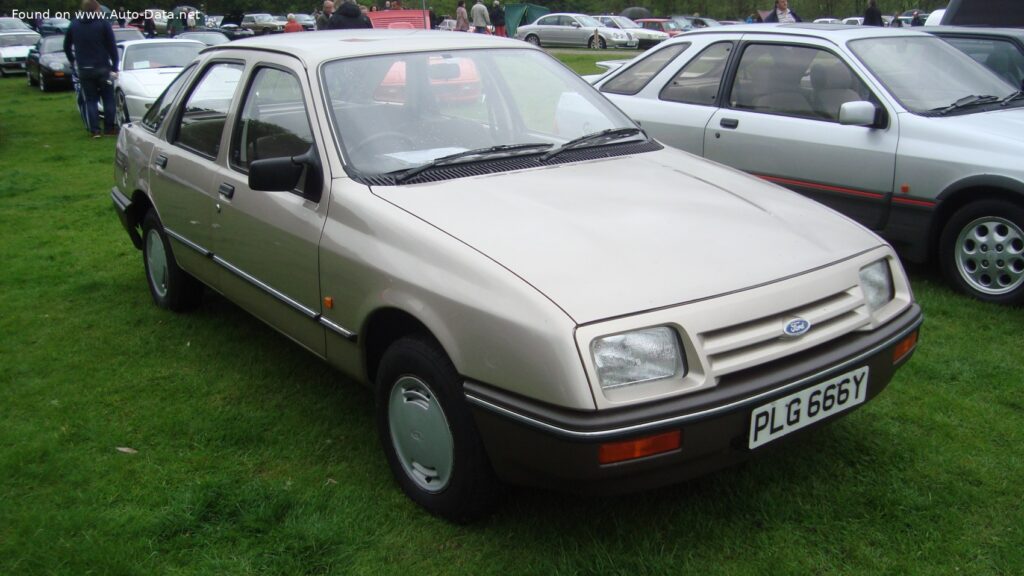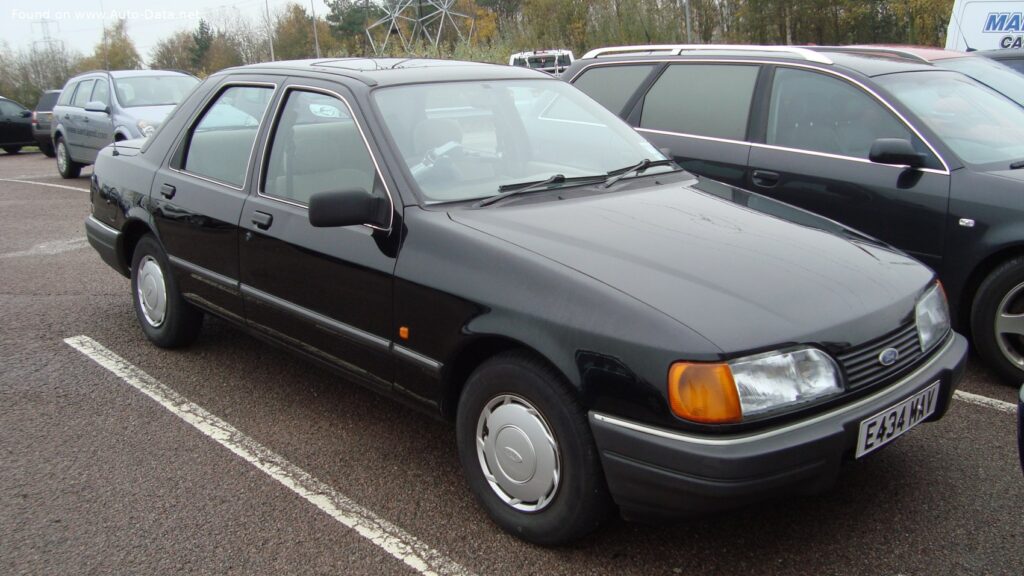
The Ford Sierra Sedan II 2.0i, produced between 1987 and 1989, represents a significant refinement of the Sierra line, a vehicle that played a crucial role in Ford of Europe’s mid-size offerings. Replacing the aging Taunus and Cortina, the Sierra was a thoroughly modern design for its time, emphasizing aerodynamics and space efficiency. The Sedan II, specifically the 2.0i variant with 101 horsepower, aimed to provide a balance of performance and economy for the European family car market. While never officially sold in the United States, the Sierra’s engineering and design philosophies influenced Ford’s global product development, and it remains a fondly remembered vehicle among enthusiasts.
The Ford Sierra Sedan II 2.0i: A European Family Sedan
The Sierra was a pivotal model for Ford, representing a departure from the traditional boxy designs of its predecessors. Introduced in 1982, it was a clean-sheet design, prioritizing aerodynamic efficiency to improve fuel economy and reduce drag. The Sedan II, launched in 1987, brought further refinements to the bodywork, interior, and mechanical components. The 2.0i model occupied a sweet spot in the range, offering a more powerful engine than the base models while remaining accessible to a wider customer base. It was positioned as a practical and reasonably sporty option for families and commuters.
Engine & Performance
The heart of the Sierra Sedan II 2.0i is its naturally aspirated 2.0-liter inline-four cylinder engine, designated as either the NE5 or NEJ depending on specific market and minor revisions. This engine produced 101 horsepower, providing adequate performance for everyday driving. While not a high-performance machine, the 2.0i offered a noticeable step up in power compared to the smaller displacement engines available in the Sierra range. The engine’s power delivery was relatively smooth, making it a comfortable choice for long journeys. The powertrain architecture relies on a traditional internal combustion engine (ICE) driving the rear wheels, a configuration common for European sedans of this era. The car featured a five-speed manual transmission, allowing drivers to effectively manage the engine’s power and optimize fuel efficiency. The rear-wheel-drive layout contributed to a balanced handling characteristic, although it also meant that traction in adverse weather conditions could be a concern.
Design & Features
The Sierra Sedan II’s design was characterized by its sleek, aerodynamic profile. The four-door sedan body style offered practical access and ample space for passengers and luggage. The interior was designed with functionality in mind, offering comfortable seating for five occupants. While not lavishly appointed, the interior featured durable materials and a logical layout of controls. Safety features, while limited by the standards of the time, included ventilated disc brakes on the front wheels and disc brakes on the rear, providing adequate stopping power. The steering system employed a rack and pinion setup, offering precise and responsive handling. The Sierra’s relatively lightweight construction contributed to its agility and fuel efficiency. The car’s exterior styling was understated yet modern for its time, with clean lines and a focus on aerodynamic efficiency. The 60-liter (15.85 US gallons) fuel tank provided a reasonable driving range, making it suitable for long-distance travel.
Technical Specifications
| Brand | Ford |
| Model | Sierra |
| Generation | Sierra Sedan II |
| Type (Engine) | 2.0i (101 Hp) |
| Start of production | 1987 |
| End of production | 1989 |
| Powertrain Architecture | Internal Combustion engine |
| Body type | Sedan |
| Seats | 5 |
| Doors | 4 |
| Fuel Type | Petrol (Gasoline) |
| Power | 101 Hp |
| Engine Model/Code | NE5, NEJ |
| Engine aspiration | Naturally aspirated engine |
| Engine oil capacity | 3.75 l (3.96 US qt | 3.3 UK qt) |
| Coolant capacity | 8 l (8.45 US qt | 7.04 UK qt) |
| Fuel tank capacity | 60 l (15.85 US gal | 13.2 UK gal) |
| Length | 4467 mm (175.87 in.) |
| Width | 1698 mm (66.85 in.) |
| Height | 1407 mm (55.39 in.) |
| Wheelbase | 2608 mm (102.68 in.) |
| Front track | 1452 mm (57.17 in.) |
| Rear track | 1468 mm (57.8 in.) |
| Minimum turning circle | 10 m (32.81 ft.) |
| Drivetrain Architecture | Rear wheel drive |
| Number of gears | 5 |
| Type of gearbox | Manual transmission |
| Front brakes | Ventilated discs |
| Rear brakes | Disc |
| Steering type | Steering rack and pinion |
The Ford Sierra Sedan II 2.0i, while not a groundbreaking vehicle in terms of technological innovation, represented a well-rounded and practical choice for European car buyers in the late 1980s. Its aerodynamic design, comfortable interior, and reliable powertrain made it a popular choice for families and commuters. Although it remained a European market exclusive, the Sierra’s influence can be seen in subsequent Ford models, and it continues to be appreciated by classic car enthusiasts for its understated style and driving characteristics.