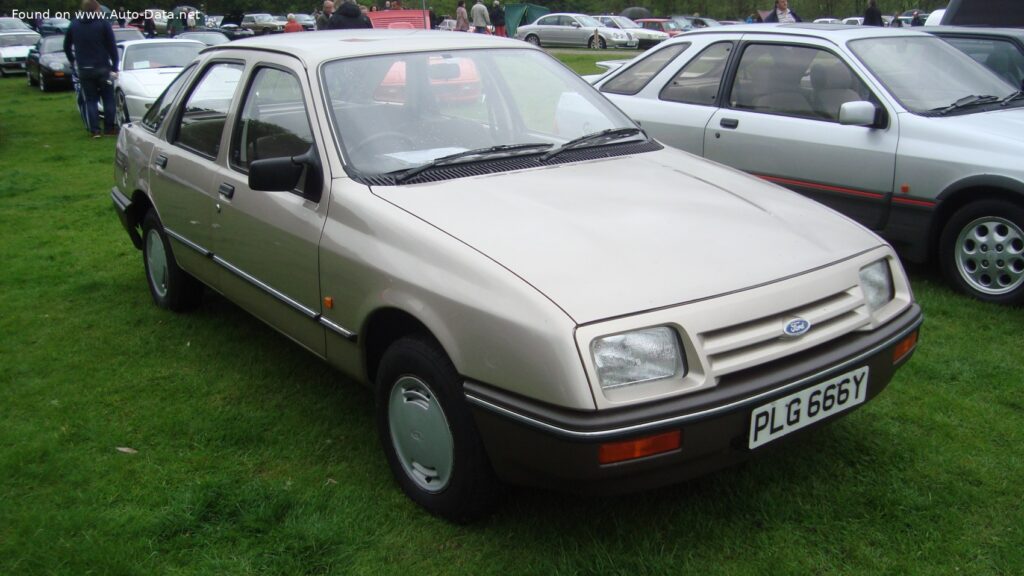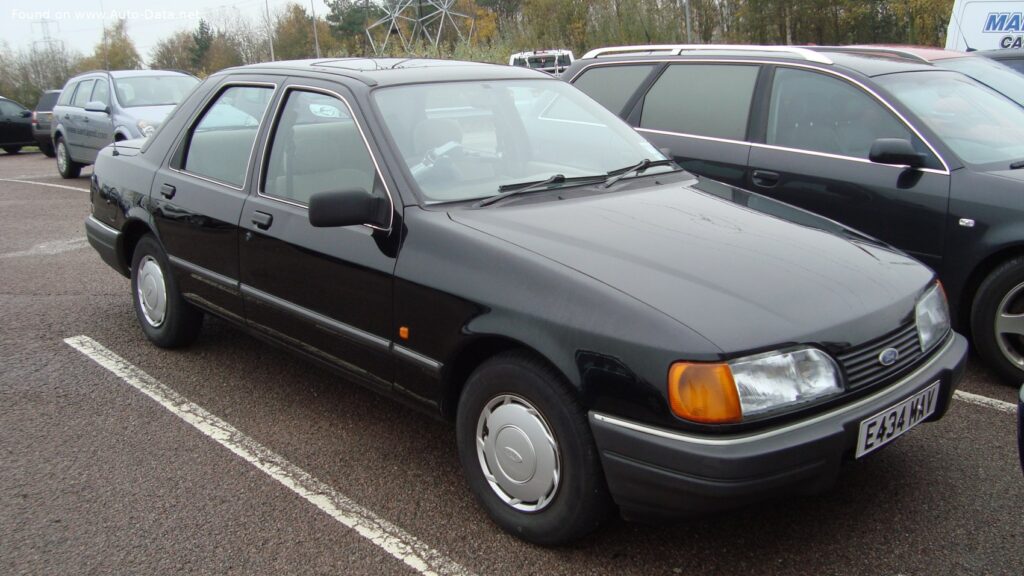
The Ford Sierra Sedan II 2.0i Automatic, produced between 1987 and 1989, represents a significant refinement of Ford’s mid-size offering in Europe. The Sierra, launched in 1982, was a pivotal model for Ford, replacing the aging Taunus and Cortina lines. It marked a departure in design and engineering, embracing a more aerodynamic profile and modern mechanical components. The Sedan II iteration, specifically the 2.0i Automatic, aimed to provide a comfortable and efficient driving experience for family and business users, competing with vehicles like the Opel Ascona and Volkswagen Passat in the European market. While never officially sold in the United States, the Sierra’s influence on subsequent Ford models, particularly in terms of chassis design and aerodynamic principles, is noteworthy. This model occupied the mainstream sedan segment, prioritizing practicality and affordability.
The Ford Sierra Sedan II 2.0i: A Detailed Overview
The Sierra Sedan II represented a mid-cycle refresh of the original Sierra, incorporating subtle styling changes and mechanical improvements. The 2.0i Automatic variant was positioned as a premium offering within the sedan range, providing a balance between performance and convenience. It was designed to appeal to buyers seeking a comfortable and well-equipped family car, or a reliable vehicle for business use. The automatic transmission was a key feature, enhancing ease of driving, particularly in urban environments. The Sierra’s design, while initially controversial for its departure from traditional Ford styling, proved to be aerodynamically efficient, contributing to improved fuel economy and stability.
Engine & Performance
The heart of the Sierra Sedan II 2.0i Automatic is a naturally aspirated 2.0-liter inline-four cylinder gasoline engine. This engine, designated as either NE5 or NEJ depending on specific production variations, produced 101 horsepower. While not a high-performance figure by modern standards, it provided adequate power for comfortable cruising and everyday driving. The engine featured a single overhead camshaft (SOHC) design and utilized a carburetor or early fuel injection system, depending on the specific market and year of production. Power was delivered to the rear wheels via a four-speed automatic transmission, offering smooth and effortless gear changes. The rear-wheel-drive configuration was a traditional layout for European sedans of this era, providing balanced handling characteristics. Performance figures were modest, with acceleration from 0 to 60 mph taking approximately 11-12 seconds, and a top speed of around 105 mph. The focus was less on outright speed and more on providing a refined and comfortable driving experience.
Design & Features
The Ford Sierra Sedan II was characterized by its distinctive, angular styling. The sedan body style offered a practical and spacious interior for five passengers. The car’s design prioritized aerodynamic efficiency, with a sloping front end and a relatively streamlined profile. The interior was functional and well-appointed for its time, featuring cloth upholstery, a basic instrument cluster, and a range of convenience features. Safety features were relatively limited by today’s standards, but typically included seat belts and a collapsible steering column. The 1987-1989 models benefited from minor cosmetic updates, including revised grille designs and interior trim materials. The Sierra’s spacious trunk offered ample luggage capacity, making it suitable for family trips. The car’s suspension system, consisting of MacPherson struts at the front and a live axle with coil springs at the rear, provided a comfortable ride quality. The steering was rack and pinion, offering precise and responsive handling. The Sierra’s build quality was generally considered to be good, and the car proved to be relatively reliable.
Technical Specifications
| Brand | Ford |
| Model | Sierra |
| Generation | Sierra Sedan II |
| Type (Engine) | 2.0i (101 Hp) Automatic |
| Start of production | 1987 |
| End of production | 1989 |
| Powertrain Architecture | Internal Combustion engine |
| Body type | Sedan |
| Seats | 5 |
| Doors | 4 |
| Fuel Type | Petrol (Gasoline) |
| Power | 101 Hp |
| Engine Model/Code | NE5, NEJ |
| Engine aspiration | Naturally aspirated engine |
| Engine oil capacity | 3.75 l / 3.96 US qt / 3.3 UK qt |
| Coolant capacity | 8 l / 8.45 US qt / 7.04 UK qt |
| Fuel tank capacity | 60 l / 15.85 US gal / 13.2 UK gal |
| Length | 4467 mm / 175.87 in. |
| Width | 1698 mm / 66.85 in. |
| Height | 1407 mm / 55.39 in. |
| Wheelbase | 2608 mm / 102.68 in. |
| Front track | 1452 mm / 57.17 in. |
| Rear track | 1468 mm / 57.8 in. |
| Minimum turning circle | 10 m / 32.81 ft. |
| Drivetrain Architecture | Rear wheel drive, Internal Combustion engine (ICE) |
| Drive wheel | Rear wheel drive |
| Number of gears and type of gearbox | 4 gears, automatic transmission |
| Front brakes | Ventilated discs |
| Rear brakes | Disc |
| Steering type | Steering rack and pinion |
The Ford Sierra Sedan II 2.0i Automatic, while not a groundbreaking vehicle in terms of innovation, represented a solid and reliable offering in the European mid-size sedan segment. Its blend of practicality, comfort, and reasonable performance made it a popular choice for families and business users alike. The Sierra’s legacy extends beyond its sales figures, as it paved the way for future Ford models and contributed to the evolution of automotive design and engineering in Europe.