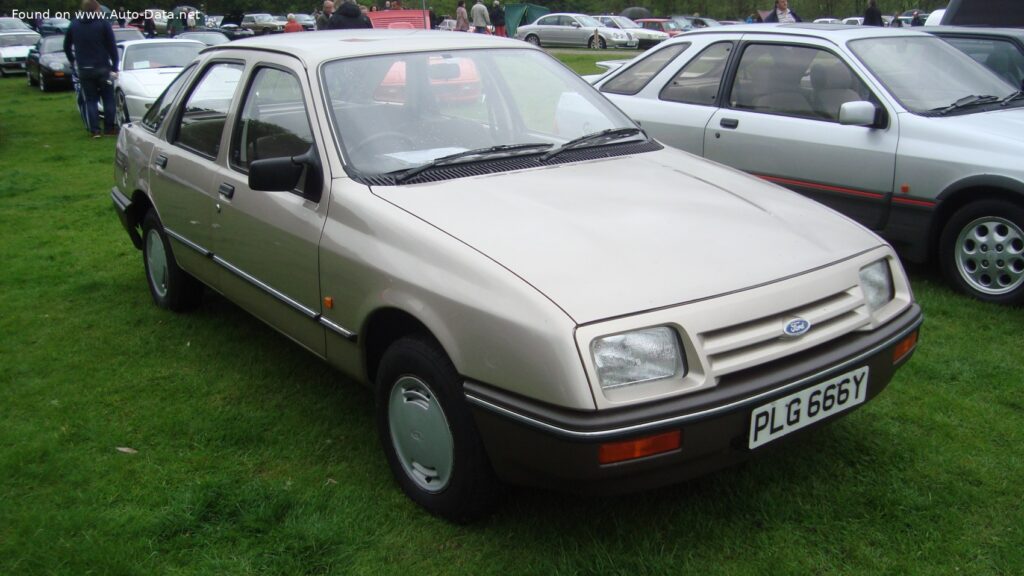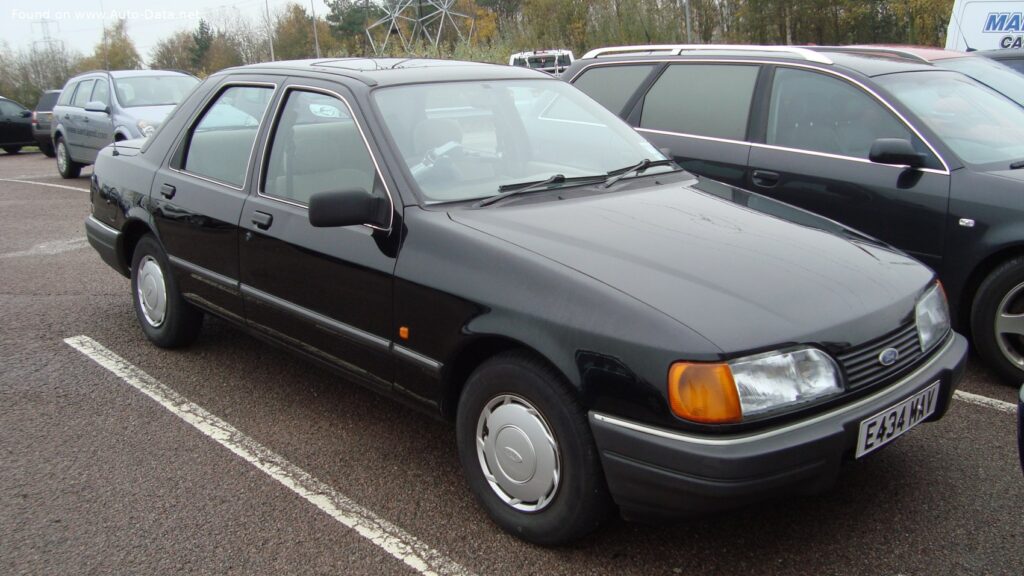
The Ford Sierra Sedan II 2.0i (101 Hp) CAT, produced between 1987 and 1993, represents a significant evolution in Ford of Europe’s mid-size offering. Replacing the aging Cortina, the Sierra was a thoroughly modern design for its time, embracing aerodynamic styling and a more spacious interior. The “Sedan II” designation denotes a series of updates and refinements applied during the model’s lifespan. While never officially sold in the United States, the Sierra was a hugely popular vehicle in Europe, competing with models like the Opel/Vauxhall Vectra, Peugeot 405, and Fiat Tempra. It marked a departure from the boxy designs of the past, and its success paved the way for the later Mondeo.
The Ford Sierra Sedan II: A European Success Story
The Sierra was a pivotal model for Ford in Europe, representing a substantial investment in a new platform and manufacturing techniques. It was designed to be lighter and more aerodynamic than its predecessor, contributing to improved fuel efficiency and handling. The Sedan II iteration, specifically the 2.0i CAT model, offered a balance of performance and economy, making it a popular choice for family cars and company vehicles. The “CAT” designation refers to the catalytic converter fitted to the exhaust system, signifying an effort to meet increasingly stringent European emissions regulations. The Sierra’s design, penned under the direction of Uwe Bahnsen, was initially controversial due to its radical departure from traditional Ford styling, but it ultimately proved successful in the marketplace.
Engine & Performance
The heart of the Sierra Sedan II 2.0i CAT is a naturally aspirated 2.0-liter inline-four cylinder engine, designated the N4B. This engine produces 101 horsepower. While not a high-output engine by modern standards, it provided adequate performance for the time, offering a reasonable blend of acceleration and fuel economy. The engine is paired with a five-speed manual transmission, delivering power to the rear wheels. This rear-wheel-drive configuration was a hallmark of Ford’s European sedans for many years, providing a more engaging driving experience than front-wheel-drive alternatives. The engine’s relatively simple design contributed to its reliability and ease of maintenance. The 2.0i model was positioned as a step up from the base 1.6-liter engine, offering more power for drivers who frequently undertook longer journeys or required more responsive performance. The engine oil capacity is 3.75 liters (3.96 US quarts, 3.3 UK quarts), and it requires a specific oil specification (details require login to access). The cooling system holds 8 liters (8.45 US quarts, 7.04 UK quarts) of coolant.
Design & Features
The Sierra Sedan II is a four-door, five-seater sedan. Its body style is characterized by clean lines, a sloping roofline, and a relatively long wheelbase. The design prioritized aerodynamic efficiency, which was a key focus during the late 1980s and early 1990s. Inside, the Sierra offered a surprisingly spacious cabin for its size, with comfortable seating and a functional dashboard layout. Features were relatively basic compared to modern cars, but included features expected of a vehicle in its class at the time. Safety features were evolving during this period, and the Sierra incorporated improvements over its predecessor, though it lacked many of the advanced safety systems found in contemporary vehicles. The focus was on structural integrity and basic occupant protection. The fuel tank capacity is a substantial 60 liters (15.85 US gallons, 13.2 UK gallons), providing a good driving range. The interior trim levels varied, with higher-spec models offering features such as central locking, electric windows, and upgraded upholstery.
Technical Specifications
| Brand | Ford |
| Model | Sierra |
| Generation | Sierra Sedan II |
| Type (Engine) | 2.0i (101 Hp) CAT |
| Start of production | 1987 |
| End of production | 1993 |
| Powertrain Architecture | Internal Combustion engine |
| Body type | Sedan |
| Seats | 5 |
| Doors | 4 |
| Fuel Type | Petrol (Gasoline) |
| Power | 101 Hp |
| Engine Model/Code | N4B |
| Engine aspiration | Naturally aspirated engine |
| Engine oil capacity | 3.75 l (3.96 US qt | 3.3 UK qt) |
| Coolant | 8 l (8.45 US qt | 7.04 UK qt) |
| Fuel tank capacity | 60 l (15.85 US gal | 13.2 UK gal) |
| Length | 4467 mm (175.87 in.) |
| Width | 1698 mm (66.85 in.) |
| Height | 1407 mm (55.39 in.) |
| Wheelbase | 2608 mm (102.68 in.) |
| Front track | 1452 mm (57.17 in.) |
| Rear (Back) track | 1468 mm (57.8 in.) |
| Minimum turning circle (turning diameter) | 10 m (32.81 ft.) |
| Drivetrain Architecture | The Internal combustion engine (ICE) drives the rear wheels of the vehicle. |
| Drive wheel | Rear wheel drive |
| Number of gears and type of gearbox | 5 gears, manual transmission |
| Front brakes | Ventilated discs |
| Rear brakes | Drum |
| Steering type | Steering rack and pinion |
| Power steering | Hydraulic Steering |
The Ford Sierra Sedan II 2.0i CAT, while not a performance icon, represents a significant step forward in Ford of Europe’s design and engineering capabilities. Its blend of practicality, efficiency, and reasonable performance made it a popular choice for European drivers during its production run. It remains a fondly remembered vehicle for those who experienced its blend of traditional rear-wheel-drive handling and modern aerodynamic styling. The Sierra’s legacy continues in the form of its successor, the Mondeo, which built upon the foundations laid by this groundbreaking model.