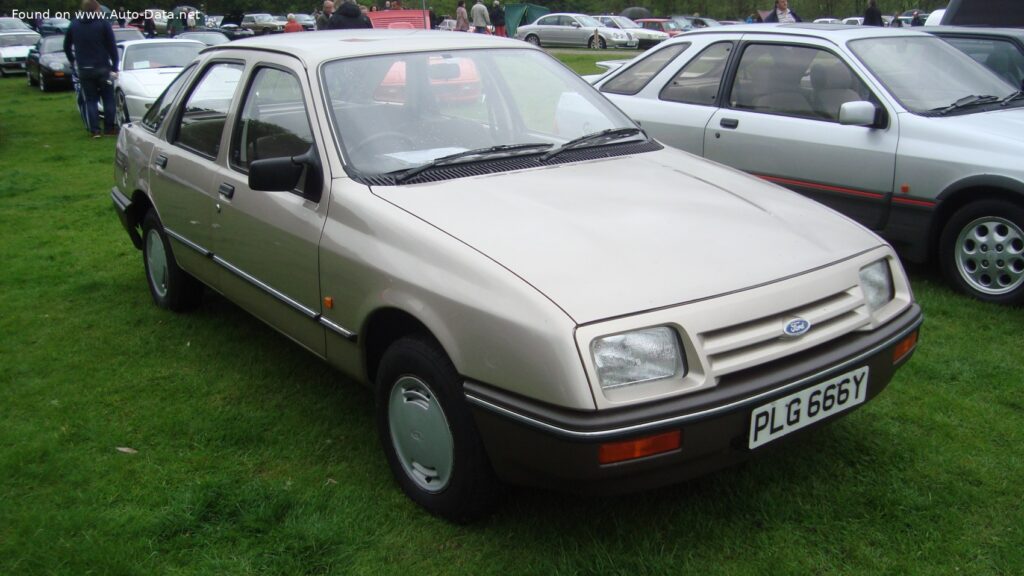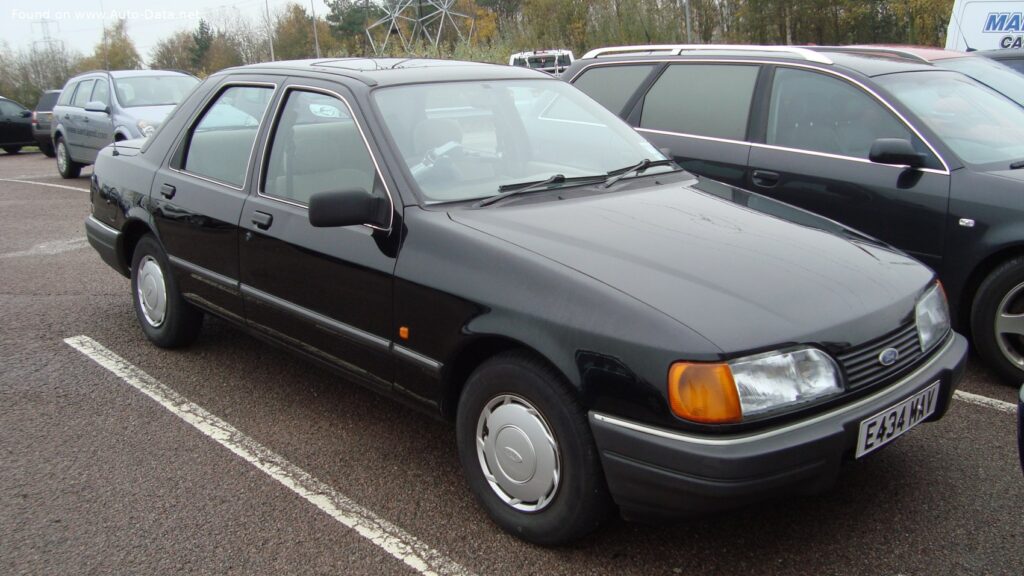
The Ford Sierra Sedan II 2.0i Automatic, produced between 1987 and 1993, represents a significant evolution in Ford of Europe’s mid-size offering. Replacing the aging Cortina, the Sierra was a thoroughly modern design for its time, embracing aerodynamic styling and a more spacious interior. The Sedan II, specifically the 2.0i variant with automatic transmission, aimed to provide a comfortable and refined driving experience, appealing to family buyers and those seeking a practical yet reasonably sporty vehicle. While never officially sold in the United States, the Sierra was a hugely popular car in Europe, competing with models like the Opel/Vauxhall Vectra, Peugeot 405, and Fiat Tempra. It marked a departure from the boxy designs of the past, and its influence can be seen in subsequent Ford models.
The Ford Sierra Sedan II: A European Success Story
The Ford Sierra was a pivotal model for Ford of Europe, representing a clean-sheet design that moved away from the traditional, somewhat dated aesthetics of the Cortina. Introduced in 1982, the Sierra underwent a significant facelift in 1987, resulting in the Sedan II. This update brought revised styling, improved aerodynamics, and enhanced interior appointments. The 2.0i model, equipped with a fuel-injected engine and an automatic transmission, was positioned as a premium offering within the Sierra range, providing a balance of performance and convenience. The Sierra’s success stemmed from its practicality, reliability, and relatively affordable price point, making it a popular choice for both private and fleet buyers across Europe.
Engine & Performance
The heart of the Sierra Sedan II 2.0i Automatic is a naturally aspirated 2.0-liter inline-four cylinder engine, designated as either N4A or N4I depending on specific production variations. This engine produced 115 horsepower, providing adequate performance for comfortable cruising and everyday driving. The automatic transmission, featuring four forward gears, offered smooth and effortless gear changes, enhancing the overall driving experience. While not a sports car by any means, the 2.0i offered respectable acceleration and a comfortable highway speed. The rear-wheel-drive configuration, a hallmark of Ford’s European models at the time, contributed to balanced handling characteristics. The engine’s fuel injection system improved efficiency and reduced emissions compared to earlier carbureted engines. The powertrain was designed for reliability and ease of maintenance, reflecting Ford’s commitment to providing a practical and dependable vehicle.
Design & Features
The Sierra Sedan II boasted a sleek, aerodynamic profile that was considered quite modern for the late 1980s and early 1990s. The four-door sedan body style offered ample space for passengers and luggage, making it a suitable family car. The interior was designed with practicality in mind, featuring comfortable seating for five occupants and a functional dashboard layout. While not lavishly equipped by today’s standards, the 2.0i Automatic typically included features such as power steering, cloth upholstery, and a basic audio system. Safety features were relatively limited compared to modern vehicles, but typically included seatbelts and a collapsible steering column. The Sierra’s design prioritized functionality and efficiency, resulting in a vehicle that was both practical and aesthetically pleasing for its time. The car’s relatively lightweight construction contributed to its fuel efficiency and handling agility.
Technical Specifications
| Brand | Ford |
| Model | Sierra |
| Generation | Sierra Sedan II |
| Type (Engine) | 2.0i (115 Hp) Automatic |
| Start of production | 1987 |
| End of production | 1993 |
| Powertrain Architecture | Internal Combustion engine |
| Body type | Sedan |
| Seats | 5 |
| Doors | 4 |
| Fuel Type | Petrol (Gasoline) |
| Power | 115 Hp |
| Engine Model/Code | N4A, N4I |
| Engine aspiration | Naturally aspirated engine |
| Engine oil capacity | 3.8 l / 4.02 US qt / 3.34 UK qt |
| Coolant capacity | 8 l / 8.45 US qt / 7.04 UK qt |
| Fuel tank capacity | 60 l / 15.85 US gal / 13.2 UK gal |
| Length | 4467 mm / 175.87 in. |
| Width | 1698 mm / 66.85 in. |
| Height | 1407 mm / 55.39 in. |
| Wheelbase | 2608 mm / 102.68 in. |
| Front track | 1452 mm / 57.17 in. |
| Rear track | 1468 mm / 57.8 in. |
| Minimum turning circle | 10 m / 32.81 ft. |
| Drivetrain Architecture | Rear wheel drive, Internal Combustion engine (ICE) |
| Drive wheel | Rear wheel drive |
| Number of gears and type of gearbox | 4 gears, automatic transmission |
| Front brakes | Ventilated discs |
| Rear brakes | Drum |
| Steering type | Steering rack and pinion |
| Power steering | Hydraulic Steering |
The Ford Sierra Sedan II 2.0i Automatic, while not a performance icon, remains a significant vehicle in Ford’s history. It represented a leap forward in design, technology, and practicality for the European market. Its blend of comfort, reliability, and affordability made it a popular choice for families and commuters alike, solidifying Ford’s position as a leading automotive manufacturer in Europe. Though never officially available in the US, the Sierra’s influence on subsequent Ford models is undeniable, and it continues to be appreciated by classic car enthusiasts today.