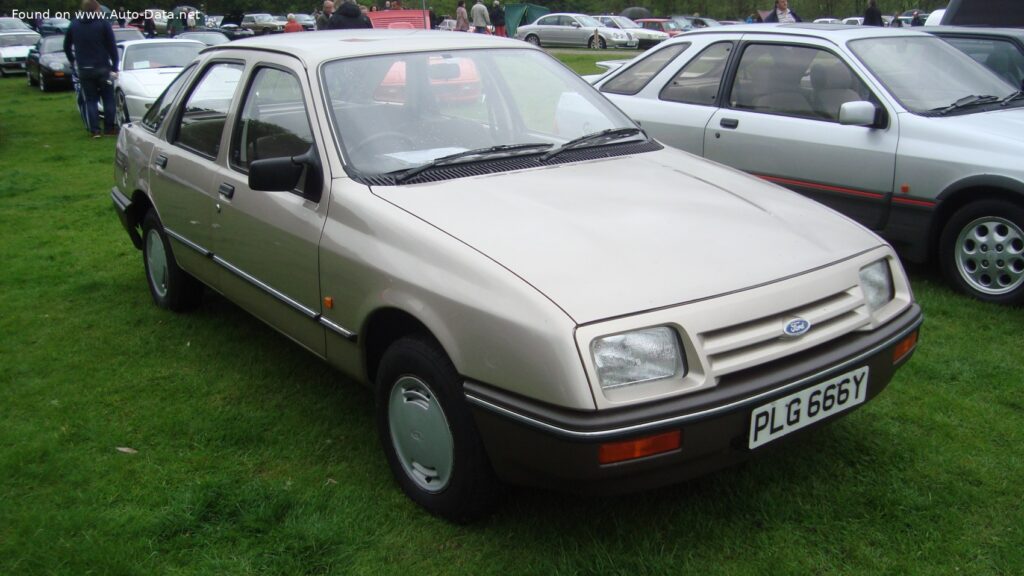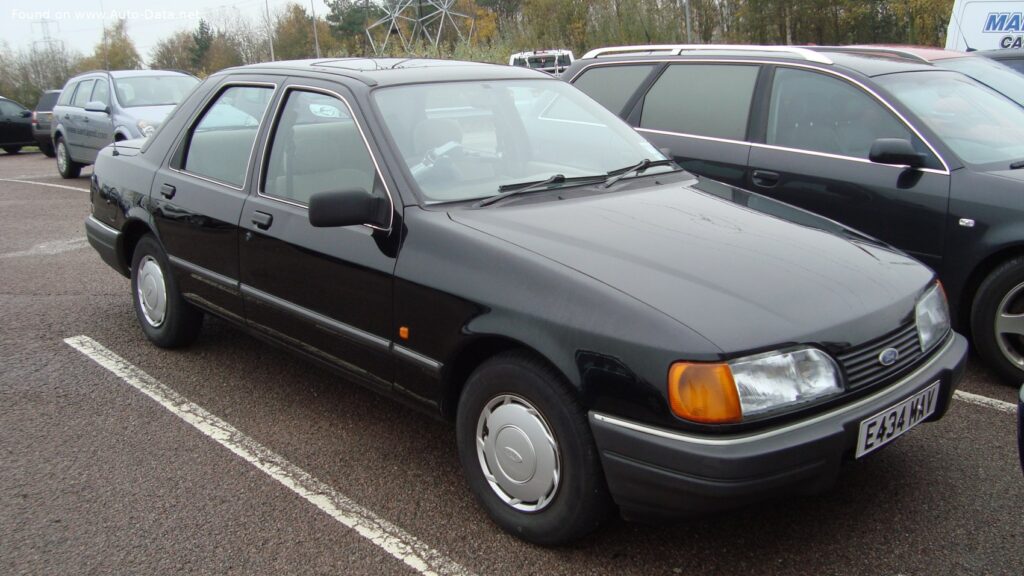
The Ford Sierra Sedan II 2.0i (125 Hp), produced between 1990 and 1993, represents a significant evolution in Ford of Europe’s mid-size offering. The Sierra, intended as a modern replacement for the aging Cortina and Taunus, was a departure from traditional Ford designs, embracing a more aerodynamic and contemporary aesthetic. While never officially sold in the United States, the Sierra was a hugely popular vehicle in Europe, competing with models like the Opel/Vauxhall Vectra, Peugeot 405, and Fiat Tempra. The Sedan II variant, specifically the 2.0i model, offered a balance of performance and fuel efficiency, appealing to a broad range of buyers seeking a practical and reasonably sporty family car.
The Ford Sierra Sedan II: A European Success Story
The Sierra’s development was driven by a need for a car that could compete in a rapidly changing automotive landscape. Ford aimed for a vehicle that was lighter, more aerodynamic, and more fuel-efficient than its predecessors. The Sierra’s design, penned under the direction of Uwe Bahnsen, was initially controversial due to its boxy shape, a stark contrast to the more rounded designs of the era. However, its aerodynamic efficiency proved to be a key selling point. The Sedan II iteration brought refinements to the original Sierra, including updated interior trim and minor exterior styling changes. The 2.0i model, with its 125 horsepower engine, was positioned as a mid-range offering, providing a step up in performance from the base models.
Engine & Performance
The heart of the Sierra Sedan II 2.0i is its 1998 cc (121.93 cu. in.) inline-four cylinder engine. This naturally aspirated powerplant, designated the N9C engine code, produces 125 horsepower at 5500 rpm and 177 Nm (130.55 lb.-ft.) of torque at 2500 rpm. The engine utilizes multi-port fuel injection and a double overhead camshaft (DOHC) valvetrain, contributing to its relatively high power output for its displacement – 62.6 Hp per liter. Power is delivered to the rear wheels via a five-speed manual transmission. This configuration allows for a 0-60 mph (0-96 km/h) acceleration time of approximately 9.1 seconds and a top speed of 195 km/h (121.17 mph). The weight-to-power ratio of 9.6 kg/Hp and a weight-to-torque ratio of 6.8 kg/Nm contribute to a reasonably responsive driving experience. Fuel consumption is rated at 8.4 l/100 km (28 US mpg, 33.6 UK mpg).
Design & Features
The Ford Sierra Sedan II is a four-door, five-seater sedan. Its body style reflects the design trends of the early 1990s, characterized by a relatively boxy silhouette and a focus on practicality. The Sedan body style offered a more traditional appearance compared to the fastback and hatchback versions of the Sierra. Key features of the 2.0i model included hydraulic power steering, ventilated front disc brakes, and disc brakes on the rear axle. The inclusion of an Anti-lock Braking System (ABS) was a notable safety feature for the time, enhancing braking performance and stability. The interior offered a functional and comfortable environment, with seating for five adults. Trunk space is a respectable 415 liters (14.66 cu. ft.). The Sierra’s design prioritized aerodynamic efficiency, contributing to its fuel economy and stability at higher speeds. The vehicle’s dimensions are 4467 mm (175.87 in.) in length, 1698 mm (66.85 in.) in width, and 1407 mm (55.39 in.) in height.
Technical Specifications: Ford Sierra Sedan II 2.0i (125 Hp)
| Brand | Ford |
| Model | Sierra |
| Generation | Sierra Sedan II |
| Type (Engine) | 2.0i (125 Hp) |
| Start of production | 1990 |
| End of production | 1993 |
| Powertrain Architecture | Internal Combustion engine |
| Body type | Sedan |
| Seats | 5 |
| Doors | 4 |
| Fuel consumption (combined) | 8.4 l/100 km |
| Fuel consumption (US mpg) | 28 US mpg |
| Fuel consumption (UK mpg) | 33.6 UK mpg |
| Fuel Type | Petrol (Gasoline) |
| Acceleration 0 – 100 km/h | 9.6 sec |
| Acceleration 0 – 62 mph | 9.6 sec |
| Acceleration 0 – 60 mph | 9.1 sec |
| Maximum speed | 195 km/h (121.17 mph) |
| Weight-to-power ratio | 9.6 kg/Hp |
| Weight-to-torque ratio | 6.8 kg/Nm |
| Power | 125 Hp @ 5500 rpm |
| Power per litre | 62.6 Hp/l |
| Torque | 177 Nm @ 2500 rpm (130.55 lb.-ft. @ 2500 rpm) |
| Engine layout | Front, Longitudinal |
| Engine Model/Code | N9C |
| Engine displacement | 1998 cm3 (121.93 cu. in.) |
| Number of cylinders | 4 |
| Engine configuration | Inline |
| Cylinder Bore | 86 mm (3.39 in.) |
| Piston Stroke | 86 mm (3.39 in.) |
| Number of valves per cylinder | 2 |
| Fuel injection system | Multi-port manifold injection |
| Engine aspiration | Naturally aspirated engine |
| Valvetrain | DOHC |
| Engine oil capacity | 4.5 l (4.76 US qt | 3.96 UK qt) |
| Coolant | 7.3 l (7.71 US qt | 6.42 UK qt) |
| Kerb Weight | 1200 kg (2645.55 lbs.) |
| Trunk (boot) space – minimum | 415 l (14.66 cu. ft.) |
| Fuel tank capacity | 60 l (15.85 US gal | 13.2 UK gal) |
| Length | 4467 mm (175.87 in.) |
| Width | 1698 mm (66.85 in.) |
| Height | 1407 mm (55.39 in.) |
| Wheelbase | 2608 mm (102.68 in.) |
| Front track | 1452 mm (57.17 in.) |
| Rear (Back) track | 1468 mm (57.8 in.) |
| Minimum turning circle (turning diameter) | 10 m (32.81 ft.) |
| Drivetrain Architecture | Rear wheel drive |
| Number of gears and type of gearbox | 5 gears, manual transmission |
| Front brakes | Ventilated discs |
| Rear brakes | Disc |
| Assisting systems | ABS (Anti-lock braking system) |
| Steering type | Steering rack and pinion |
| Power steering | Hydraulic Steering |
| Tires size | 185/60 R14 |
| Wheel rims size | 14 |
The Ford Sierra Sedan II 2.0i, while not a performance icon, represented a solid and reliable family car for its time. Its blend of practicality, reasonable performance, and improving safety features made it a popular choice in the European market, and a significant step forward for Ford of Europe.