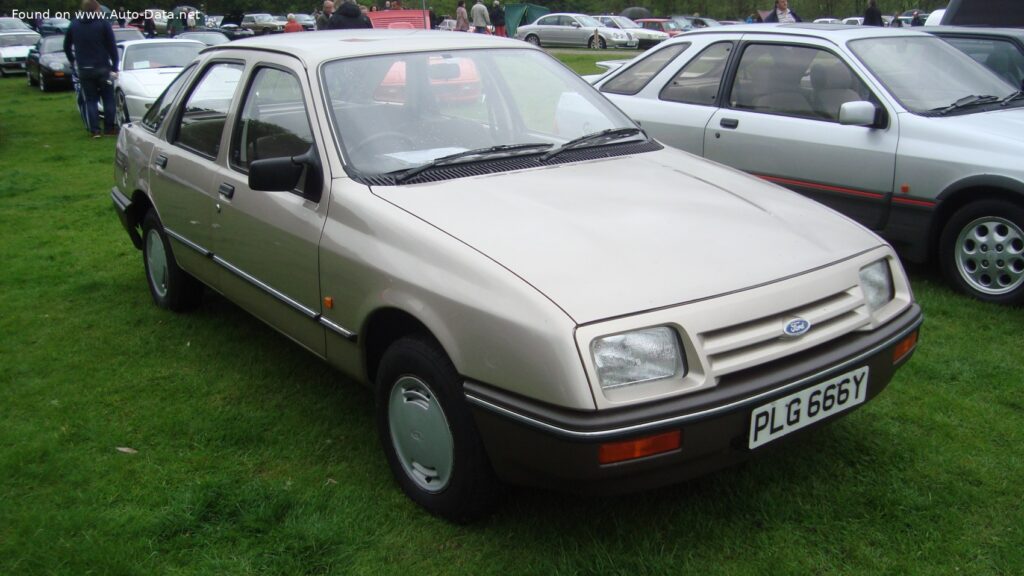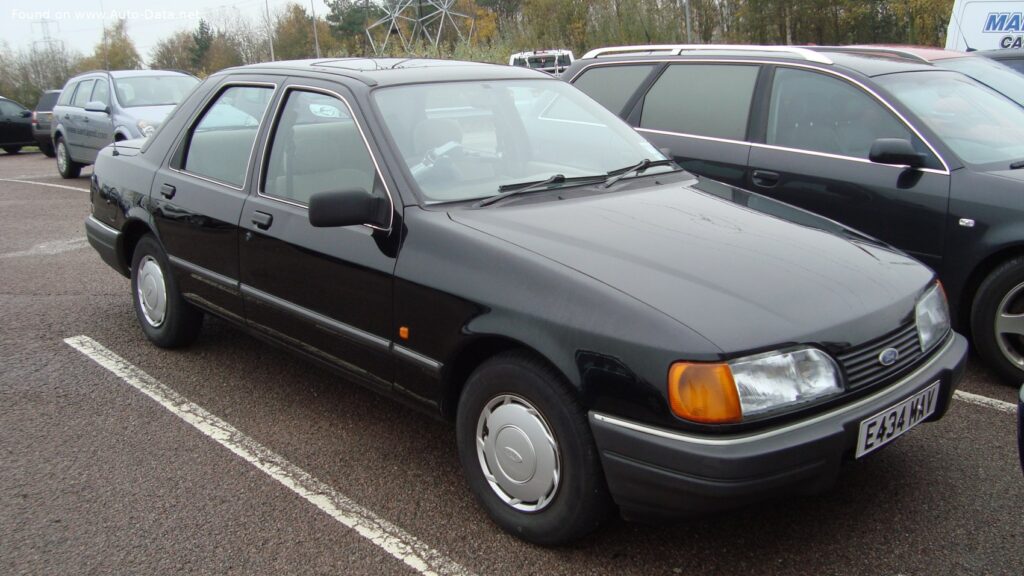
The Ford Sierra Sedan II 2.9i (145 Hp), produced between 1988 and 1993, represents a significant evolution in Ford of Europe’s mid-size offering. The Sierra, intended as a modern replacement for the aging Cortina and Taunus, aimed to provide a more aerodynamic and technologically advanced vehicle. The Sedan II, specifically the 2.9i variant, was positioned as a performance-oriented option within the Sierra range, offering a blend of practicality and respectable power for its time. While not officially sold in the United States, the Sierra was a crucial model for Ford in the European market, competing with vehicles like the Opel/Vauxhall Vectra and Volkswagen Passat. This model marked a shift towards more contemporary automotive design and engineering for Ford, influencing subsequent models.
The Ford Sierra Sedan II 2.9i: A Detailed Overview
The Sierra underwent a substantial redesign in 1986, resulting in the “Series II” models. This facelift addressed criticisms of the original Sierra’s somewhat angular styling and improved interior refinement. The 2.9i model, distinguished by its larger engine displacement, was aimed at drivers seeking a more engaging driving experience. It represented the upper echelon of the Sierra Sedan lineup, offering a balance between comfort and performance. The Sierra’s impact extended beyond its sales figures; it introduced new manufacturing techniques and design philosophies within Ford, paving the way for future generations of vehicles.
Engine & Performance
The heart of the Sierra Sedan II 2.9i is its 2.9-liter, naturally aspirated inline-six cylinder engine, designated as either B4B or B4C depending on specific production variations. This engine produced 145 horsepower, a respectable figure for a family sedan in the late 1980s and early 1990s. The engine’s configuration provided a smooth power delivery and a distinctive exhaust note. Power was transmitted to all four wheels via a five-speed manual transmission, making this a relatively uncommon all-wheel-drive sedan for the period. The all-wheel-drive system enhanced traction and stability, particularly in adverse weather conditions. While acceleration figures weren’t groundbreaking by modern standards, the 2.9i offered a responsive and capable driving experience. The engine required 4.25 liters (4.49 US quarts, 3.74 UK quarts) of engine oil, adhering to specific Ford lubricant specifications. Cooling was managed by a system holding 8.5 liters (8.98 US quarts, 7.48 UK quarts) of coolant.
Design & Features
The Sierra Sedan II boasted a sleek, aerodynamic profile for its time, a departure from the boxier designs of previous Ford models. The four-door sedan body style offered practical access and comfortable seating for five passengers. The interior, while functional, was designed with a focus on durability and ease of use. Features were relatively modest compared to contemporary luxury vehicles, but included essential amenities such as power steering (via a steering rack and pinion system), and ventilated front disc brakes paired with rear discs for effective stopping power. The 60-liter (15.85 US gallons, 13.2 UK gallons) fuel tank provided a reasonable driving range. Safety features, while limited by the standards of today, included a robust chassis structure and the aforementioned effective braking system. The car’s design prioritized practicality and affordability, making it a popular choice for families and fleet buyers. The turning circle measured 10 meters (32.81 feet), providing adequate maneuverability for urban driving.
Technical Specifications
| Brand | Ford |
| Model | Sierra |
| Generation | Sierra Sedan II |
| Type (Engine) | 2.9 i (145 Hp) |
| Start of production | 1988 |
| End of production | 1993 |
| Powertrain Architecture | Internal Combustion engine |
| Body type | Sedan |
| Seats | 5 |
| Doors | 4 |
| Fuel Type | Petrol (Gasoline) |
| Power | 145 Hp |
| Engine Model/Code | B4B, B4C |
| Engine aspiration | Naturally aspirated engine |
| Engine oil capacity | 4.25 l / 4.49 US qt / 3.74 UK qt |
| Coolant | 8.5 l / 8.98 US qt / 7.48 UK qt |
| Fuel tank capacity | 60 l / 15.85 US gal / 13.2 UK gal |
| Length | 4467 mm / 175.87 in. |
| Width | 1698 mm / 66.85 in. |
| Height | 1407 mm / 55.39 in. |
| Wheelbase | 2608 mm / 102.68 in. |
| Front track | 1452 mm / 57.17 in. |
| Rear (Back) track | 1468 mm / 57.8 in. |
| Minimum turning circle (turning diameter) | 10 m / 32.81 ft. |
| Drive wheel | All wheel drive (4×4) |
| Number of gears and type of gearbox | 5 gears, manual transmission |
| Front brakes | Ventilated discs |
| Rear brakes | Disc |
| Steering type | Steering rack and pinion |
The Ford Sierra Sedan II 2.9i, while largely unknown in the American market, was a significant vehicle in Europe. It represented a step forward in Ford’s design and engineering capabilities, offering a compelling combination of performance, practicality, and affordability. Its all-wheel-drive system was a notable feature for its class, and the inline-six engine provided a smooth and enjoyable driving experience. The Sierra’s legacy continues to influence Ford’s approach to vehicle development, and it remains a fondly remembered model among European car enthusiasts.