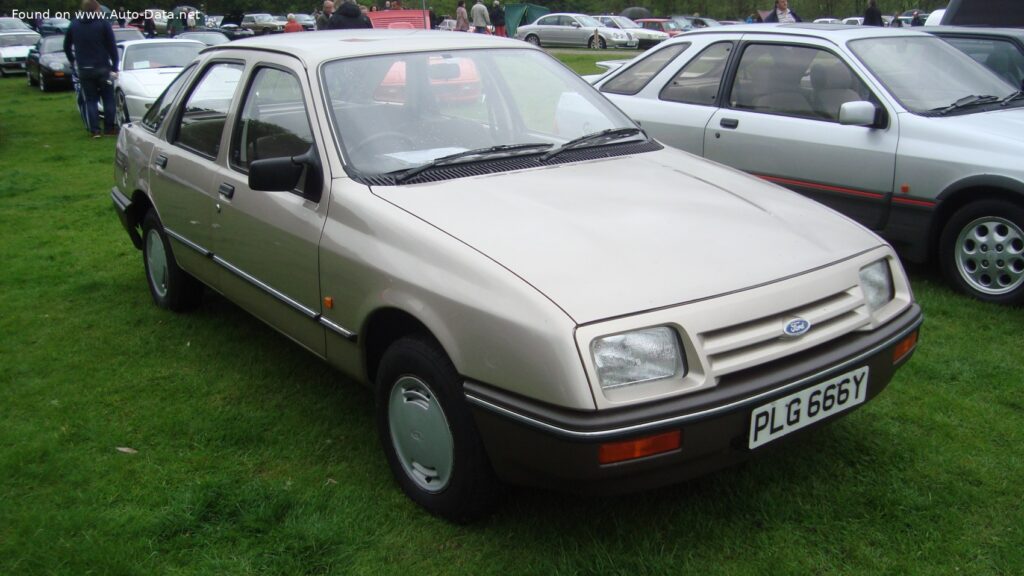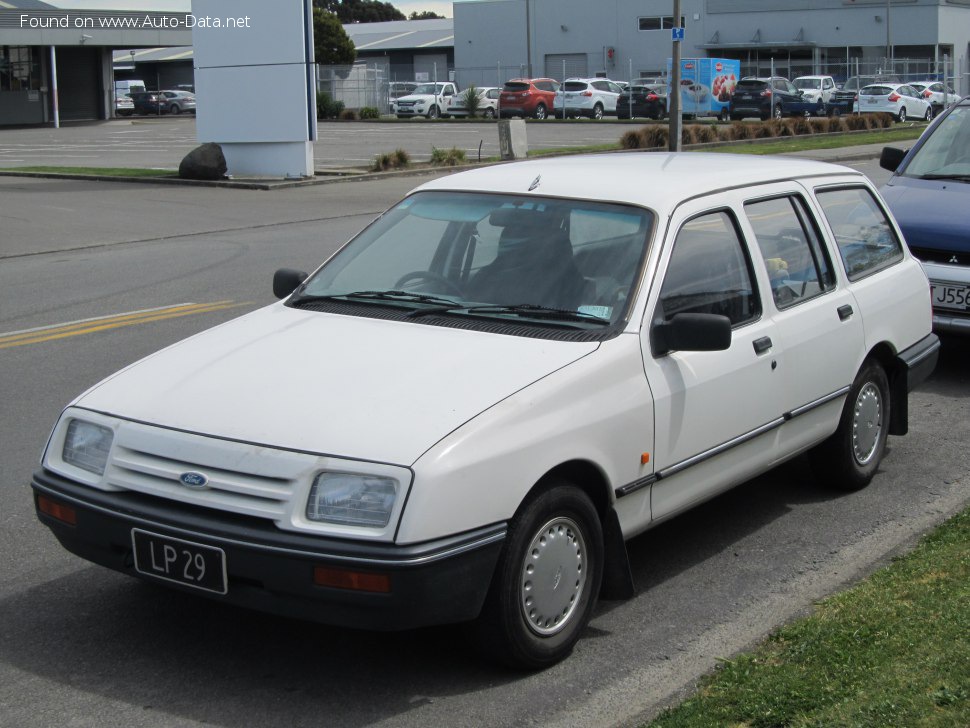
The Ford Sierra Turnier I 1.6 (75 Hp), produced between 1982 and 1986, represents a significant step forward for Ford’s European lineup. As the estate (station wagon) variant of the Sierra, it offered practicality and versatility alongside the modern styling that distinguished the Sierra from its predecessor, the Cortina. The Turnier, meaning “tournament” or “competition” in German, reflected Ford’s intention to present a vehicle capable of handling both family duties and active lifestyles. This model was never officially sold in the United States, but it was a popular choice in Europe, competing with vehicles like the Vauxhall/Opel Astra Estate and the Volvo 240 Estate. The Sierra, and by extension the Turnier, was a pivotal model for Ford, introducing aerodynamic design and modern engineering to the traditionally conservative British and European car markets.
Ford Sierra Turnier I: A Detailed Overview
The Sierra Turnier I was part of the first generation of the Sierra, launched in 1982. It was designed to replace the aging Cortina, and represented a radical departure in terms of styling and engineering. The Sierra’s aerodynamic shape, penned under the direction of Uwe Bahnsen, was a deliberate attempt to improve fuel efficiency and reduce drag. The Turnier variant capitalized on this design, offering a spacious and practical load-carrying area without sacrificing the Sierra’s sleek aesthetic. The 1.6-liter engine option, producing 75 horsepower, was positioned as an economical choice for buyers prioritizing fuel efficiency and everyday usability over outright performance.
Engine & Performance
The Ford Sierra Turnier I 1.6 was powered by a 1.6-liter, naturally aspirated four-cylinder petrol (gasoline) engine. This engine, part of Ford’s “Pinto” family, produced 75 horsepower. While not a high-performance engine by modern standards, it provided adequate power for typical driving conditions in Europe during the early 1980s. The engine was paired with a five-speed manual transmission, which allowed drivers to optimize fuel economy and engine performance. The drivetrain architecture was rear-wheel drive, a configuration common for European cars of this era. This rear-wheel drive layout contributed to the Sierra’s handling characteristics, offering a balanced feel, although it could be challenging in slippery conditions without modern traction control systems. The engine’s relatively small displacement and simple design contributed to its reliability and ease of maintenance. Acceleration was modest, but the engine was known for its durability and relatively low running costs.
Design & Features
The Sierra Turnier I’s body style is a five-door station wagon (estate). The design prioritized practicality, offering a large cargo area accessible through a rear tailgate. The Turnier’s rear suspension was specifically tuned to handle heavier loads, making it suitable for carrying luggage, equipment, or other cargo. The interior of the Turnier was designed with family use in mind, offering seating for five passengers. While the interior trim and features were relatively basic compared to modern vehicles, they were functional and durable. Safety features were limited by the standards of the time, but included seatbelts and a robust chassis structure. The exterior styling mirrored the saloon (sedan) version of the Sierra, with a focus on aerodynamic efficiency. The Turnier’s extended roofline and larger rear window distinguished it from the saloon, providing increased headroom and visibility for rear passengers. The vehicle’s dimensions were carefully considered to maximize interior space while maintaining a manageable size for urban driving and parking.
Technical Specifications
| Brand | Ford |
| Model | Sierra |
| Generation | Sierra Turnier I |
| Type (Engine) | 1.6 (75 Hp) |
| Start of production | 1982 |
| End of production | 1986 |
| Powertrain Architecture | Internal Combustion engine |
| Body type | Station wagon (estate) |
| Seats | 5 |
| Doors | 5 |
| Fuel Type | Petrol (Gasoline) |
| Power | 75 Hp |
| Engine aspiration | Naturally aspirated engine |
| Fuel tank capacity | 60 l / 15.85 US gal / 13.2 UK gal |
| Length | 4511 mm / 177.6 in. |
| Width | 1720 mm / 67.72 in. |
| Height | 1428 mm / 56.22 in. |
| Wheelbase | 2608 mm / 102.68 in. |
| Front track | 1452 mm / 57.17 in. |
| Rear (Back) track | 1468 mm / 57.8 in. |
| Minimum turning circle (turning diameter) | 10 m / 32.81 ft. |
| Drivetrain Architecture | The Internal combustion engine (ICE) drives the rear wheels of the vehicle. |
| Drive wheel | Rear wheel drive |
| Number of gears and type of gearbox | 5 gears, manual transmission |
| Front brakes | Ventilated discs |
| Rear brakes | Disc |
| Steering type | Steering rack and pinion |
The Ford Sierra Turnier I 1.6 (75 Hp) represents a significant moment in Ford’s history. It was a well-rounded vehicle that offered a compelling combination of practicality, fuel efficiency, and modern styling. While it was never sold in the United States, it remains a popular classic car in Europe, appreciated for its durability, reliability, and distinctive design. The Turnier’s success helped establish the Sierra as a dominant force in the European market, paving the way for future Ford models.