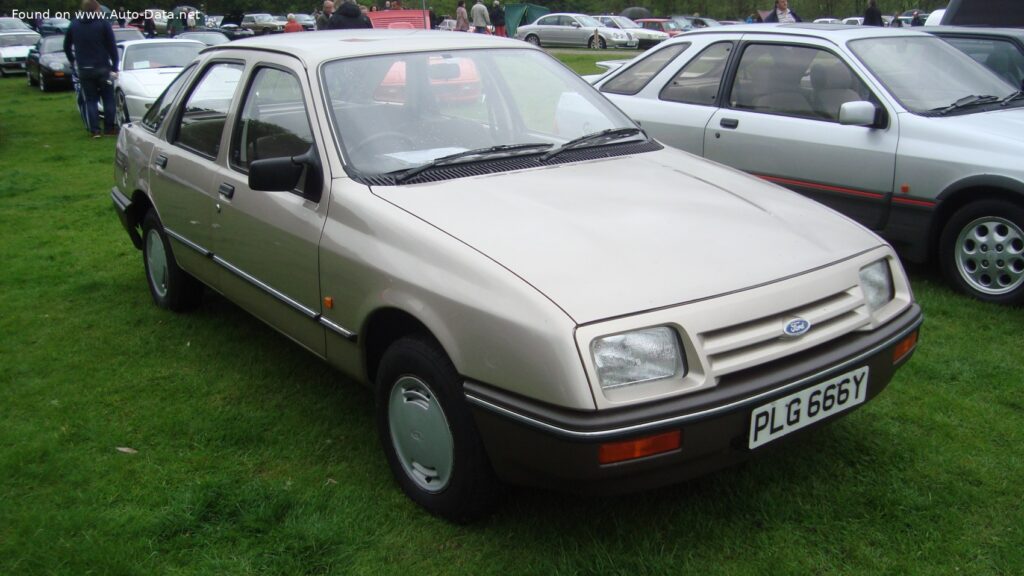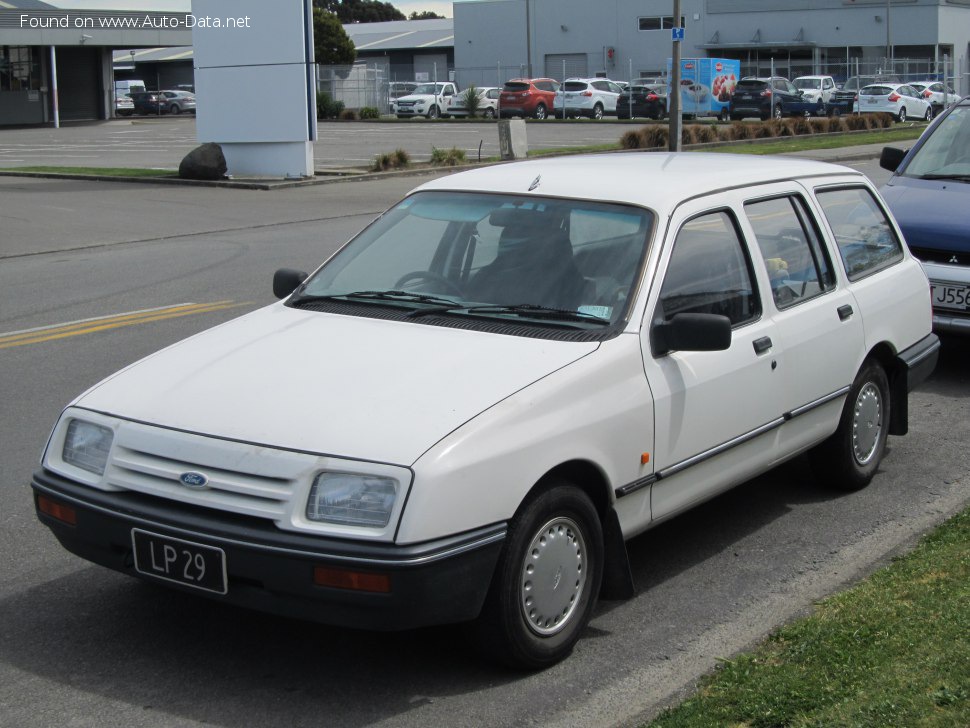
The Ford Sierra Turnier I 2.0 (100 Hp), produced between 1985 and 1986, represents a significant evolution in Ford of Europe’s family car offerings. As the estate version of the Sierra, the Turnier aimed to provide practicality and versatility without sacrificing the driving dynamics that were becoming increasingly important in the 1980s. While not officially sold in the United States, the Sierra and its Turnier variant were pivotal in the European market, competing with vehicles like the Vauxhall/Opel Astra Estate, Volvo 240 Estate, and the various offerings from Volkswagen. The Sierra marked a departure from the traditionally boxy Ford Cortina, embracing a more aerodynamic and modern design. The Turnier, specifically, catered to families and those requiring substantial cargo space, becoming a popular choice for both private and commercial users.
The Ford Sierra Turnier I 2.0: A European Family Car
The Sierra, launched in 1982, was a watershed moment for Ford of Europe. It was the first Ford to be designed with aerodynamics as a primary consideration, resulting in a sleek, contemporary profile. The Turnier estate, introduced shortly after the saloon, extended this appeal to buyers needing a more spacious vehicle. The “Turnier” name itself, meaning “tournament” or “competition” in German, hinted at the car’s intended versatility and ability to handle various tasks. The 2.0-liter engine variant, producing 100 horsepower, offered a balance between performance and fuel economy, making it a practical choice for everyday driving. The Sierra range as a whole was a commercial success for Ford, and the Turnier played a crucial role in maintaining that momentum.
Engine & Performance
The Ford Sierra Turnier I 2.0 was powered by a naturally aspirated 1.994-liter inline-four cylinder petrol (gasoline) engine. This engine, part of Ford’s ‘Pinto’ family, produced 100 horsepower. While not a high-output engine by modern standards, it provided adequate performance for the time, particularly considering the vehicle’s weight. The engine was coupled with a five-speed manual transmission, delivering power to the rear wheels. This rear-wheel-drive configuration was a hallmark of Ford’s larger family cars for many years and contributed to the Sierra’s relatively engaging driving experience. The weight-to-power ratio of 11.8 kg/Hp (or 84.7 Hp/tonne) indicates a reasonably sprightly vehicle for its era. The engine’s naturally aspirated design meant it relied on conventional fuel delivery and ignition systems, offering reliability and relative simplicity in maintenance. Top speed was around 98 mph, and acceleration from 0-60 mph took approximately 11.5 seconds.
Design & Features
The Sierra Turnier I distinguished itself with its practical and spacious estate body style. The five-door configuration provided easy access for passengers and cargo alike. The rear load area offered a substantial amount of space, making it ideal for families, outdoor enthusiasts, or those needing to transport larger items. The design of the Turnier was largely dictated by its functional requirements, but Ford engineers still managed to integrate the sleek lines of the Sierra saloon into the estate body. Inside, the Turnier offered a relatively basic but functional interior. The focus was on durability and practicality, with hard-wearing materials and a straightforward layout. Safety features were limited by the standards of the 1980s, but typically included seatbelts and a collapsible steering column. The car’s suspension, featuring independent front suspension and a live rear axle, provided a comfortable ride and reasonable handling characteristics. The steering utilized a rack and pinion system, offering precise control. The Turnier’s design represented a move towards more modern aesthetics, abandoning the more angular styling of its predecessor, the Cortina.
Technical Specifications
| Brand | Ford |
| Model | Sierra |
| Generation | Sierra Turnier I |
| Type (Engine) | 2.0 (100 Hp) |
| Start of production | 1985 |
| End of production | 1986 |
| Powertrain Architecture | Internal Combustion engine |
| Body type | Station wagon (estate) |
| Seats | 5 |
| Doors | 5 |
| Fuel Type | Petrol (Gasoline) |
| Weight-to-power ratio | 11.8 kg/Hp |
| Power | 100 Hp |
| Engine aspiration | Naturally aspirated engine |
| Kerb Weight | 1180 kg / 2601.45 lbs. |
| Fuel tank capacity | 60 l / 15.85 US gal | 13.2 UK gal |
| Length | 4511 mm / 177.6 in. |
| Width | 1720 mm / 67.72 in. |
| Height | 1428 mm / 56.22 in. |
| Wheelbase | 2608 mm / 102.68 in. |
| Front track | 1452 mm / 57.17 in. |
| Rear (Back) track | 1468 mm / 57.8 in. |
| Minimum turning circle (turning diameter) | 10 m / 32.81 ft. |
| Drivetrain Architecture | The Internal combustion engine (ICE) drives the rear wheels of the vehicle. |
| Drive wheel | Rear wheel drive |
| Number of gears and type of gearbox | 5 gears, manual transmission |
| Front brakes | Ventilated discs |
| Rear brakes | Drum |
| Steering type | Steering rack and pinion |
The Ford Sierra Turnier I 2.0 (100 Hp) represents a significant step forward in Ford of Europe’s design and engineering. While it never reached American shores, its impact on the European car market was substantial. The Turnier offered a compelling combination of practicality, affordability, and reasonable performance, making it a popular choice for families and businesses alike. Its aerodynamic design and rear-wheel-drive configuration set it apart from many of its competitors, and it remains a fondly remembered vehicle for those who grew up with it in Europe.