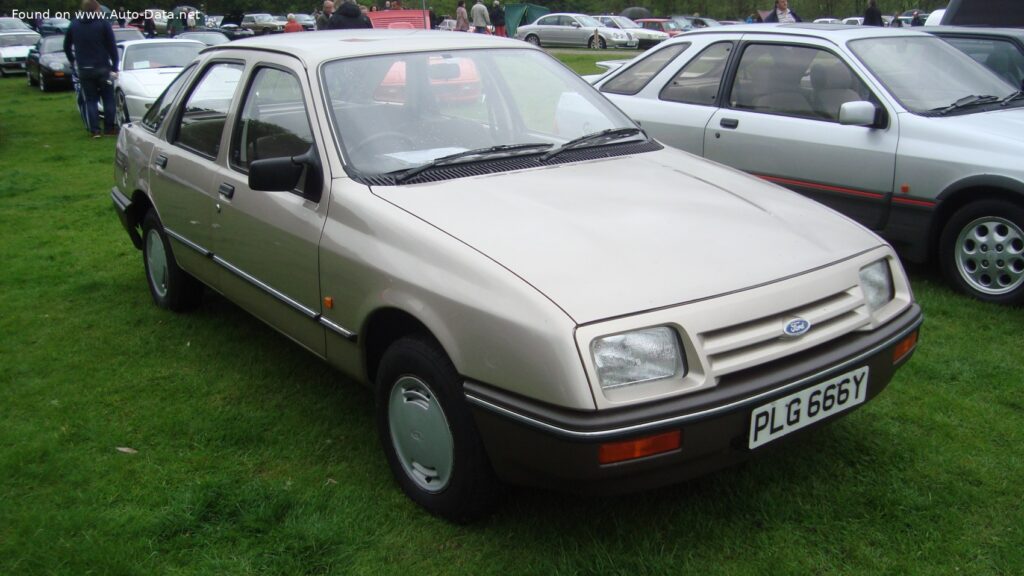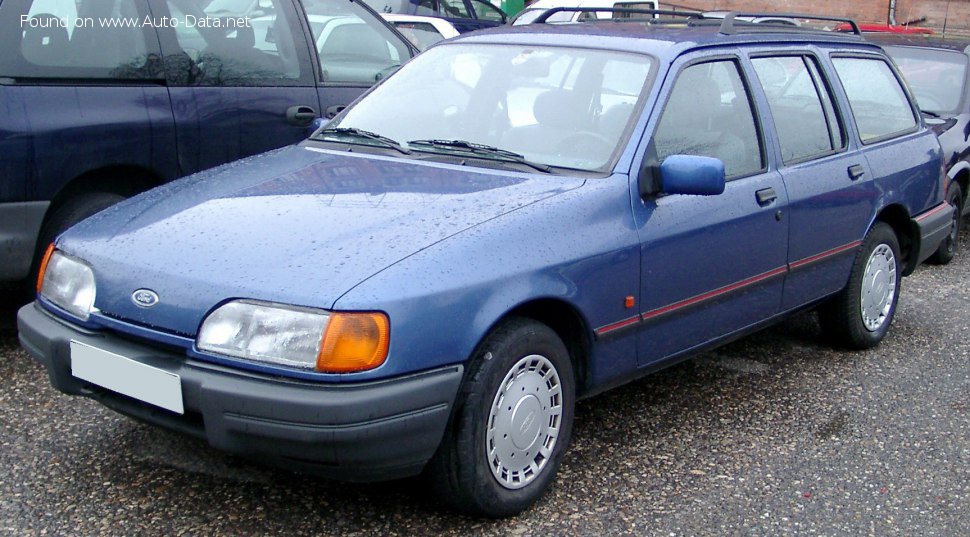
The Ford Sierra Turnier II 1.6, produced between 1989 and 1993, represents a significant evolution of Ford’s mid-size family car. The Sierra, launched in 1982, was a radical departure from the angular Cortina it replaced, embracing a more aerodynamic and modern design. The Turnier II, specifically, is the second iteration of the Sierra estate (station wagon) variant, offering increased practicality and space without sacrificing the Sierra’s core driving characteristics. While not officially sold in the United States, the Sierra was a hugely popular vehicle in Europe, competing with models like the Vauxhall/Opel Astra Estate, Volkswagen Passat Variant, and Peugeot 505 Familiale. It served as a crucial model in Ford of Europe’s lineup, providing a versatile and affordable option for families and businesses.
The Ford Sierra Turnier II 1.6: A European Family Car
The Sierra Turnier II 1.6 occupied a vital niche in the European market. During the late 1980s and early 1990s, the demand for practical, yet reasonably economical, family vehicles was high. The Turnier II addressed this need with its spacious cargo area and relatively efficient engine. It wasn’t marketed as a performance vehicle, but rather as a dependable and functional car for everyday use. The 1.6-liter engine provided adequate power for most driving situations, and the rear-wheel-drive layout, while becoming less common at the time, offered a distinct driving feel favored by many European drivers. The Turnier II bridged the gap between the more basic Sierra saloons and the higher-specification models, making it accessible to a wider range of buyers.
Engine & Performance
The heart of the Sierra Turnier II 1.6 is a naturally aspirated 1.6-liter inline-four cylinder petrol (gasoline) engine. This engine produced 80 horsepower, which, while modest by modern standards, was sufficient for comfortable cruising and everyday driving in the late 1980s and early 1990s. The engine’s simplicity contributed to its reliability, and maintenance costs were relatively low. Power is delivered to the rear wheels via a five-speed manual transmission. This rear-wheel-drive configuration was a defining characteristic of the Sierra, offering a different driving experience compared to the increasingly popular front-wheel-drive cars of the era. The weight-to-power ratio of 14.8 kg/Hp (or 67.8 Hp/tonne) reflects the car’s modest performance capabilities. Acceleration was not a primary focus, but the Sierra Turnier II 1.6 provided adequate performance for typical family duties. The engine’s naturally aspirated design meant that torque delivery was linear, making it predictable and easy to control.
Design & Features
The Sierra Turnier II’s design was a product of its time, prioritizing aerodynamics and practicality. The station wagon body style, or estate as it was commonly known in Europe, offered a significantly larger cargo capacity compared to the saloon version. The rear suspension was tuned to handle heavier loads, making it suitable for carrying luggage, groceries, or work equipment. The five-door configuration provided easy access for both passengers and cargo. Inside, the Turnier II offered a functional and relatively spacious cabin, accommodating five passengers comfortably. Features were generally basic, reflecting the car’s position in the market. Safety features were evolving during this period, and the Sierra Turnier II included features such as seatbelts, though advanced safety systems like airbags were not yet commonplace. The hydraulic power steering made maneuvering easier, particularly in urban environments. The overall aesthetic was clean and functional, with a focus on practicality rather than outright luxury. The Turnier II’s design represented a significant step forward from the more boxy designs of previous generations of Ford estates.
Safety and Practicality
While not boasting the advanced safety features of modern vehicles, the Sierra Turnier II incorporated the safety standards of its time. Seatbelts were standard equipment, and the car’s structure was designed to provide a degree of crash protection. The ventilated disc brakes on the front wheels and drum brakes on the rear provided adequate stopping power for typical driving conditions. The rear-wheel-drive layout, while offering a different driving experience, also contributed to the car’s stability, particularly when carrying a load. The Turnier II’s practicality was a key selling point. The large cargo area could be expanded by folding down the rear seats, providing ample space for larger items. The 60-liter (15.85 US gallons) fuel tank offered a reasonable driving range, reducing the frequency of refueling stops.
Technical Specifications
| Brand | Ford |
| Model | Sierra |
| Generation | Sierra Turnier II |
| Type (Engine) | 1.6 (80 Hp) |
| Start of production | 1989 year |
| End of production | 1993 year |
| Powertrain Architecture | Internal Combustion engine |
| Body type | Station wagon (estate) |
| Seats | 5 |
| Doors | 5 |
| Fuel Type | Petrol (Gasoline) |
| Weight-to-power ratio | 14.8 kg/Hp, 67.8 Hp/tonne |
| Power | 80 Hp |
| Engine aspiration | Naturally aspirated engine |
| Kerb Weight | 1180 kg / 2601.45 lbs. |
| Fuel tank capacity | 60 l / 15.85 US gal | 13.2 UK gal |
| Length | 4511 mm / 177.6 in. |
| Width | 1720 mm / 67.72 in. |
| Height | 1428 mm / 56.22 in. |
| Wheelbase | 2608 mm / 102.68 in. |
| Front track | 1452 mm / 57.17 in. |
| Rear (Back) track | 1468 mm / 57.8 in. |
| Minimum turning circle (turning diameter) | 10 m / 32.81 ft. |
| Drivetrain Architecture | The Internal combustion engine (ICE) drives the rear wheels of the vehicle. |
| Drive wheel | Rear wheel drive |
| Number of gears and type of gearbox | 5 gears, manual transmission |
| Front brakes | Ventilated discs |
| Rear brakes | Drum |
| Steering type | Steering rack and pinion |
| Power steering | Hydraulic Steering |
The Ford Sierra Turnier II 1.6, while not a groundbreaking vehicle in terms of innovation, represented a well-rounded and practical choice for European families in the late 1980s and early 1990s. Its combination of affordability, practicality, and reliability ensured its success in a competitive market. It remains a fondly remembered vehicle for those who grew up with it, representing a simpler era of motoring.