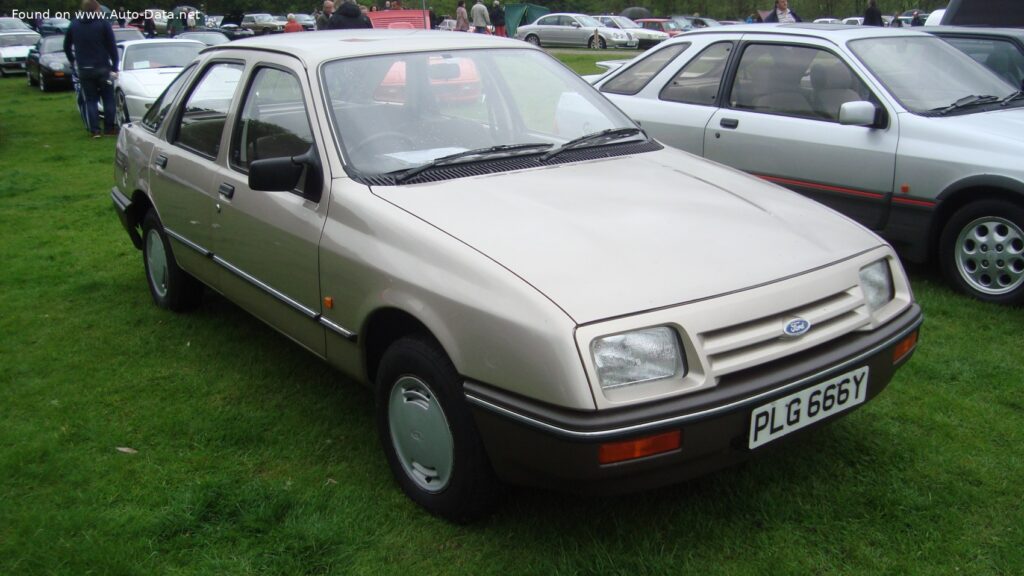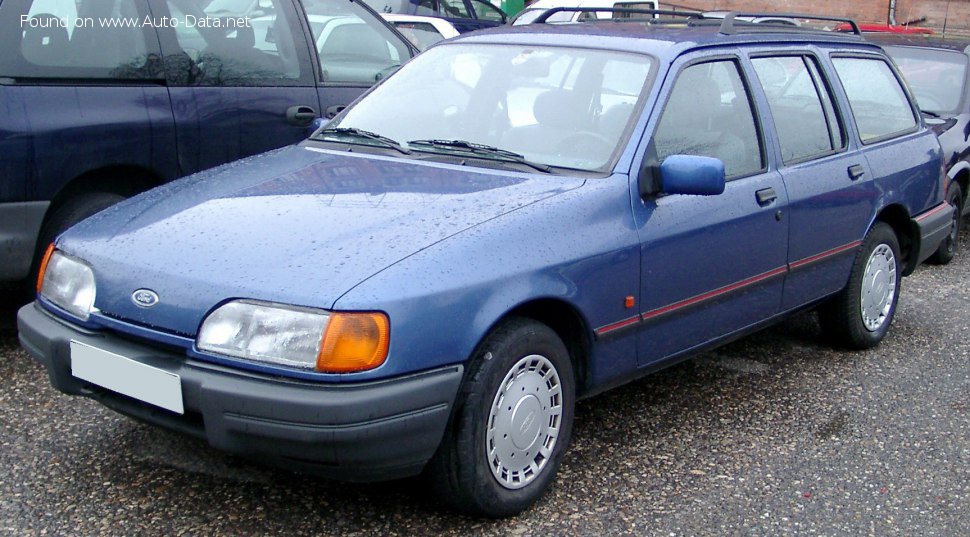
The Ford Sierra Turnier II 1.8, produced between 1988 and 1993, represents a significant evolution of Ford’s mid-size family car. The Sierra, launched in 1982, was a radical departure from the angular Cortina it replaced, embracing a more aerodynamic and modern design. The Turnier II, specifically, is the second iteration of the estate (station wagon) version, offering increased practicality and space without sacrificing the Sierra’s inherent driving characteristics. While not officially sold in the United States, the Sierra was a hugely popular vehicle in Europe, competing with models like the Vauxhall/Opel Astra Estate, Volkswagen Passat Variant, and Peugeot 305 Break. It served as a versatile and affordable option for families and businesses alike, and the Turnier version was particularly valued for its load-carrying capacity.
The Ford Sierra Turnier II 1.8: A European Family Car
The Sierra project was a pivotal moment for Ford of Europe. It represented a move towards more contemporary styling and engineering, influenced by the growing popularity of front-wheel-drive cars. However, the Sierra retained a rear-wheel-drive layout for many models, including the 1.8 Turnier II, a configuration that appealed to drivers who valued handling and driving engagement. The Turnier II specifically addressed the need for a practical, spacious vehicle within the Sierra range, catering to a market segment that demanded versatility and reliability. It was a common sight on European roads, used for everything from family holidays to commercial deliveries.
Engine & Performance
The Sierra Turnier II 1.8 was powered by a naturally aspirated 1.8-liter inline-four cylinder petrol (gasoline) engine. This engine produced 87 horsepower, which, while not exceptionally powerful by modern standards, provided adequate performance for everyday driving. The engine’s relatively modest output was paired with a five-speed manual transmission, allowing drivers to effectively manage the power delivery and optimize fuel economy. The rear-wheel-drive configuration contributed to a balanced driving experience, offering predictable handling and a degree of driver involvement. The weight-to-power ratio of 13.6 kg/Hp (or 73.7 Hp/tonne) reflects the car’s modest power relative to its weight. This wasn’t a performance-oriented vehicle, but rather one designed for practicality and efficiency. Acceleration was adequate for merging onto highways and overtaking, but the focus was on providing a comfortable and reliable driving experience.
Design & Features
The Sierra Turnier II’s design was characterized by its clean lines and aerodynamic profile. The estate body style, or station wagon as it’s known in the US, extended the roofline to the rear of the vehicle, creating a large cargo area. This provided significantly more space than the saloon (sedan) version, making it ideal for families or those who frequently needed to transport bulky items. The five-door configuration offered easy access to both the front and rear seats, enhancing practicality. Inside, the Turnier II offered a functional and relatively spacious cabin, with seating for five passengers. The interior design was typical of the late 1980s and early 1990s, featuring durable materials and a straightforward layout. Safety features, while limited by the standards of today, included seatbelts and a robust chassis structure. The emphasis was on providing a safe and reliable vehicle for everyday use. The Turnier II’s design represented a significant step forward in estate car design, offering a blend of practicality, style, and driving enjoyment.
Legacy and Impact
The Ford Sierra, and the Turnier II variant, played a crucial role in establishing Ford’s dominance in the European family car market. It was a well-built, reliable, and affordable vehicle that appealed to a wide range of buyers. The Sierra’s aerodynamic design and rear-wheel-drive layout set it apart from many of its competitors, offering a unique driving experience. The Turnier II, in particular, cemented the Sierra’s reputation as a versatile and practical vehicle, capable of meeting the needs of families and businesses alike. While the Sierra was eventually replaced by the Ford Mondeo in 1993, its legacy continues to this day. The Mondeo built upon the Sierra’s strengths, offering even more space, comfort, and technology. The Sierra Turnier II remains a popular classic car among enthusiasts, appreciated for its retro styling, driving characteristics, and enduring reliability.
Technical Specifications
| Brand | Ford |
| Model | Sierra |
| Generation | Sierra Turnier II |
| Type (Engine) | 1.8 (87 Hp) |
| Start of production | 1988 year |
| End of production | 1993 year |
| Powertrain Architecture | Internal Combustion engine |
| Body type | Station wagon (estate) |
| Seats | 5 |
| Doors | 5 |
| Fuel Type | Petrol (Gasoline) |
| Weight-to-power ratio | 13.6 kg/Hp |
| Hp/tonne | 73.7 Hp/tonne |
| Power | 87 Hp |
| Engine aspiration | Naturally aspirated engine |
| Kerb Weight | 1180 kg |
| Kerb Weight (lbs) | 2601.45 lbs. |
| Fuel tank capacity | 60 l |
| Fuel tank capacity (US gal) | 15.85 US gal |
| Fuel tank capacity (UK gal) | 13.2 UK gal |
| Length | 4511 mm |
| Length (in) | 177.6 in. |
| Width | 1720 mm |
| Width (in) | 67.72 in. |
| Height | 1428 mm |
| Height (in) | 56.22 in. |
| Wheelbase | 2608 mm |
| Wheelbase (in) | 102.68 in. |
| Front track | 1452 mm |
| Front track (in) | 57.17 in. |
| Rear track | 1568 mm |
| Rear track (in) | 61.73 in. |
| Minimum turning circle | 10 m |
| Minimum turning circle (ft) | 32.81 ft. |
| Drivetrain Architecture | ICE drives rear wheels |
| Drive wheel | Rear wheel drive |
| Number of gears | 5 |
| Gearbox type | Manual transmission |
| Front brakes | Ventilated discs |
| Rear brakes | Drum |
| Steering type | Steering rack and pinion |