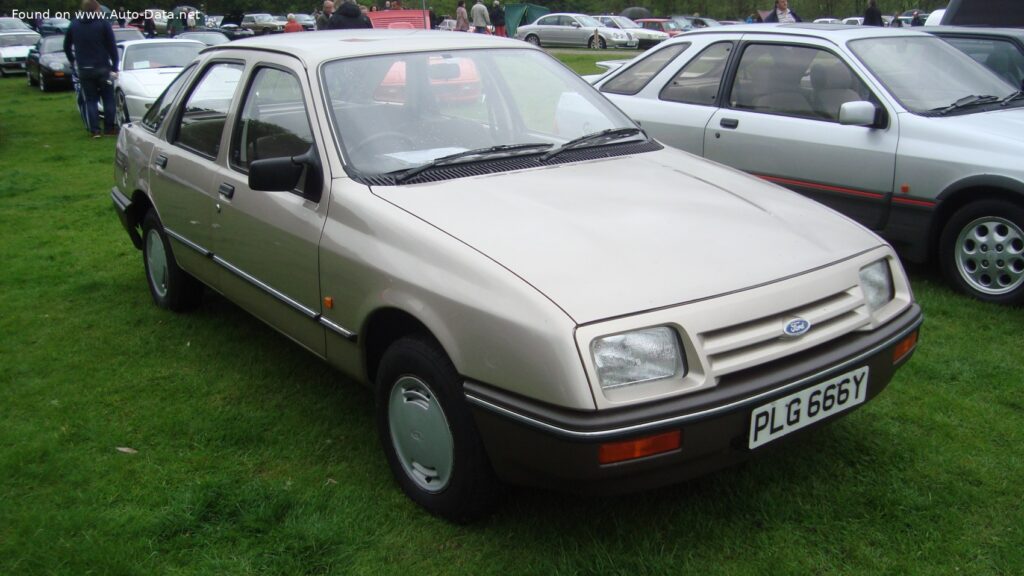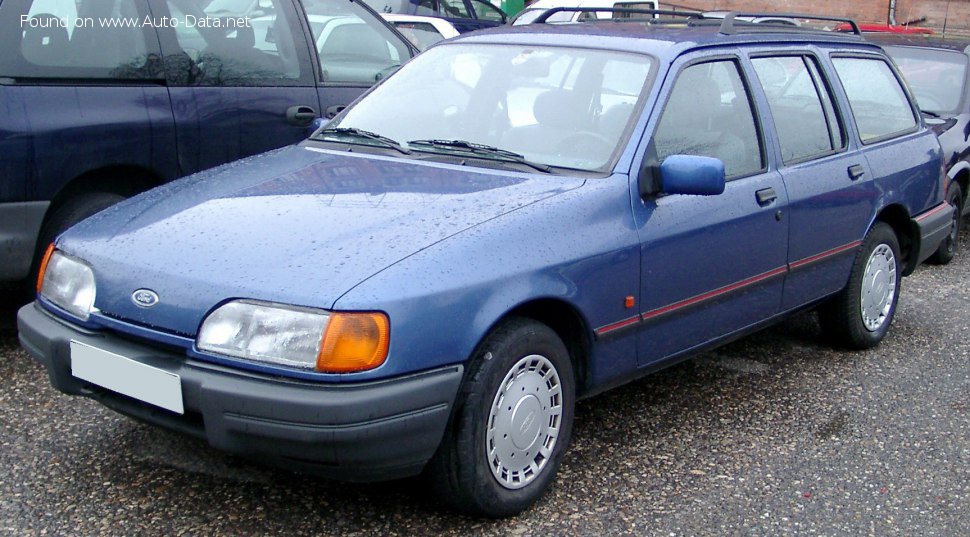
The Ford Sierra Turnier II 1.8 TD (75 Hp) represents a practical and economical offering from Ford’s European lineup during the late 1980s and early 1990s. The Sierra, launched in 1982, was a significant departure from its predecessor, the Cortina, embracing a more modern, aerodynamic design. The Turnier, the estate or station wagon variant, provided increased versatility for families and those requiring substantial cargo space. This particular iteration, powered by a 1.8-liter turbocharged diesel engine, was aimed at buyers prioritizing fuel efficiency and durability over outright performance. While not officially sold in the United States, the Sierra and Turnier were pivotal models in the European market, competing with vehicles like the Vauxhall/Opel Astra Estate and Volkswagen Passat Variant. The Turnier II, introduced with minor updates, refined the original Sierra’s design and addressed some early criticisms, solidifying its position as a popular choice in its segment.
Ford Sierra Turnier II: A Detailed Overview
The Ford Sierra Turnier II 1.8 TD occupied a crucial niche in the European automotive landscape. It was designed to appeal to a broad customer base seeking a reliable, spacious, and affordable vehicle. The “Turnier” designation, meaning “tournament” or “competition” in German, hinted at the car’s practicality and ability to handle various tasks. The introduction of the 1.8 TD engine in 1988 provided a diesel option that was increasingly desirable due to rising fuel costs and a growing awareness of fuel economy. This model was particularly popular with fleet operators and private buyers who covered high mileages. The Sierra, as a whole, was a landmark vehicle for Ford of Europe, being the first Ford to utilize front-wheel drive extensively (though the Turnier II 1.8 TD remained rear-wheel drive) and adopting a more contemporary aesthetic than previous models.
Engine & Performance
The heart of the Sierra Turnier II 1.8 TD is its 1.8-liter turbocharged diesel engine, designated with the codes RFA, RFB, or RFL depending on specific calibration and market. This engine produced 75 horsepower, a modest output by modern standards, but sufficient for comfortable cruising and hauling loads. The turbocharger significantly improved torque delivery, providing a usable amount of pulling power for everyday driving and towing. The engine’s diesel configuration prioritized fuel efficiency, making it an economical choice for long journeys. Power is delivered to the rear wheels via a five-speed manual transmission. While acceleration wasn’t a strong point, the engine’s durability and low running costs were key selling features. The engine oil capacity is 5.6 liters (5.92 US quarts or 4.93 UK quarts), and the recommended coolant capacity is 9.5 liters (10.04 US quarts or 8.36 UK quarts). The rear-wheel drive layout, while traditional, offered a different driving experience compared to the increasingly common front-wheel drive cars of the era.
Design & Features
The Sierra Turnier II’s body style is that of a five-door station wagon (estate). The extended roofline and large rear hatch provided a generous cargo area, making it ideal for families, outdoor enthusiasts, and commercial users. The design, while angular by today’s standards, was considered modern for its time, emphasizing aerodynamic efficiency. Interior features were functional rather than luxurious, focusing on practicality and durability. The vehicle comfortably seats five passengers. Safety features were relatively basic compared to modern standards, reflecting the regulations and expectations of the late 1980s and early 1990s. The front brakes are ventilated discs, providing adequate stopping power, while the rear brakes are drums. The steering system utilizes a steering rack and pinion for precise control. The Turnier II’s design prioritized maximizing interior space and usability, making it a versatile vehicle for a wide range of applications. The minimum turning circle is 10 meters (32.81 feet).
Technical Specifications
| Brand | Ford |
| Model | Sierra |
| Generation | Sierra Turnier II |
| Type (Engine) | 1.8 TD (75 Hp) |
| Start of production | 1988 year |
| End of production | 1993 year |
| Powertrain Architecture | Internal Combustion engine |
| Body type | Station wagon (estate) |
| Seats | 5 |
| Doors | 5 |
| Fuel Type | Diesel |
| Power | 75 Hp |
| Engine Model/Code | RFA, RFB, RFL |
| Engine aspiration | Turbocharger |
| Engine oil capacity | 5.6 l (5.92 US qt | 4.93 UK qt) |
| Coolant | 9.5 l (10.04 US qt | 8.36 UK qt) |
| Max. weight | 1180 kg (2601.45 lbs.) |
| Fuel tank capacity | 60 l (15.85 US gal | 13.2 UK gal) |
| Length | 4511 mm (177.6 in.) |
| Width | 1720 mm (67.72 in.) |
| Height | 1428 mm (56.22 in.) |
| Wheelbase | 2608 mm (102.68 in.) |
| Front track | 1452 mm (57.17 in.) |
| Rear (Back) track | 1468 mm (57.8 in.) |
| Minimum turning circle (turning diameter) | 10 m (32.81 ft.) |
| Drivetrain Architecture | The Internal combustion engine (ICE) drives the rear wheels of the vehicle. |
| Drive wheel | Rear wheel drive |
| Number of gears and type of gearbox | 5 gears, manual transmission |
| Front brakes | Ventilated discs |
| Rear brakes | Drum |
| Steering type | Steering rack and pinion |
The Ford Sierra Turnier II 1.8 TD, while not a performance icon, remains a significant vehicle in Ford’s history. It represents a practical and durable solution for those needing a versatile and economical estate car. Its impact lies in its ability to provide reliable transportation for families and businesses alike, cementing its place as a popular choice in the European market during its production run.