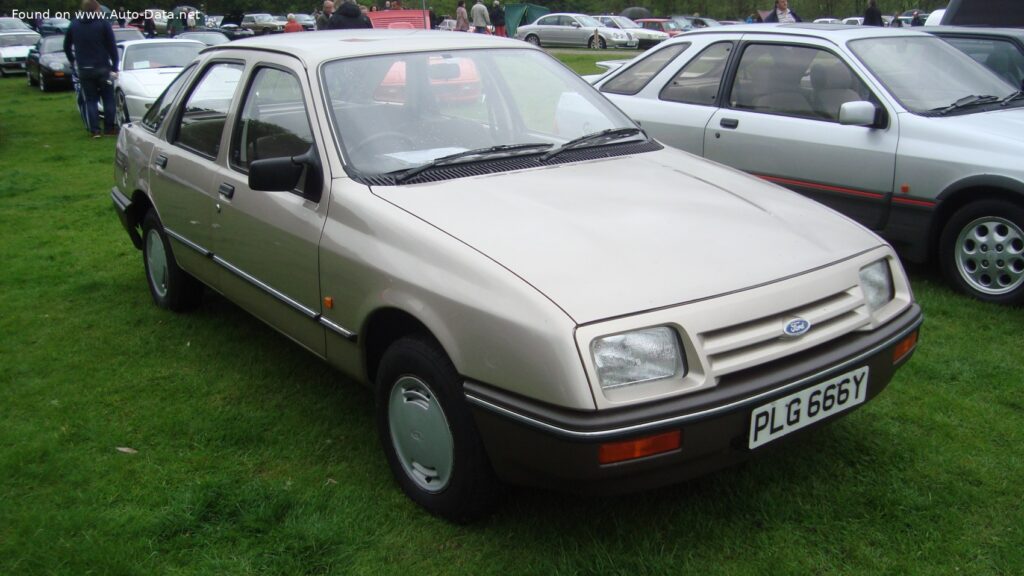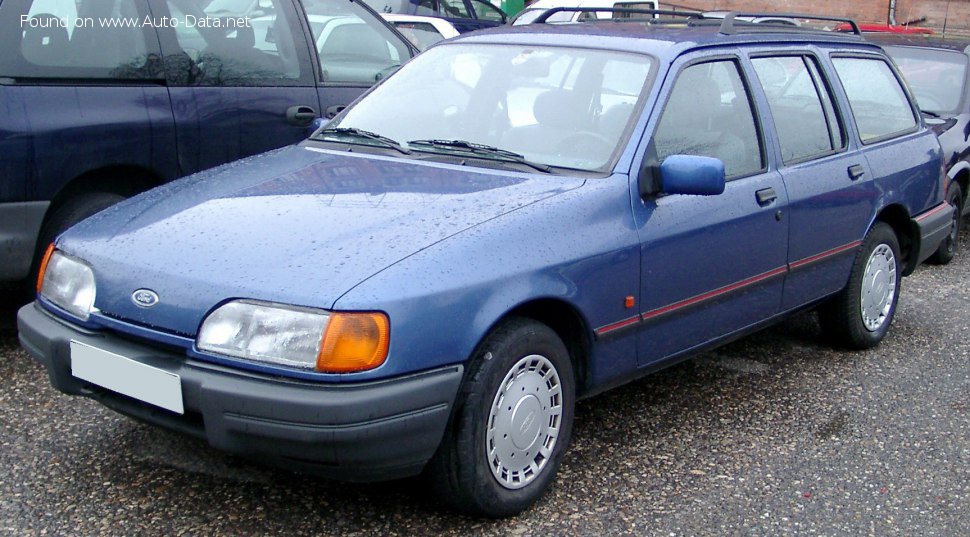
The Ford Sierra Turnier II 2.0i, produced between 1987 and 1993, represents a significant evolution in Ford of Europe’s mid-size family car lineup. As the estate (station wagon) variant of the popular Sierra, the Turnier II offered practicality and versatility alongside Ford’s established reputation for driving dynamics. While not officially sold in the United States, the Sierra and its Turnier variant were pivotal in the European market, competing with vehicles like the Opel/Vauxhall Vectra Estate, Volvo 240 Estate, and the Ford’s own Escort Estate. The Sierra, as a whole, was a departure from its predecessor, the Cortina, embracing a more modern, aerodynamic design and front-wheel-drive layout (though the Turnier II retained rear-wheel drive). The 2.0i model, with its 101 horsepower engine, provided a balance between performance and fuel economy, making it a popular choice for families and those requiring a capable load-carrier.
The Ford Sierra Turnier II 2.0i: A European Family Hauler
The Sierra Turnier II occupied a crucial space in the European automotive landscape of the late 1980s and early 1990s. European buyers increasingly demanded vehicles that could handle both daily commuting and weekend adventures, and the Turnier II delivered on both fronts. Its spacious interior and large cargo area made it ideal for families, while its rear-wheel-drive configuration offered a degree of driving engagement not typically found in estate cars of the era. The 2.0i engine provided adequate power for comfortable cruising and hauling loads, and the car’s relatively simple mechanical design contributed to its reliability and ease of maintenance. The Turnier II wasn’t marketed in the US, as American tastes at the time favored larger, front-wheel-drive station wagons or the burgeoning SUV segment.
Engine & Performance
The heart of the Sierra Turnier II 2.0i is its naturally aspirated 2.0-liter inline-four cylinder engine, designated as either the NE5 or NEJ depending on the specific year and market. This engine produced 101 horsepower, providing a respectable power output for its time. While not a performance-oriented engine, it delivered sufficient torque for everyday driving and load-carrying. The engine is paired with a five-speed manual transmission, which allowed drivers to effectively manage the power and optimize fuel economy. The rear-wheel-drive layout, a characteristic retained from the earlier Sierra models, contributed to the car’s balanced handling and predictable driving characteristics. Acceleration was adequate, with a focus on usability rather than outright speed. The engine’s simplicity also meant relatively straightforward maintenance, a key consideration for European buyers.
Design & Features
The Sierra Turnier II’s design was a significant departure from the more boxy aesthetics of the Cortina it replaced. The Turnier II featured a more streamlined, aerodynamic profile, reflecting the design trends of the 1980s. The estate body style maximized interior space, offering a generous cargo area that could be further expanded by folding down the rear seats. The five-door configuration provided easy access for passengers and cargo. Inside, the Turnier II offered a functional and relatively comfortable interior, with seating for five passengers. Features were generally practical rather than luxurious, reflecting the car’s positioning as a family vehicle. Safety features, while limited by the standards of today, included ventilated disc brakes on the front wheels and drum brakes on the rear. Hydraulic power steering was standard, making the car easier to maneuver. The overall design prioritized practicality and durability, making it a reliable and versatile vehicle for European families.
Safety and Technology
Compared to modern vehicles, the Sierra Turnier II 2.0i’s safety technology was relatively basic. However, for its time, it offered a reasonable level of protection. The ventilated front disc brakes provided effective stopping power, while the hydraulic power steering enhanced control. The car’s body structure, while not incorporating advanced crash protection features, was designed to provide a degree of occupant safety. Technologically, the Sierra Turnier II was fairly conventional for the late 1980s. It lacked features such as airbags, anti-lock brakes (ABS), and electronic stability control, which were not yet commonplace on mainstream vehicles. The focus was on mechanical reliability and straightforward functionality rather than advanced electronic systems.
Technical Specifications
| Brand | Ford |
| Model | Sierra |
| Generation | Sierra Turnier II |
| Type (Engine) | 2.0i (101 Hp) |
| Start of production | 1987 |
| End of production | 1993 |
| Powertrain Architecture | Internal Combustion engine |
| Body type | Station wagon (estate) |
| Seats | 5 |
| Doors | 5 |
| Fuel Type | Petrol (Gasoline) |
| Power | 101 Hp |
| Engine Model/Code | NE5, NEJ |
| Engine aspiration | Naturally aspirated engine |
| Engine oil capacity | 3.75 l / 3.96 US qt / 3.3 UK qt |
| Coolant capacity | 8 l / 8.45 US qt / 7.04 UK qt |
| Max. weight | 1180 kg / 2601.45 lbs. |
| Fuel tank capacity | 60 l / 15.85 US gal / 13.2 UK gal |
| Length | 4511 mm / 177.6 in. |
| Width | 1720 mm / 67.72 in. |
| Height | 1428 mm / 56.22 in. |
| Wheelbase | 2608 mm / 102.68 in. |
| Front track | 1452 mm / 57.17 in. |
| Rear track | 1468 mm / 57.8 in. |
| Minimum turning circle | 10 m / 32.81 ft. |
| Drivetrain Architecture | Rear wheel drive |
| Number of gears | 5 |
| Gearbox type | Manual transmission |
| Front brakes | Ventilated discs |
| Rear brakes | Drum |
| Steering type | Steering rack and pinion |
| Power steering | Hydraulic Steering |
The Ford Sierra Turnier II 2.0i, while largely unknown in the American market, remains a fondly remembered vehicle in Europe. Its blend of practicality, affordability, and reasonable performance made it a popular choice for families and individuals alike. It represents a key chapter in Ford of Europe’s history, bridging the gap between the traditional Cortina and the more modern Mondeo that would eventually replace it.