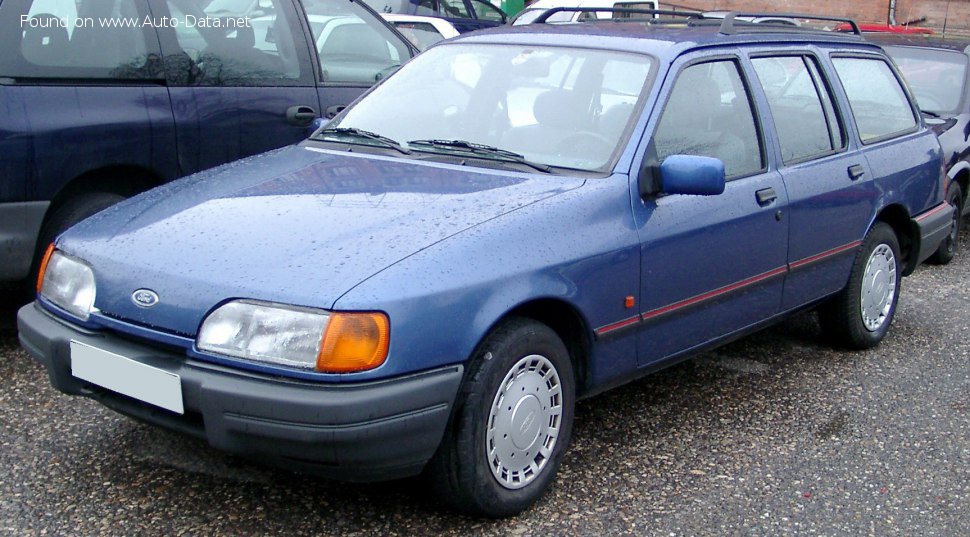
The Ford Sierra Turnier II 2.0i 16V, produced between 1987 and 1993, represents a significant evolution in Ford of Europe’s family car lineup. The Sierra, intended as a modern replacement for the aging Cortina and Taunus, was a departure in design and engineering. The Turnier, the station wagon (estate) variant, offered practicality and space without sacrificing the Sierra’s dynamic driving characteristics. While never officially sold in the United States, the Sierra was a hugely popular vehicle in Europe, competing with models like the Vauxhall/Opel Astra Estate, Volkswagen Passat Variant, and Peugeot 305 Break. The 2.0i 16V model, with its fuel-injected engine and multi-valve cylinder head, was positioned as a performance-oriented option within the Turnier range, appealing to drivers seeking a blend of practicality and driving enjoyment.
Ford Sierra Turnier II 2.0i 16V: A Detailed Overview
The Sierra Turnier II marked a refinement of the original Sierra, introducing subtle styling updates and improvements to the interior. The 2.0i 16V variant specifically benefited from a more powerful engine, enhancing its appeal to those who valued performance. This model year saw Ford solidifying the Sierra’s position as a competitive family car, offering a compelling alternative to its rivals. The Turnier body style, in particular, was praised for its generous cargo capacity and versatile interior layout, making it a popular choice for families and those with active lifestyles.
Engine & Performance
At the heart of the Ford Sierra Turnier II 2.0i 16V lies a naturally aspirated 2.0-liter inline-four cylinder engine. This engine, designated as either N4A or N4I depending on specific production variations, produced 115 horsepower. The “16V” designation refers to the engine’s four valves per cylinder configuration, a feature that significantly improved breathing and, consequently, power output compared to earlier Sierra engines. Fuel delivery was handled by a fuel injection system, contributing to improved efficiency and responsiveness. The engine’s power was delivered to the rear wheels via a five-speed manual transmission, providing drivers with precise control over gear selection. The weight-to-power ratio of 10.3 kg/Hp (or 97.5 Hp/tonne) indicates a reasonably sprightly performance for a family estate car of its era. While not a sports car, the 2.0i 16V offered a noticeable step up in performance compared to lower-spec Sierra Turnier models.
Design & Features
The Ford Sierra Turnier II retained the distinctive wedge-shaped silhouette of the original Sierra, but with subtle refinements to the front and rear styling. The Turnier body style, a five-door station wagon, prioritized practicality and space. The interior offered seating for five passengers and a generous cargo area that could be expanded by folding down the rear seats. The dashboard layout was functional and driver-focused, with clear instrumentation and logically placed controls. Safety features for the time included ventilated disc brakes on the front wheels and drum brakes on the rear, providing adequate stopping power. Power steering, utilizing a hydraulic system, made maneuvering the vehicle easier, particularly in urban environments. The Sierra’s design, while initially controversial, proved to be aerodynamically efficient, contributing to improved fuel economy and stability at higher speeds. The Turnier’s large tailgate and low load floor further enhanced its practicality, making it easy to load and unload cargo.
Technological Context
The Sierra represented a significant technological leap for Ford of Europe. The switch to front-wheel drive (in many Sierra models, though the Turnier II 2.0i 16V remained rear-wheel drive) and the adoption of modern engine technology, such as fuel injection and multi-valve cylinder heads, were key advancements. The use of computer-aided design (CAD) in the Sierra’s development was also noteworthy, allowing for more precise engineering and improved aerodynamic efficiency. While lacking the advanced electronic systems found in modern vehicles, the Sierra Turnier II 2.0i 16V offered a level of refinement and performance that was competitive with its rivals. The hydraulic power steering and ventilated front disc brakes were considered advanced features for a family car of the late 1980s and early 1990s.
Technical Specifications
| Brand | Ford |
| Model | Sierra |
| Generation | Sierra Turnier II |
| Type (Engine) | 2.0i 16V (115 Hp) |
| Start of production | 1987 |
| End of production | 1993 |
| Powertrain Architecture | Internal Combustion engine |
| Body type | Station wagon (estate) |
| Seats | 5 |
| Doors | 5 |
| Fuel Type | Petrol (Gasoline) |
| Weight-to-power ratio | 10.3 kg/Hp |
| Hp/tonne | 97.5 Hp/tonne |
| Power | 115 Hp |
| Engine Model/Code | N4A, N4I |
| Engine aspiration | Naturally aspirated engine |
| Engine oil capacity | 3.8 l / 4.02 US qt / 3.34 UK qt |
| Coolant capacity | 8 l / 8.45 US qt / 7.04 UK qt |
| Kerb Weight | 1180 kg / 2601.45 lbs. |
| Fuel tank capacity | 60 l / 15.85 US gal / 13.2 UK gal |
| Length | 4511 mm / 177.6 in. |
| Width | 1720 mm / 67.72 in. |
| Height | 1428 mm / 56.22 in. |
| Wheelbase | 2608 mm / 102.68 in. |
| Front track | 1452 mm / 57.17 in. |
| Rear track | 1468 mm / 57.8 in. |
| Minimum turning circle | 10 m / 32.81 ft. |
| Drivetrain Architecture | Rear wheel drive, Internal Combustion engine |
| Number of gears | 5 |
| Gearbox type | Manual transmission |
| Front brakes | Ventilated discs |
| Rear brakes | Drum |
| Steering type | Steering rack and pinion |
| Power steering | Hydraulic Steering |
The Ford Sierra Turnier II 2.0i 16V remains a fondly remembered vehicle for many European car enthusiasts. Its blend of practicality, performance, and relatively modern technology made it a popular choice in its day. While not a direct competitor in the US market, the Sierra Turnier II represents a significant chapter in Ford’s history and a testament to the company’s engineering capabilities during the late 1980s and early 1990s.