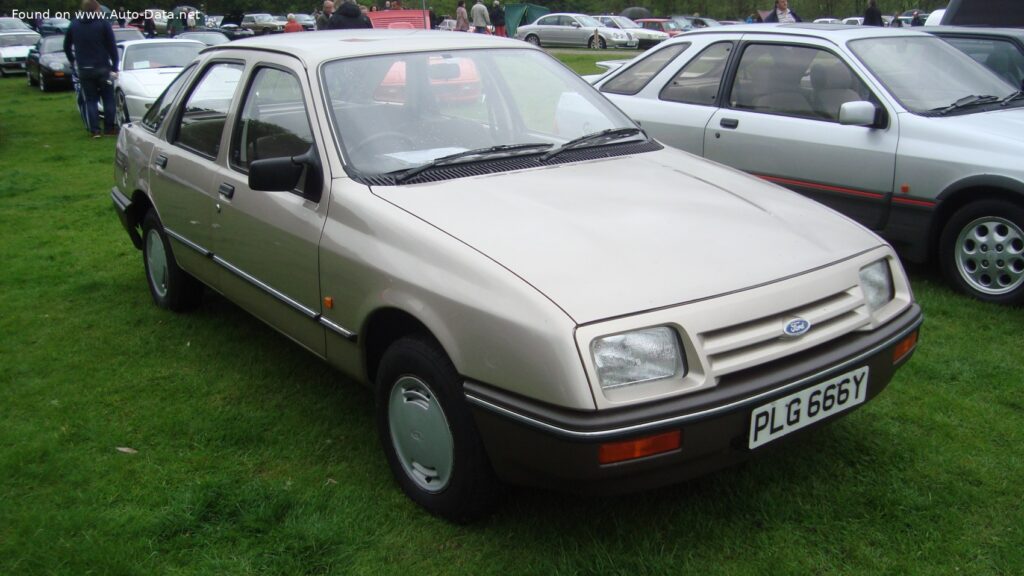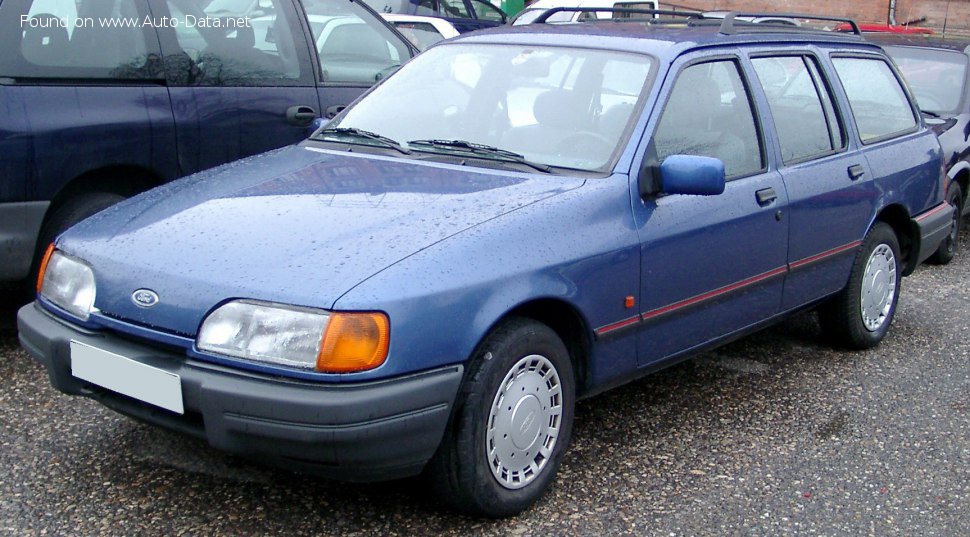
The Ford Sierra Turnier II 2.0i CAT, produced from 1987 to 1993, represents a significant evolution in Ford of Europe’s family car lineup. The Sierra, intended as a replacement for the aging Taunus and Cortina, aimed to modernize Ford’s offerings with a focus on aerodynamics and practicality. The Turnier, the station wagon variant, provided increased cargo capacity and versatility, making it a popular choice for families. While never officially sold in the United States, the Sierra and Turnier were pivotal models in the European market, competing with vehicles like the Opel Ascona/Vectra and Volkswagen Passat. The 2.0i CAT model, equipped with a catalytic converter (“CAT” denoting this feature), was a response to increasingly stringent emissions regulations and offered a balance of performance and fuel efficiency.
The Ford Sierra Turnier II 2.0i CAT: A European Family Car
The Sierra Turnier II, specifically the 2.0i CAT variant, occupied a crucial space in the mid-size station wagon segment in Europe. It was designed to appeal to buyers seeking a practical, reliable, and reasonably affordable vehicle. The “Turnier” name itself, meaning “tournament” or “competition” in German, hinted at the car’s ability to handle the demands of an active lifestyle. The introduction of the catalytic converter in the 2.0i CAT model demonstrated Ford’s commitment to environmental responsibility, albeit driven by regulatory pressures. This model bridged the gap between earlier, less environmentally conscious Sierras and the more modern vehicles that would follow.
Engine & Performance
The heart of the Sierra Turnier II 2.0i CAT is its naturally aspirated 2.0-liter inline-four cylinder engine. This engine, designated as the N4B, produced 101 horsepower. While not a particularly high output by modern standards, it provided adequate performance for everyday driving and long-distance journeys. The engine’s design focused on reliability and durability, characteristics valued by European drivers. The presence of the catalytic converter, a relatively new technology at the time, reduced harmful emissions but also slightly impacted engine performance. The engine is paired with a five-speed manual transmission, delivering power to the rear wheels. This rear-wheel-drive configuration was a hallmark of Ford’s European models for many years and contributed to the car’s balanced handling. The weight-to-power ratio of 11.7 kg/Hp (or 85.6 Hp/tonne) reflects the car’s modest power relative to its weight. Acceleration was respectable for the era, but the Sierra Turnier II 2.0i CAT was not designed for outright speed. Instead, it prioritized fuel economy and smooth, predictable performance.
Design & Features
The Sierra Turnier II’s design was a departure from the more boxy aesthetics of its predecessors. It featured a sleek, aerodynamic profile, influenced by contemporary design trends. The station wagon body style offered a generous cargo area, making it ideal for families and those needing to transport large items. The five-door configuration provided easy access for passengers and cargo. Inside, the Sierra Turnier II offered a functional and relatively comfortable interior. While not luxurious, the cabin was well-equipped for its time, with supportive seats and a practical dashboard layout. Safety features were evolving during this period, and the Sierra Turnier II included features such as seatbelts and a reinforced safety cell. However, it lacked many of the advanced safety systems found in modern vehicles. The hydraulic power steering made maneuvering easier, particularly in urban environments. The overall design of the Sierra Turnier II aimed to balance practicality, affordability, and a modern aesthetic, appealing to a broad range of European buyers.
Technical Specifications
| Brand | Ford |
| Model | Sierra |
| Generation | Sierra Turnier II |
| Type (Engine) | 2.0i CAT (101 Hp) |
| Start of production | 1987 |
| End of production | 1993 |
| Powertrain Architecture | Internal Combustion engine |
| Body type | Station wagon (estate) |
| Seats | 5 |
| Doors | 5 |
| Fuel Type | Petrol (Gasoline) |
| Weight-to-power ratio | 11.7 kg/Hp |
| Hp/tonne | 85.6 Hp/tonne |
| Power | 101 Hp |
| Engine Model/Code | N4B |
| Engine aspiration | Naturally aspirated engine |
| Engine oil capacity | 3.75 l / 3.96 US qt / 3.3 UK qt |
| Coolant | 8 l / 8.45 US qt / 7.04 UK qt |
| Kerb Weight | 1180 kg / 2601.45 lbs. |
| Fuel tank capacity | 60 l / 15.85 US gal / 13.2 UK gal |
| Length | 4511 mm / 177.6 in. |
| Width | 1720 mm / 67.72 in. |
| Height | 1428 mm / 56.22 in. |
| Wheelbase | 2608 mm / 102.68 in. |
| Front track | 1452 mm / 57.17 in. |
| Rear (Back) track | 1468 mm / 57.8 in. |
| Minimum turning circle (turning diameter) | 10 m / 32.81 ft. |
| Drivetrain Architecture | Internal Combustion engine (ICE) drives the rear wheels |
| Drive wheel | Rear wheel drive |
| Number of gears and type of gearbox | 5 gears, manual transmission |
| Front brakes | Ventilated discs |
| Rear brakes | Drum |
| Steering type | Steering rack and pinion |
| Power steering | Hydraulic Steering |
The Ford Sierra Turnier II 2.0i CAT, while not a performance icon, remains a significant vehicle in the history of Ford of Europe. It represented a step forward in terms of aerodynamics, practicality, and environmental responsibility. Its enduring appeal lies in its blend of affordability, reliability, and versatility, making it a popular choice for families throughout the late 1980s and early 1990s. The Sierra Turnier II ultimately paved the way for the more modern Ford Mondeo, which would continue the tradition of providing practical and well-engineered family cars to European buyers.