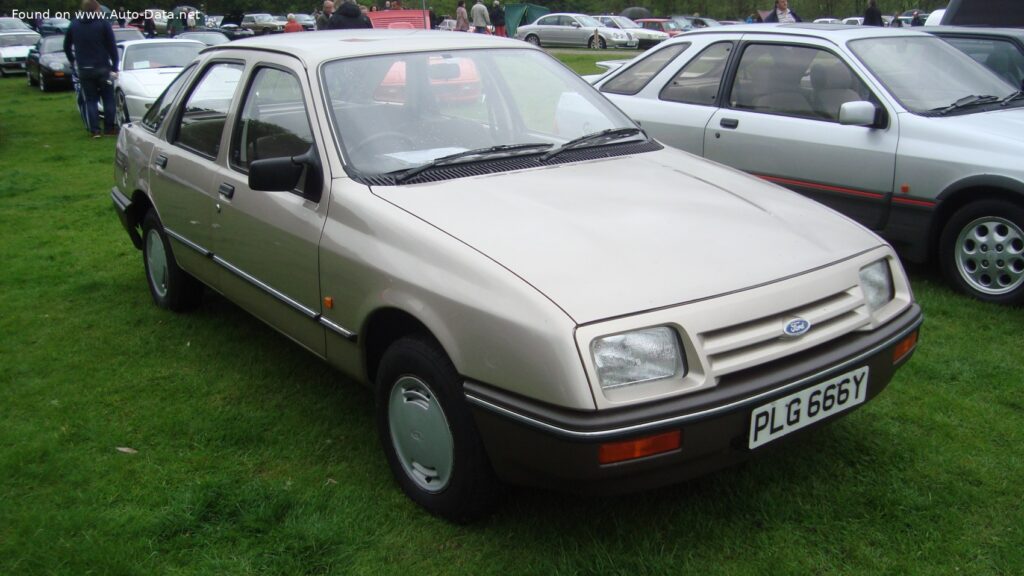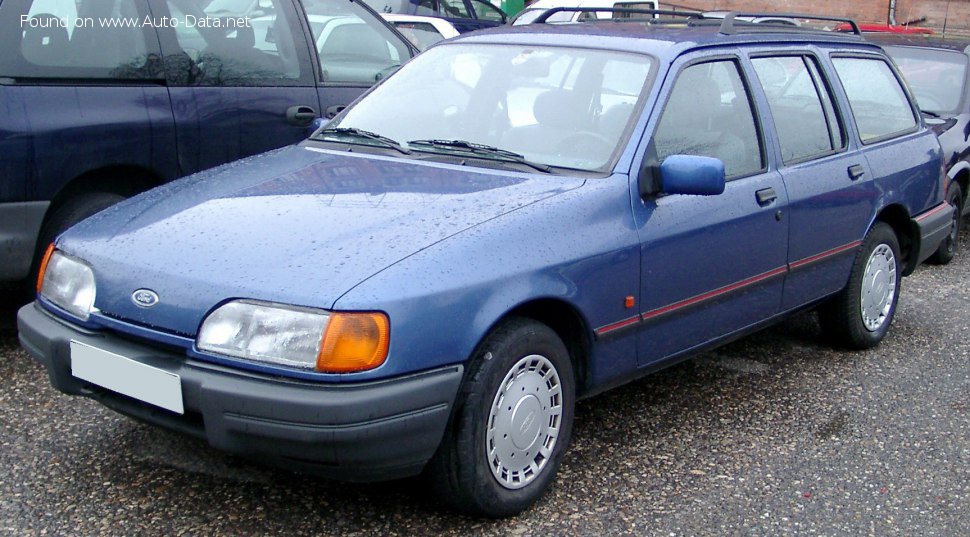
The Ford Sierra Turnier II 2.9 4×4, produced between 1988 and 1993, represents a significant evolution in Ford of Europe’s family car offerings. The Sierra, intended as a replacement for the aging Taunus and Cortina, was a thoroughly modern design for its time, embracing aerodynamic principles and offering a range of engines and body styles. The Turnier, the station wagon variant, provided practicality and space, while the 2.9-liter, four-wheel-drive model catered to buyers needing enhanced capability in challenging conditions. While never officially sold in the United States, the Sierra was a popular and influential vehicle in Europe, known for its robust construction and relatively sporty handling. It served as a crucial stepping stone in Ford’s development of family vehicles, paving the way for the later Mondeo.
Ford Sierra Turnier II 2.9 4×4: A Detailed Overview
The Sierra Turnier II 2.9 4×4 occupies a unique position within the Sierra lineup. It combined the practicality of a station wagon with the added security and traction of a four-wheel-drive system, making it a versatile vehicle for both family duties and more demanding applications. The “Turnier” designation, meaning “tournament” or “competition” in German, hinted at the car’s load-carrying capacity and potential for active lifestyles. This model was particularly popular in regions with inclement weather or rough terrain, where its all-wheel-drive system provided a distinct advantage.
Engine & Performance
At the heart of the Sierra Turnier II 2.9 4×4 lies a naturally aspirated 2.9-liter V6 engine, designated as either B4B or B4C depending on specific production variations. This engine produced 145 horsepower, providing a respectable level of performance for a vehicle of its size and weight. The engine’s power delivery was smooth and linear, making it well-suited for everyday driving. The five-speed manual transmission allowed drivers to fully utilize the engine’s capabilities, offering precise gear changes and a satisfying driving experience. The all-wheel-drive system, a viscous coupling type, automatically distributed torque between the front and rear axles as needed, enhancing traction on slippery surfaces. The weight-to-power ratio of 8.1 kg/Hp (122.9 Hp/tonne) indicates a reasonably sprightly vehicle, capable of providing adequate acceleration and cruising ability. While not a sports car, the 2.9 4×4 offered a balanced blend of performance and practicality.
Design & Features
The Sierra Turnier II’s design was a departure from the more boxy aesthetics of its predecessors. Its sleek, aerodynamic profile, penned under the direction of Uwe Bahnsen, was influenced by contemporary designs from manufacturers like Audi and BMW. The station wagon body style maximized interior space, offering a generous cargo area that could be further expanded by folding down the rear seats. The five-door configuration provided easy access for passengers and cargo. The interior was functional and well-equipped for the era, featuring comfortable seating for five occupants. While not laden with luxury features, the Sierra Turnier II offered essential amenities such as power steering (hydraulic) and ventilated front disc brakes, enhancing both driver comfort and safety. The rear brakes were also discs, a relatively advanced feature for a family car of the late 1980s. The vehicle’s dimensions – 4511 mm in length, 1720 mm in width, and 1428 mm in height – positioned it squarely within the mid-size station wagon segment. The 2608 mm wheelbase contributed to a stable and comfortable ride.
Technical Specifications
| Brand | Ford |
| Model | Sierra |
| Generation | Sierra Turnier II |
| Type (Engine) | 2.9 4×4 (145 Hp) |
| Start of production | 1988 year |
| End of production | 1993 year |
| Powertrain Architecture | Internal Combustion engine |
| Body type | Station wagon (estate) |
| Seats | 5 |
| Doors | 5 |
| Fuel Type | Petrol (Gasoline) |
| Weight-to-power ratio | 8.1 kg/Hp |
| Hp/tonne | 122.9 Hp/tonne |
| Power | 145 Hp |
| Engine Model/Code | B4B, B4C |
| Engine aspiration | Naturally aspirated engine |
| Engine oil capacity | 4.25 l / 4.49 US qt / 3.74 UK qt |
| Coolant | 8.5 l / 8.98 US qt / 7.48 UK qt |
| Kerb Weight | 1180 kg / 2601.45 lbs. |
| Fuel tank capacity | 60 l / 15.85 US gal / 13.2 UK gal |
| Length | 4511 mm / 177.6 in. |
| Width | 1720 mm / 67.72 in. |
| Height | 1428 mm / 56.22 in. |
| Wheelbase | 2608 mm / 102.68 in. |
| Front track | 1452 mm / 57.17 in. |
| Rear (Back) track | 1468 mm / 57.8 in. |
| Minimum turning circle (turning diameter) | 10 m / 32.81 ft. |
| Drive wheel | All wheel drive (4×4) |
| Number of gears and type of gearbox | 5 gears, manual transmission |
| Front brakes | Ventilated discs |
| Rear brakes | Disc |
| Steering type | Steering rack and pinion |
| Power steering | Hydraulic Steering |
The Ford Sierra Turnier II 2.9 4×4, while not a vehicle commonly found in the United States, remains a significant example of European automotive engineering from the late 1980s and early 1990s. Its combination of practicality, performance, and all-wheel-drive capability made it a popular choice for families and individuals seeking a versatile and capable vehicle. The Sierra’s influence can be seen in subsequent Ford models, solidifying its place as an important chapter in the company’s history.