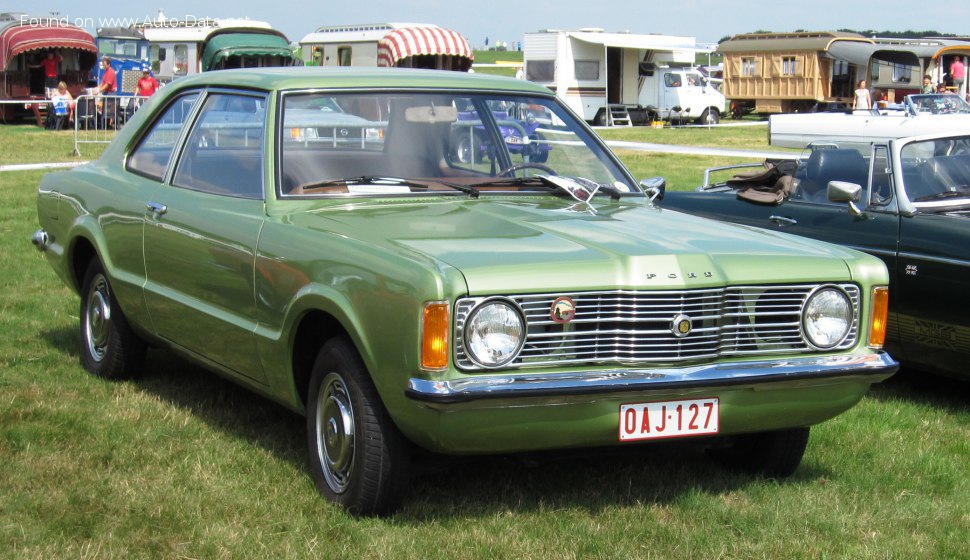
The Ford Taunus GBTK 1600, produced between 1974 and 1975, represents a pivotal, though relatively short-lived, iteration of Ford’s mid-size offering for the European market. Positioned as a family sedan, the Taunus competed directly with vehicles like the Opel Rekord and the Fiat 132. While never officially sold in the United States, understanding the Taunus GBTK provides insight into Ford of Europe’s engineering and design philosophies during the 1970s, a period marked by increasing fuel efficiency concerns and evolving safety standards. The GBTK designation refers to a specific facelift within the broader Taunus TC series, introducing subtle styling changes and mechanical refinements. This model aimed to balance affordability, practicality, and a degree of modern comfort for the average European driver.
The Ford Taunus GBTK 1600: A European Family Sedan
The Taunus name has a long history within Ford’s European lineup, dating back to the 1930s. By the 1970s, the Taunus had become a mainstay, representing Ford’s commitment to providing a comfortable and reliable vehicle for the mass market. The GBTK series, launched in 1974, was a response to growing competition and a desire to update the Taunus’s image. The “TC” series, of which the GBTK is a part, was notable for its more angular styling compared to its predecessors, reflecting the design trends of the era. The 1600 model, powered by a 1.6-liter engine, was a popular choice, offering a reasonable compromise between performance and fuel economy. The Taunus, in its various iterations, played a significant role in establishing Ford as a leading automotive manufacturer in Europe, paving the way for later successes like the Sierra and Mondeo.
Engine & Performance
The heart of the Ford Taunus GBTK 1600 is a naturally aspirated, 1.6-liter inline-four cylinder gasoline engine. This engine produced 68 horsepower, a modest output by modern standards, but adequate for the vehicle’s intended purpose. The engine utilized a single overhead camshaft (SOHC) configuration, a common design for the time, and featured a two-barrel carburetor for fuel delivery. While not a performance-oriented vehicle, the Taunus 1600 offered sufficient power for comfortable cruising and everyday driving. The engine’s relatively small displacement contributed to reasonable fuel economy, a growing concern for consumers in the mid-1970s due to the oil crises. Power was delivered to the rear wheels via a four-speed manual transmission, with an optional three-speed automatic transmission available. The suspension system consisted of independent front suspension with MacPherson struts and a live axle with leaf springs at the rear, providing a comfortable, if not particularly sporty, ride. Top speed was approximately 95 miles per hour, and acceleration from 0 to 60 mph took around 14 seconds. The engine’s durability and relatively simple design made it easy to maintain, contributing to the Taunus’s reputation for reliability.
Design & Features
The Ford Taunus GBTK 1600 was offered exclusively as a four-door sedan. The body style was typical of European sedans of the period, characterized by clean lines and a relatively conservative aesthetic. The GBTK facelift included minor revisions to the front grille, headlights, and taillights, giving the car a slightly more modern appearance. Inside, the Taunus offered a practical and functional interior. The cabin was designed to accommodate five passengers comfortably, with ample headroom and legroom for the time. The dashboard was straightforward and easy to use, with clearly labeled controls. Standard features included cloth upholstery, a heater, and a basic instrument cluster. Optional extras included a radio, a vinyl roof, and upgraded interior trim. Safety features were relatively basic by today’s standards, but included seat belts and a collapsible steering column. The Taunus’s trunk offered a generous amount of space for luggage and other cargo. The overall design philosophy prioritized practicality and affordability over luxury or sporting pretensions. The car’s build quality was generally good, and the Taunus was known for its robust construction. The GBTK’s styling, while not groundbreaking, was well-proportioned and reflected the prevailing design trends of the 1970s.
Technical Specifications
| Brand | Ford |
| Model | Taunus |
| Generation | Taunus (GBTK) |
| Type (Engine) | 1600 (68 Hp) |
| Start of production | 1974 |
| End of production | 1975 |
| Powertrain Architecture | Internal Combustion engine |
| Body type | Sedan |
| Fuel Type | Petrol (Gasoline) |
| Power | 68 Hp |
| Engine aspiration | Naturally aspirated engine |
The Ford Taunus GBTK 1600, despite its brief production run, remains a significant vehicle in the history of Ford of Europe. It represents a transitional period in automotive design and engineering, bridging the gap between the classic sedans of the 1960s and the more modern, fuel-efficient vehicles of the 1980s. While not a performance icon, the Taunus 1600 provided reliable and affordable transportation for countless European families, solidifying Ford’s position as a major player in the European automotive market. Its simple, robust design and ease of maintenance continue to endear it to classic car enthusiasts today, preserving a piece of automotive history from a bygone era. The Taunus GBTK 1600 serves as a reminder of a time when practicality and affordability were paramount, and when cars were built to last.