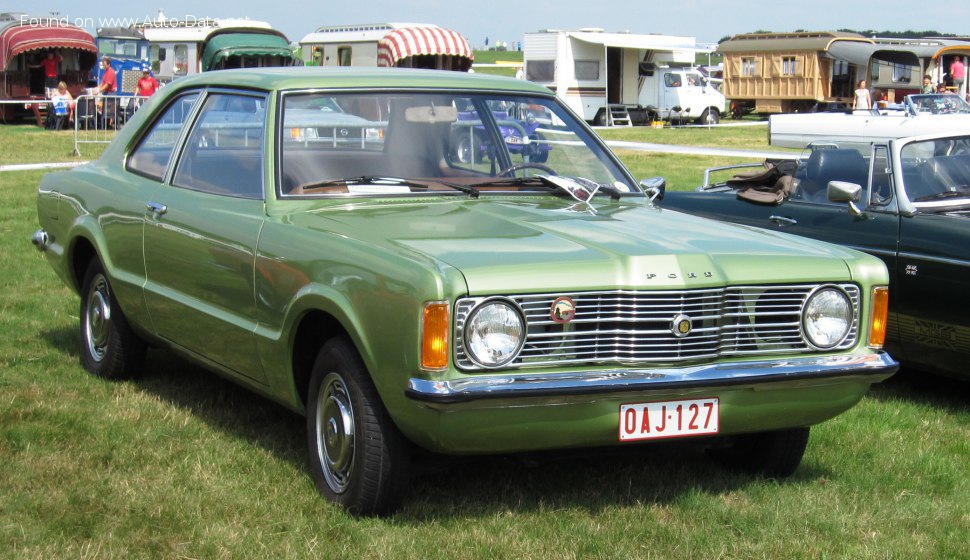
The Ford Taunus GBTK, specifically the 1600 model producing 72 horsepower, represents a significant chapter in Ford of Germany’s history. Produced between 1970 and 1975, this iteration of the Taunus was a mainstay of the mid-size family car segment in Europe, offering a blend of practicality, affordability, and increasingly, modern features. While never officially sold in the United States, the Taunus provides a fascinating case study of automotive development outside the American market during a period of significant change in the global automotive industry. It competed directly with vehicles like the Opel Rekord, Volkswagen Passat, and other European family sedans, establishing Ford as a major player in the European automotive landscape.
The Ford Taunus GBTK: A European Family Sedan
The Taunus name had a long history with Ford, dating back to the 1930s. The GBTK designation refers to the specific generation introduced in 1970, representing a substantial redesign over its predecessor. This generation aimed to modernize the Taunus, offering a more spacious interior, improved ride quality, and a wider range of engine options. The 1600 model, with its 72 horsepower engine, was positioned as a popular choice for buyers seeking a balance between performance and fuel economy. The Taunus GBTK was available in various body styles, including a two-door coupe, a four-door sedan (the focus of this article), and a station wagon, catering to a diverse range of customer needs. Its design reflected the styling trends of the early 1970s, characterized by clean lines, a relatively low profile, and a focus on practicality.
Engine & Performance
The heart of the Taunus 1600 was a 1.6-liter, naturally aspirated four-cylinder engine. This engine, while modest by modern standards, provided adequate power for everyday driving in the European context. Producing 72 horsepower, the engine was typically paired with a four-speed manual transmission, although an automatic transmission was also available as an option. The engine utilized a conventional overhead valve (OHV) configuration and a single carburetor. Performance figures were not focused on outright speed, but rather on providing smooth and reliable operation. Acceleration from 0 to 60 mph was estimated to be around 14-16 seconds, and top speed was approximately 90-95 mph. Fuel economy, a growing concern in the early 1970s, was reasonable for the time, averaging around 28-32 miles per gallon. The engine’s durability and relatively simple design contributed to its longevity and ease of maintenance, making it a popular choice for families and fleet operators.
Design & Features
The Ford Taunus GBTK 1600 Sedan was a classic three-box design, typical of European sedans of the era. The body featured a relatively long hood, a spacious passenger compartment, and a separate trunk. The styling was characterized by clean lines and a restrained elegance, avoiding the more flamboyant designs that were becoming popular in some other markets. Inside, the Taunus offered a comfortable and practical interior. The seats were typically upholstered in durable cloth or vinyl, and the dashboard was functional and straightforward. Features included a heater, windscreen wipers, and basic instrumentation. Higher trim levels offered options such as a radio, upgraded upholstery, and chrome trim. Safety features, while limited by the standards of today, were improving during this period. The Taunus GBTK incorporated features such as seat belts and a collapsible steering column, representing a step forward in vehicle safety. The suspension system consisted of independent front suspension with MacPherson struts and a live axle with leaf springs at the rear, providing a comfortable ride quality. Brakes were disc brakes at the front and drum brakes at the rear. The Taunus GBTK’s design prioritized practicality and affordability, making it a popular choice for families and everyday commuters.
Market Position and Legacy
The Ford Taunus GBTK occupied a crucial position in Ford’s European strategy. It was designed to appeal to a broad range of buyers, offering a compelling combination of value, reliability, and practicality. The Taunus competed directly with other European family sedans, such as the Opel Rekord, Volkswagen Passat, and Fiat 132. Its success helped to solidify Ford’s position as a leading automotive manufacturer in Europe. The GBTK generation of the Taunus was eventually replaced by the Taunus TC in 1976, but the legacy of the GBTK continued to influence Ford’s design and engineering philosophy. The Taunus, in general, represents a significant period in Ford’s history, demonstrating the company’s ability to adapt to changing market conditions and consumer preferences. While not sold in the US, it showcases the different paths automotive development took in Europe compared to North America.
Technical Specifications
| Brand | Ford |
| Model | Taunus |
| Generation | Taunus (GBTK) |
| Type (Engine) | 1600 (72 Hp) |
| Start of production | 1970 |
| End of production | 1975 |
| Powertrain Architecture | Internal Combustion engine |
| Body type | Sedan |
| Fuel Type | Petrol (Gasoline) |
| Power | 72 Hp |
| Engine aspiration | Naturally aspirated engine |
| Engine Displacement | 1.6 Liters |
| Cylinders | 4 |
| Valves per Cylinder | 2 |
| Transmission | 4-speed Manual (Optional Automatic) |
| Brakes (Front/Rear) | Disc / Drum |
| Suspension (Front) | MacPherson Strut |
| Suspension (Rear) | Leaf Spring |