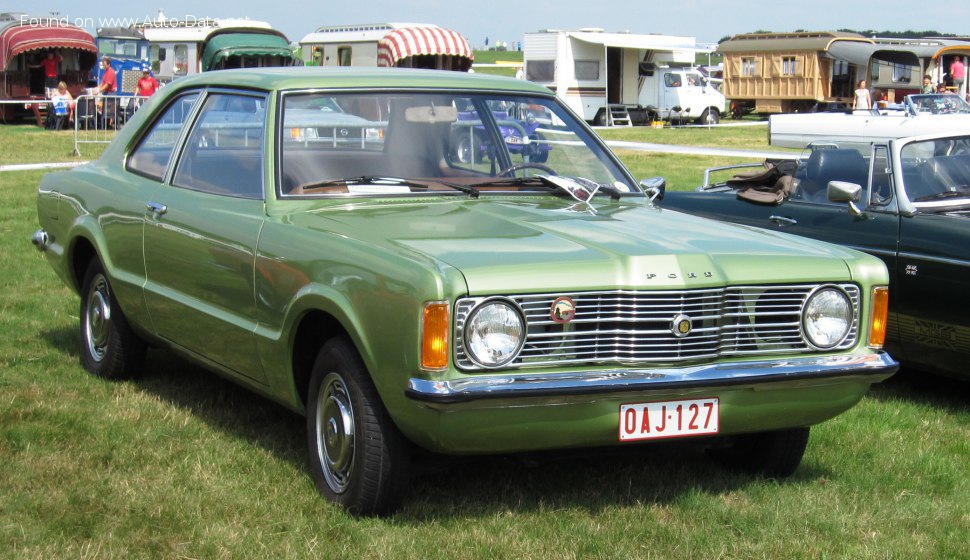
The Ford Taunus GBTK, specifically the 1600 model producing 88 horsepower, represents a significant chapter in Ford of Germany’s history. Produced between 1970 and 1976, this iteration of the Taunus was a mainstay of the mid-size family car segment in Europe, offering a blend of practicality, affordability, and increasingly, modern features. While never officially sold in the United States, the Taunus provides a fascinating case study of Ford’s global engineering and adaptation to diverse market demands. The GBTK generation, introduced in 1970, marked a substantial departure from its predecessors, embracing a more contemporary design and improved mechanical components. It competed directly with vehicles like the Opel Rekord, Volkswagen Passat, and other European family sedans.
The Ford Taunus GBTK: A European Family Sedan
The Taunus nameplate has a long and storied history within Ford, originating in the 1930s. However, the GBTK generation, launched in 1970, was a pivotal moment. It signified a move towards more sophisticated engineering and styling, reflecting the changing tastes of European consumers. The “GBTK” designation itself isn’t a formal model name, but rather an internal Ford code referring to the specific body style and engineering updates within the Taunus range. The 1600 model, powered by a 1.6-liter engine, was a popular choice, balancing performance with fuel economy – a growing concern in the early 1970s. The Taunus was primarily aimed at families and commuters seeking a reliable and comfortable vehicle for everyday use. It was available in various trim levels, offering different levels of equipment and luxury.
Engine & Performance
The heart of the Taunus 1600 was a 1.6-liter, naturally aspirated inline-four cylinder gasoline engine. This engine produced 88 horsepower, which, while not exceptionally powerful by modern standards, was adequate for the vehicle’s weight and intended purpose. The engine featured a single overhead camshaft (SOHC) design, a relatively modern feature for the time, contributing to improved efficiency and smoother operation. Fuel was delivered via a carburetor, typical for vehicles of this era. The Taunus 1600 was offered with either a four-speed manual transmission or a three-speed automatic transmission, catering to different driver preferences. Performance figures were modest, with acceleration from 0 to 60 mph taking around 13-15 seconds, and a top speed of approximately 95-100 mph. The focus wasn’t on outright speed, but rather on providing a comfortable and reliable driving experience. The engine’s durability and relatively simple design made it easy to maintain, a key factor in its popularity.
Design & Features
The Taunus GBTK featured a distinctly European design aesthetic. The sedan body style was characterized by clean lines, a relatively low roofline, and a spacious interior. The front end incorporated a prominent grille and rectangular headlights, while the rear featured simple, understated taillights. The interior was designed with practicality in mind, offering comfortable seating for five passengers and a reasonably sized trunk. Materials used were typical for the period, including vinyl and cloth upholstery, and plastic trim.
While not brimming with advanced technology by today’s standards, the Taunus GBTK offered a range of features considered desirable in the early 1970s. These included front disc brakes (a significant safety improvement over drum brakes), a heater, and optional features such as a radio, whitewall tires, and upgraded upholstery. Safety features were relatively basic, consisting primarily of seatbelts and a steering column designed to collapse in the event of a collision. The suspension system, featuring independent front suspension and a live rear axle, provided a comfortable ride, absorbing bumps and irregularities in the road surface effectively. The Taunus GBTK’s design prioritized functionality and durability, making it a practical and reliable choice for European families.
Evolution and Market Position
The Taunus GBTK underwent several minor revisions during its production run, including updates to the interior trim, exterior styling, and engine specifications. These changes were aimed at keeping the vehicle competitive in a rapidly evolving market. The Taunus played a crucial role in Ford of Germany’s success, establishing the brand as a major player in the European automotive industry. It was a popular choice among families, commuters, and company car fleets. The Taunus’s success also helped to solidify Ford’s reputation for building reliable and affordable vehicles. The model was eventually replaced by the Taunus TC in 1976, representing another significant step forward in Ford of Germany’s design and engineering capabilities.
Technical Specifications
| Brand | Ford |
| Model | Taunus |
| Generation | Taunus (GBTK) |
| Type (Engine) | 1600 (88 Hp) |
| Start of production | 1970 |
| End of production | 1976 |
| Powertrain Architecture | Internal Combustion engine |
| Body type | Sedan |
| Fuel Type | Petrol (Gasoline) |
| Power | 88 Hp |
| Engine aspiration | Naturally aspirated engine |
| Engine Displacement | 1.6 Liters |
| Number of Cylinders | 4 |
| Valve Configuration | SOHC (Single Overhead Camshaft) |
| Fuel System | Carburetor |
| Transmission Options | 4-speed Manual, 3-speed Automatic |
| Brakes (Front) | Disc |
| Brakes (Rear) | Drum |
| Approximate Top Speed | 95-100 mph (153-161 km/h) |
| Approximate 0-60 mph Time | 13-15 seconds |