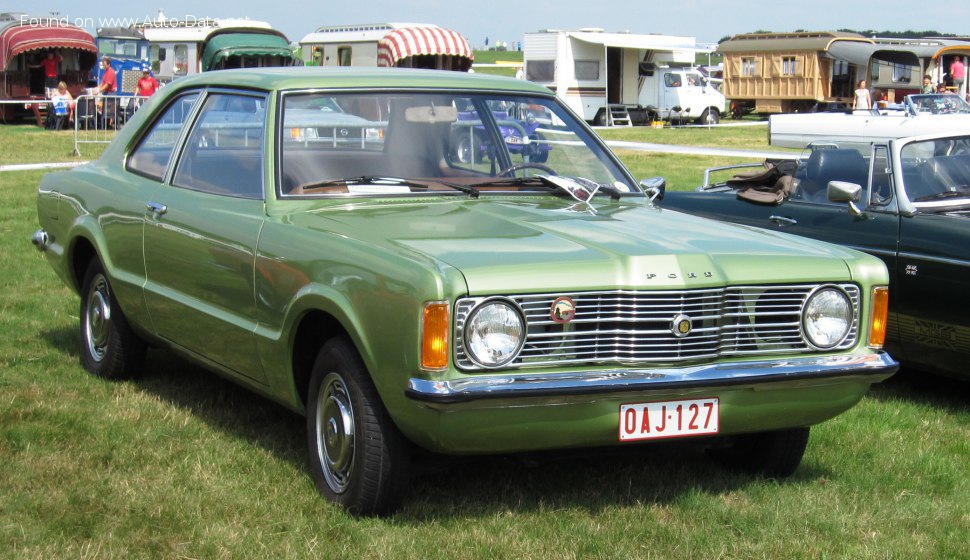
The Ford Taunus GBTK, produced between 1970 and 1976, represents a significant chapter in Ford of Germany’s history. This generation of the Taunus, often referred to as the “Taunus TC,” was a mid-size family car designed to compete with rivals like the Opel Rekord and Volkswagen Passat in the European market. While never officially sold in the United States, the Taunus TC was a popular and influential vehicle in Europe, known for its comfortable ride, practical design, and a range of engine options, including the 2.0-liter V6 detailed here. The GBTK designation specifically refers to the body style and engine configuration of this particular variant. It marked a move towards more modern styling and engineering for Ford’s European lineup.
Ford Taunus (GBTK): A Detailed Overview
The Taunus TC was a crucial model for Ford in the early 1970s, embodying the design trends of the era. It was a response to changing consumer demands for larger, more comfortable, and better-equipped family cars. The GBTK model, with its 2.0-liter V6 engine, offered a balance of performance and fuel economy that appealed to a broad range of buyers. The car’s design was a departure from the more rounded shapes of previous Taunus models, adopting a more angular and contemporary aesthetic. The Taunus TC underwent several revisions during its production run, including updates to the interior, exterior styling, and engine options. The GBTK version, being an early model, represents the initial iteration of this design philosophy.
Origins and Market Position
The Ford Taunus had a long history dating back to the 1930s, but the TC generation represented a significant modernization. Ford of Germany was tasked with developing a vehicle that could appeal to the diverse tastes of European drivers. The Taunus TC aimed to provide a comfortable and reliable family car that could handle both city driving and longer journeys. It was positioned as a step up from smaller, more basic models like the Ford Escort, offering more space, refinement, and power. The Taunus competed directly with other popular European sedans, and its success helped Ford establish a strong presence in the mid-size car segment.
Engine & Performance
The heart of the Taunus GBTK is its 2.0-liter V6 engine. This naturally aspirated powerplant produced 90 horsepower, which, while modest by today’s standards, provided adequate performance for the time. The engine was known for its smooth operation and relatively quiet running. It was paired with either a four-speed manual or a three-speed automatic transmission, offering drivers a choice between greater control and convenience. The engine’s configuration, with its 60-degree V-angle, contributed to its balance and reduced vibrations. Fuel delivery was handled by a carburetor, typical for vehicles of this era. The Taunus GBTK’s performance was characterized by its ability to cruise comfortably at highway speeds and provide sufficient power for overtaking maneuvers. While not a sports car, it offered a pleasant driving experience for everyday use. The engine’s durability and relatively simple design made it a reliable unit, contributing to the Taunus’s reputation for dependability.
Powertrain Details
The 2.0-liter V6 engine featured a cast iron block and an aluminum cylinder head. This combination provided a good balance of strength and weight. The engine’s valve train utilized an overhead valve (OHV) configuration, which was common in the early 1970s. The engine’s compression ratio was approximately 8.8:1, optimized for the gasoline available in Europe at the time. The Taunus GBTK’s drivetrain was rear-wheel drive, providing a traditional driving experience. The rear axle was a solid axle, suspended by leaf springs. This suspension setup was robust and capable of handling a reasonable load, but it wasn’t known for providing a particularly refined ride. The steering was a recirculating ball system, which was typical for cars of this era.
Design & Features
The Ford Taunus GBTK was a four-door sedan with a classic three-box design. Its styling was characterized by clean lines, a relatively low roofline, and a prominent grille. The car’s interior was designed with practicality and comfort in mind. It offered seating for five passengers and a reasonably sized trunk. The dashboard was functional and straightforward, with clearly labeled gauges and controls. Features such as a radio, heater, and optional air conditioning were available, depending on the trim level. Safety features were relatively basic by modern standards, but included seat belts and a collapsible steering column. The Taunus GBTK’s body construction utilized a monocoque chassis, providing a good balance of strength and weight. The car’s suspension system was designed to provide a comfortable ride, although it wasn’t particularly sporty. The Taunus GBTK’s exterior styling was available in a range of colors, and the car was often equipped with chrome trim and brightwork, adding to its visual appeal.
Interior and Comfort
The interior of the Taunus GBTK was designed to be durable and practical. The seats were typically upholstered in cloth or vinyl, and the floor was covered in carpet. The dashboard was made of plastic and featured a simple layout. The car’s ventilation system provided adequate heating and cooling, although it wasn’t as sophisticated as those found in more modern vehicles. The Taunus GBTK’s interior space was generous for a car of its size, providing ample headroom and legroom for both front and rear passengers. The car’s trunk was also reasonably sized, capable of accommodating a significant amount of luggage.
Technical Specifications
| Brand | Ford |
| Model | Taunus |
| Generation | Taunus (GBTK) |
| Type (Engine) | 2000 V6 (90 Hp) |
| Start of production | 1970 |
| End of production | 1976 |
| Powertrain Architecture | Internal Combustion engine |
| Body type | Sedan |
| Fuel Type | Petrol (Gasoline) |
| Power | 90 Hp |
| Engine aspiration | Naturally aspirated engine |