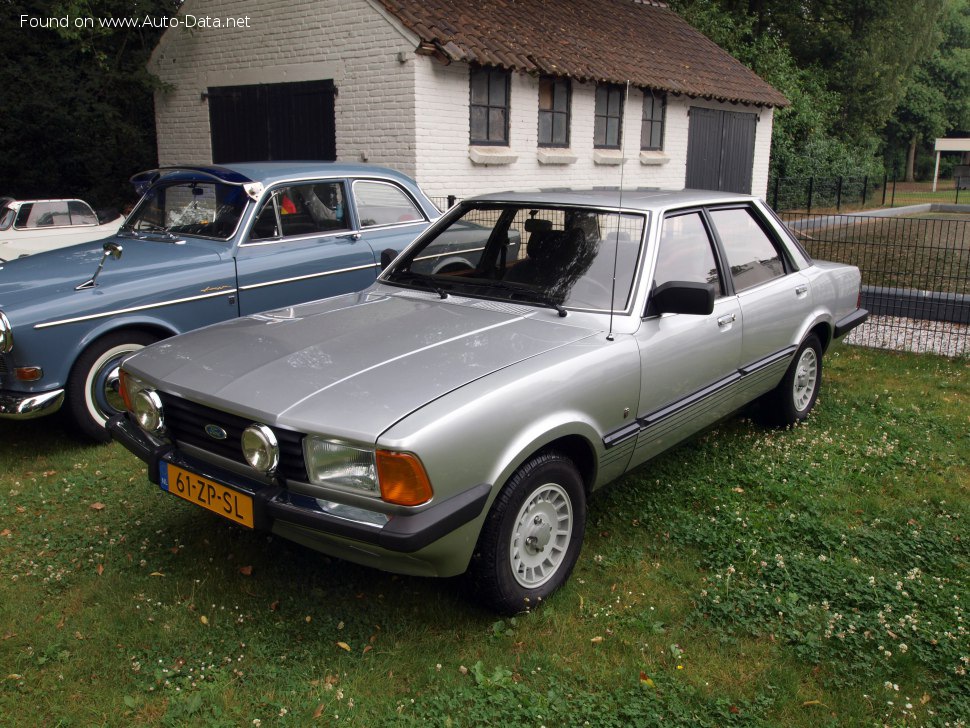
The Ford Taunus, specifically the GBTS, GBFS, and CBTS series produced between 1976 and 1979, represents a significant chapter in Ford of Europe’s history. While largely unknown in the North American market, the Taunus was a mainstay of the European family car segment for decades. This iteration, powered by a 1.3-liter engine producing 54 horsepower, was aimed at providing affordable and practical transportation during a period of economic change and increasing fuel costs. The Taunus competed directly with vehicles like the Opel Ascona, Volkswagen Passat, and British Leyland’s offerings, serving as a crucial volume seller for Ford in its key European markets.
The Ford Taunus: A European Family Sedan
The Taunus nameplate has a long and varied history, dating back to the 1930s. However, the models produced from the mid-1960s through the late 1970s are particularly noteworthy for their styling and engineering. The GBTS, GBFS, and CBTS series, introduced in 1976, were a facelift of the earlier Taunus TC models, offering updated aesthetics and some mechanical refinements. These cars were primarily sold in Germany, the United Kingdom, and other European countries, and were built in Ford’s factories in Saarlouis, Germany, and Dagenham, England. The 1.3-liter version, designated CBTS, was positioned as the entry-level model, offering a balance of economy and usability.
Engine & Performance
The heart of the Ford Taunus 1.3 CBTS is a naturally aspirated, 1.3-liter inline-four cylinder gasoline engine. This engine, while modest by modern standards, was designed for reliability and fuel efficiency. Producing 54 horsepower, the Taunus 1.3 wasn’t intended for high-performance driving. Instead, it focused on providing adequate power for everyday commuting and family transportation. The engine featured a single carburetor and a relatively low compression ratio, contributing to its ability to run on the lower-octane fuels commonly available in Europe at the time.
Power was delivered to the rear wheels through a four-speed manual transmission, although a three-speed automatic transmission was offered as an optional extra. The suspension system consisted of independent front suspension with MacPherson struts and a live axle with leaf springs at the rear. This setup provided a comfortable ride, although handling was not particularly sporty. The Taunus 1.3 CBTS had a top speed of around 85 miles per hour, and acceleration from 0 to 60 mph took approximately 15 seconds. Fuel economy was a key selling point, averaging around 35-40 miles per gallon depending on driving conditions.
Design & Features
The 1976-1979 Taunus GBTS/GBFS/CBTS series featured a distinctively angular design, reflecting the styling trends of the 1970s. The sedan body style was the most common, offering a practical and spacious interior for a family of five. The exterior was characterized by a prominent grille, rectangular headlights, and a relatively boxy silhouette. Chrome trim was used sparingly, giving the car a somewhat understated appearance.
Inside, the Taunus 1.3 CBTS offered a functional and comfortable cabin. The dashboard was simple and straightforward, with clearly labeled controls. Seats were upholstered in durable cloth, and the interior trim was typically dark in color. Standard features included a heater, windscreen wipers, and basic instrumentation. Optional extras included a radio, upgraded upholstery, and a sunroof. Safety features were relatively basic for the era, consisting primarily of seat belts and a collapsible steering column. The Taunus was designed to be a practical and affordable family car, and its features reflected this focus. The car’s relatively large trunk provided ample space for luggage and other cargo.
Technical Specifications
| Brand | Ford |
| Model | Taunus |
| Generation | Taunus (GBTS, GBFS, CBTS) |
| Type (Engine) | 1.3 (CBTS) (54 Hp) |
| Start of production | 1976 |
| End of production | 1979 |
| Powertrain Architecture | Internal Combustion engine |
| Body type | Sedan |
| Fuel Type | Petrol (Gasoline) |
| Engine specs Power | 54 Hp |
| Engine aspiration | Naturally aspirated engine |
Legacy and Impact
While the Ford Taunus never achieved significant sales success in North America, it played a vital role in the European automotive landscape. The GBTS, GBFS, and CBTS series represented a refinement of the Taunus formula, offering a practical, affordable, and reliable family car. The 1.3-liter engine provided a good balance of economy and usability, making it a popular choice for budget-conscious buyers.
The Taunus’s impact extended beyond its sales figures. It helped establish Ford of Europe as a major player in the family car segment, and its engineering and design influenced subsequent Ford models. The Taunus also served as a platform for innovation, with Ford experimenting with new technologies and features on the car. By the late 1970s, the Taunus was beginning to show its age, and it was eventually replaced by the Ford Sierra in 1982. However, the Taunus remains a fondly remembered car among European enthusiasts, representing a bygone era of affordable and practical motoring. Today, well-maintained examples are sought after by collectors and classic car enthusiasts, preserving a piece of Ford’s European heritage.
The Taunus, in its various iterations, demonstrated Ford’s commitment to providing vehicles tailored to the specific needs and preferences of the European market. It was a car built for everyday life, offering a comfortable and reliable transportation solution for families across the continent. Its legacy continues to resonate with those who remember it as a symbol of a simpler time in automotive history.