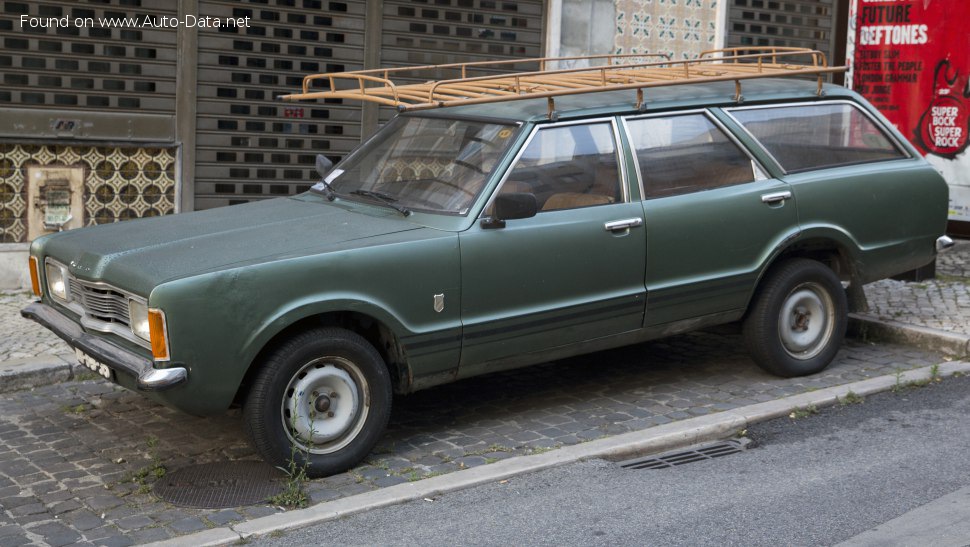
The Ford Taunus Turnier, specifically the GBNK variant powered by a 1.3-liter engine producing 54 horsepower, represents a significant entry in the European station wagon market of the early 1970s. Produced from 1970 to 1976, the Turnier – meaning “tournament” or “competition” in German – was Ford of Germany’s answer to the growing demand for practical, family-oriented vehicles. While not officially sold in the United States, the Taunus range, and the Turnier in particular, played a crucial role in establishing Ford as a dominant force in the European automotive landscape. It offered a blend of affordability, reasonable performance, and, crucially, increased cargo capacity compared to the standard Taunus saloon (sedan). This model filled a niche for buyers needing a versatile vehicle for both daily commuting and leisure activities.
The Ford Taunus Turnier: A European Family Hauler
The Taunus name had a long history with Ford, dating back to the 1930s. By the late 1960s, the Taunus had evolved into a modern, though somewhat conservative, family car. The Turnier, introduced as the estate (station wagon) version of the Taunus TC series, aimed to broaden the appeal of the range. It wasn’t intended to be a performance vehicle; rather, it was designed for practicality and reliability. The GBNK designation specifically refers to the 1300cc engine variant, which was a popular choice for buyers seeking a balance between fuel economy and usability. The Turnier competed with other European estates like the Opel Caravan, Volkswagen Variant, and Hillman Estate, all vying for the attention of families and businesses.
Engine & Performance
The heart of the Taunus Turnier GBNK is a 1.3-liter, naturally aspirated inline-four cylinder petrol (gasoline) engine. This engine, while modest by modern standards, was typical for the era and market segment. Producing 54 horsepower, it wasn’t designed for rapid acceleration. Instead, the focus was on providing sufficient power for comfortable cruising and hauling loads. The engine featured a single carburetor and a relatively low compression ratio, contributing to its reliability and ability to run on the available fuel grades of the time. Power was delivered to the rear wheels via a four-speed manual transmission, although an automatic transmission was offered as an option. The drivetrain was a conventional rear-wheel-drive setup, common for European cars of this period. Performance figures were modest; acceleration from 0 to 60 mph would have taken around 16-18 seconds, and top speed was approximately 85-90 mph. However, these figures were adequate for the intended use of the vehicle – providing a practical and economical mode of transport.
Design & Features
The Taunus Turnier GBNK’s design was largely dictated by its function. The extended roofline and large rear hatch provided a generous cargo area, significantly increasing the vehicle’s versatility. The body style is a classic two-box design, typical of station wagons of the era. Stylistically, the Turnier shared the same basic front-end design as the Taunus saloon, with a rectangular grille and round headlights. Inside, the Turnier offered a relatively simple and functional interior. The dashboard was typically constructed from durable plastics, and the seats were upholstered in cloth or vinyl. Features were basic by today’s standards, but included things like a heater, windscreen wipers, and basic instrumentation. Safety features were also limited, reflecting the standards of the time. Seatbelts were available, but often not standard equipment. The suspension consisted of independent front suspension with coil springs and a live rear axle with leaf springs, providing a comfortable, if not particularly sporty, ride. The Turnier’s design prioritized practicality and durability over outright aesthetics, making it a popular choice for families and businesses who needed a reliable and versatile vehicle.
Technical Specifications
| Brand | Ford |
| Model | Taunus |
| Generation | Taunus Turnier (GBNK) |
| Type (Engine) | 1300 (54 Hp) |
| Start of production | 1970 |
| End of production | 1976 |
| Powertrain Architecture | Internal Combustion engine |
| Body type | Station wagon (estate) |
| Fuel Type | Petrol (Gasoline) |
| Power | 54 Hp |
| Engine aspiration | Naturally aspirated engine |
The Taunus Turnier GBNK, while not a groundbreaking vehicle in terms of innovation, was a successful and important model for Ford of Germany. It provided a practical and affordable solution for families and businesses needing a versatile vehicle. Its enduring appeal lies in its simplicity, reliability, and spaciousness. Although never officially sold in the United States, the Taunus Turnier represents a significant chapter in Ford’s global history and a testament to the enduring popularity of the station wagon body style. The Turnier’s legacy can be seen in the subsequent generations of Ford estates that followed, continuing the tradition of providing practical and reliable transportation for European families. The car’s relatively simple mechanical design also makes it a popular choice for classic car enthusiasts, who appreciate its ease of maintenance and affordability. Today, well-maintained examples of the Taunus Turnier GBNK are becoming increasingly collectible, representing a nostalgic reminder of a bygone era of automotive design.
The Turnier’s impact extended beyond simply providing transportation. It helped to shape the European station wagon market, influencing the designs and features of competing models. Ford’s commitment to providing a practical and affordable estate car demonstrated a keen understanding of the needs of European buyers. The Turnier’s success also contributed to Ford’s overall growth and market share in Europe, solidifying its position as a leading automotive manufacturer. While the Taunus name has since been discontinued, the Turnier’s legacy lives on in the modern Ford estates that continue to offer practicality, versatility, and reliability to drivers across Europe.