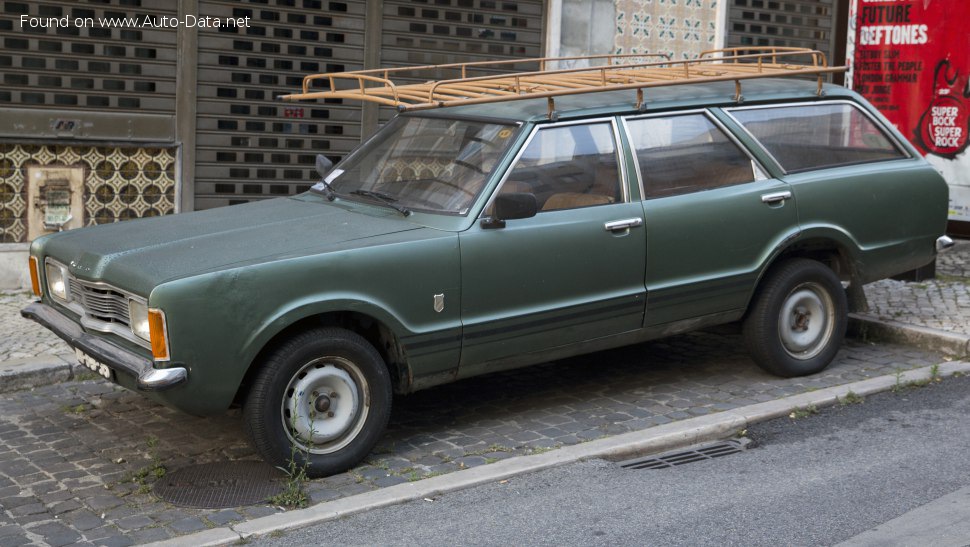
The Ford Taunus Turnier GBNK 1600, produced between 1974 and 1975, represents a significant offering in the European station wagon market during a period of increasing demand for practical family vehicles. Part of the larger Ford Taunus line, the Turnier – meaning “tournament” or “competition” in German, and signifying its versatility – was Ford’s answer to competitors offering estate versions of popular sedans. While not officially sold in the United States, the Taunus range was a mainstay of Ford’s European operations, providing affordable and reliable transportation for a broad customer base. The GBNK designation specifically refers to the 1600cc engine variant, producing 68 horsepower. This model aimed to balance fuel economy with adequate performance for everyday use, catering to families and individuals needing a spacious and functional vehicle.
The Ford Taunus Turnier: A European Family Hauler
The Taunus line, in general, held a crucial position for Ford of Europe. Developed as a competitor to vehicles like the Opel Rekord and Volkswagen Passat, the Taunus aimed to provide a modern, comfortable, and affordable option for European drivers. The Turnier, as the station wagon variant, expanded the Taunus’s appeal by offering increased cargo capacity and practicality. The second-generation Taunus (TC series, 1970-1979) saw a significant redesign, moving towards a more modern and angular aesthetic compared to its predecessors. The Turnier benefited from this redesign, offering a stylish and functional body shape that was well-received in the European market. The GBNK 1600 model, while not the most powerful in the Taunus range, was a popular choice due to its balance of performance and economy.
Engine & Performance
The Ford Taunus Turnier GBNK 1600 was powered by a 1.6-liter, naturally aspirated four-cylinder engine. This engine, a mainstay of the Taunus lineup, produced 68 horsepower. While this output may seem modest by modern standards, it was considered adequate for the vehicle’s intended purpose in the 1970s. The engine featured a single overhead camshaft (SOHC) design and a two-barrel carburetor, contributing to its relatively simple and reliable operation. Power was delivered to the rear wheels via a four-speed manual transmission, although a three-speed automatic transmission was also available as an option.
Performance figures for the GBNK 1600 were typical for the era. Acceleration was not a primary focus, with the vehicle prioritizing smooth and reliable operation over outright speed. Top speed was estimated to be around 95 miles per hour, and acceleration from 0 to 60 mph took approximately 14-16 seconds. Fuel economy, while not exceptional, was reasonable for a vehicle of its size and type, averaging around 28-32 miles per gallon depending on driving conditions. The engine’s durability and relatively low maintenance requirements contributed to the Taunus Turnier’s reputation as a practical and dependable vehicle.
Design & Features
The Taunus Turnier GBNK 1600 boasted a classic station wagon body style, characterized by its extended roofline and large rear cargo area. The design incorporated the angular styling cues of the second-generation Taunus, with a prominent front grille and rectangular headlights. The interior was designed with practicality in mind, offering comfortable seating for five passengers and a spacious cargo area that could be further expanded by folding down the rear seats.
Features were relatively basic by modern standards, reflecting the vehicle’s price point and the era in which it was produced. Standard equipment typically included cloth upholstery, a basic instrument panel, and manually operated windows and door locks. Optional features could include a radio, a heater, and upgraded interior trim. Safety features were also limited compared to contemporary vehicles, consisting primarily of seat belts and a steering column-mounted gear selector to minimize injury in a collision. The Turnier’s focus was on providing a functional and affordable vehicle for families, rather than offering a luxurious or technologically advanced experience. The large tailgate and low load floor made it easy to load and unload cargo, further enhancing its practicality.
Technical Specifications: Ford Taunus Turnier (GBNK) 1600
| Brand | Ford |
| Model | Taunus |
| Generation | Taunus Turnier (GBNK) |
| Type (Engine) | 1600 (68 Hp) |
| Start of production | 1974 |
| End of production | 1975 |
| Powertrain Architecture | Internal Combustion engine |
| Body type | Station wagon (estate) |
| Fuel Type | Petrol (Gasoline) |
| Power | 68 Hp |
| Engine aspiration | Naturally aspirated engine |
| Engine Displacement | 1.6 Liters |
| Number of Cylinders | 4 |
| Valve Configuration | SOHC (Single Overhead Camshaft) |
| Fuel System | Two-barrel Carburetor |
| Transmission | 4-speed Manual (Optional 3-speed Automatic) |
| Drivetrain | Rear-Wheel Drive |
| Approximate Top Speed | 95 mph (153 km/h) |
| 0-60 mph Acceleration | 14-16 seconds |
| Fuel Economy (Average) | 28-32 mpg |
The Ford Taunus Turnier GBNK 1600, while largely unknown in the American market, played a significant role in providing practical and affordable transportation for European families during the 1970s. Its combination of a reliable engine, spacious interior, and functional design made it a popular choice for those seeking a versatile vehicle capable of handling both everyday commuting and weekend adventures. The Turnier’s legacy lies in its contribution to Ford’s success in the European market and its representation of a practical and dependable vehicle from a bygone era.